Japanese Minimalist Fashion: 11 Rules I Follow Without Ever Having Been to Tokyo
If you want to achieve the Japanese minimalist fashion look, the secret is all about choosing intentional silhouettes, natural fabrics, and a less is more mindset.
In this post, I am sharing 11 steps that are actually doable to help you build an outfit that feels both grounded and incredibly stylish.
Want to look more like a Japanese minimalist in 60 seconds?
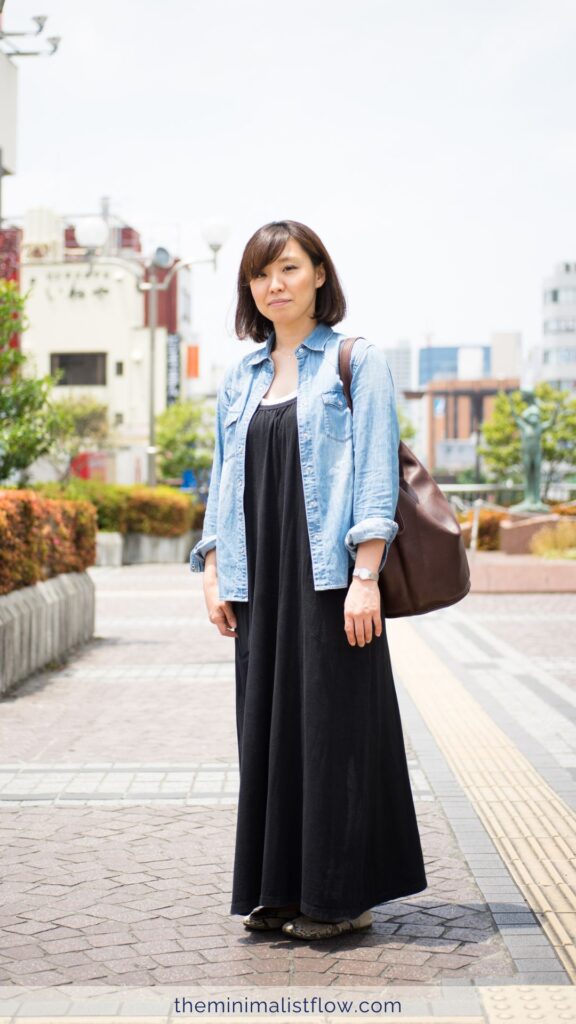
Swap your tight-fitting blazer for an oversized, structured cotton shirt and do a simple half-tuck into high-waisted trousers. This immediately creates that effortless silhouette that looks so chic on the streets of Tokyo.
Ever feel like your closet is packed with clothes, yet you have absolutely nothing to wear that feels like the real you?
Most of us are stuck in a cycle of fast fashion and loud trends that leave us feeling cluttered, overwhelmed, and just plain tired.
Take a look at this list to get the big picture:
| Principle Name | Description | Key Recommended Materials | Silhouette and Cut Style | Color Palette and Aesthetics | Practical Application or Styling Tip |
| Understand the Power of ‘Ma’ | The concept of the beauty of empty space, avoiding the need to fill every gap with accessories. | Simple outfits with zero distractions | Quiet luxury | Let a single well-made coat be the star of the show without flashy belts or jewelry. | |
| Prioritize Natural, High-Quality Fabrics | Focusing on materials that breathe and age well rather than synthetic fast fashion. | Cotton, linen, and wool | Drapes with natural weight | Invest in one high-quality linen piece instead of multiple polyester shirts. | |
| Embrace the Oversized Silhouette | Creating a new shape around the body rather than showing off the body’s silhouette. | Structured fabrics that hold their shape | Boxy and oversized cuts | Pair an oversized button-down with wide-leg culottes. | |
| Master the Poetry of Layering | Using layers of different textures and lengths to add depth without bright colors. | Cotton (turtlenecks) | Unexpected lengths peeking from under each other | Textured and expensive-looking | Wear a thin turtleneck under a sleeveless shift dress or a long vest over a white tee. |
| Invest in an Architectural White Shirt | A high-quality staple with unique details that serves as a versatile canvas. | Heavy-weight poplin fabric | Mandarin collar or dropped shoulders | White | Wear it tucked into a midi skirt for dinner or open over a tank top for weekends. |
| Build a Palette of Muted Neutrals | Using colors that harmonize easily to simplify the process of getting dressed. | Not in source | Sand, charcoal, navy, olive, and crisp white | Choose colors that allow you to grab any top and bottom in the dark and have them match. | |
| Opt for Unstructured, Soft Tailoring | Dressing professionally in a way that feels comfortable and lived-in rather than stiff. | Blazers without stiff shoulder pads; elasticated back waists on trousers | Approachable and grounded | Look for soft tailoring that makes you feel like you could take a nap if needed. | |
| Pay Close Attention to the Hemline | Using length to create a sophisticated, elegant line that is comfortable and timeless. | Midi or maxi lengths that graze the ankles or shins | Long, elegant lines | Choose timeless lengths over ‘micro-mini’ trends for better sustainability. | |
| Functional Footwear | Prioritizing shoes that are practical for walking and provide a solid foundation. | High-quality leather | Structured and solid | Clean white sneakers, Tabi-style boots | Opt for leather loafers or minimalist sneakers instead of flimsy heels. |
| Shop with the ’10-Year Rule’ | Viewing clothing as a long-term relationship and choosing pieces based on longevity. | Timeless pieces | Only buy an item if you can see yourself wearing it in ten years. | ||
| Minimalist Beauty | Maintaining an effortless and healthy look to let the outfit shine. | Clean slate | Glowing skin, simple lip tint, and effortless hair | Focus on a natural look to save time and enhance the clothing. |
My Tokyo Manifestation Journey
Real talk: I have a massive, long-term crush on Japan.
As a European woman who has spent years obsessed with things like Kaizen, Kintsugi, and forest bathing, my soul just vibes with that level of intentionality.
I haven’t made it to Japan just yet, but I’m currently manifesting that trip with a vision board and a very dedicated savings account. Until I’m actually walking through Ginza, I’ve decided to bring that peaceful energy to me through my wardrobe.
One fair warning before we start. Everything below comes from reading, watching, and paying very close attention – not from walking around Tokyo myself. Where I’m guessing, I’ll say so.
Because I’m a minimalist at heart, Japanese fashion isn’t just a trend: it’s a mandatory study in how to look put-together without looking like you tried too hard.
If you love a clean aesthetic, I think you’ll like what comes next.
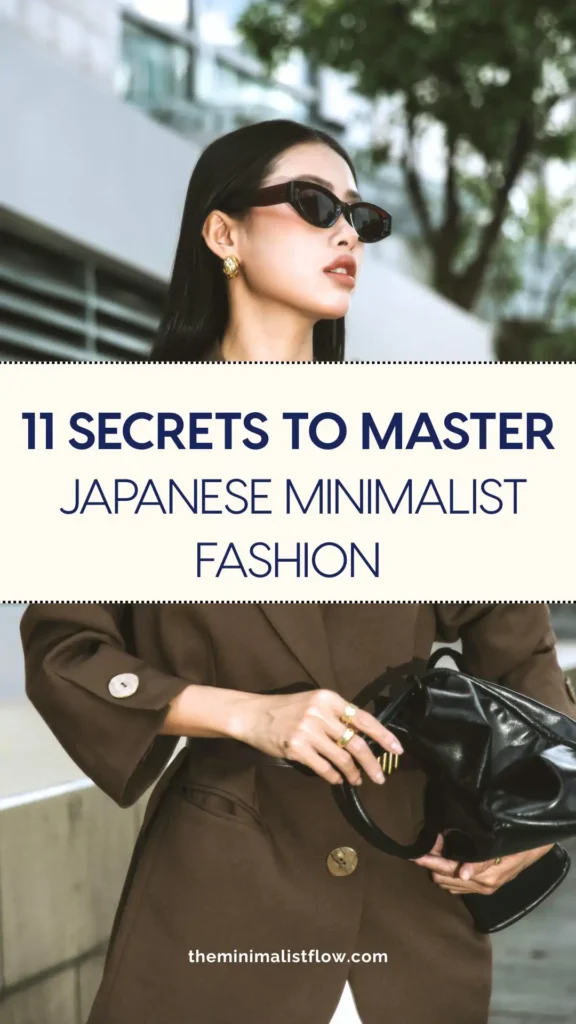
11 Secrets to Master Japanese Minimalist Fashion
We’ve been told our whole lives that clothes should make us look taller, thinner, or more curvy. Believe it or not, Japanese minimalism completely rejects this idea.
In Japanese street style, the goal isn’t to show off the body’s silhouette, but to create a new one using the garment itself. The space between your skin and the fabric is where the magic happens.
When you stop trying to fit into clothes and start letting clothes create a shape around you, you find a level of confidence that tight-fitting trends can never give you. It’s about freedom of movement and a quiet sense of power.
1. Prioritize Natural, High-Quality Fabrics Over Everything
The foundation of any minimalist outfit is the material. Cotton, linen, wool. Nothing clever.
In Japan there is a deep, almost spiritual respect for these fibres, because they breathe and they age well instead of falling apart.
Mine is a men’s linen shirt from a department store, bought maybe five years ago. Deliberately oversized, which is how I like it. It works with jeans, with a smarter trouser, with a skirt, and it comes with me on every holiday. Five years in, it is still the thing I reach for most.
Instead of five polyester shirts that leave you sweaty by noon, save that money for one good linen piece.
Natural fibres have weight. They drape instead of clinging, they crease in a way that looks lived-in rather than sloppy, and they get better with washing instead of worse. Synthetic fabric manages the opposite of all three.
You feel the difference by the end of the first day.
2. Embrace the Oversized Silhouette with Intention
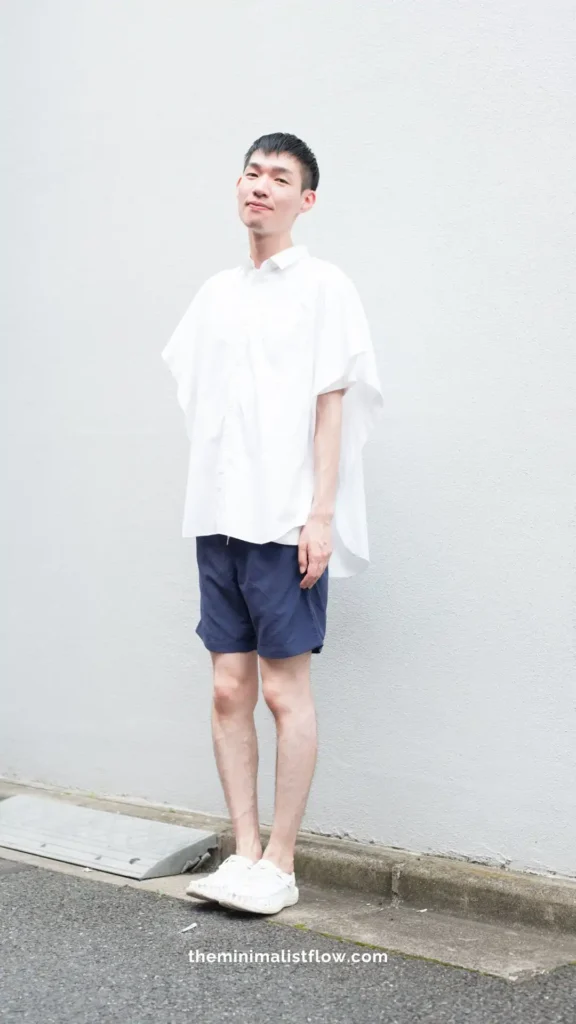
Japanese fashion is famous for its boxy and oversized cuts. A lot of women worry this will make them look lost in their clothes, but it’s actually the opposite.
Try pairing an oversized button-down with wide-leg culottes. The key is in the structure – look for fabrics that hold their shape rather than just sagging.
As it turns out, this extra volume creates a sophisticated, artistic look. It says you aren’t trying to perform for anyone; you are simply dressed in a way that feels intentional and free.
3. Build a Palette of Muted, Earthy Neutrals
Sand, charcoal, navy, olive, clean white.
The practical argument for a narrow palette is boring but real: everything goes with everything. You can get dressed in bad light, half awake, and still walk out looking like you meant it. On a school morning that is not a small thing.
I can’t back this up with a study, and I’m not going to pretend I can. But I’ve noticed it in myself. On the mornings I reach for sand and charcoal, I leave the house calmer than on the mornings I stand in front of the closet trying to make a bright print work. Whether that’s the colour doing something, or just the fact that the decision took ten seconds instead of ten minutes, I honestly don’t know.
4. Understand the Power of “Ma” (The Space Between)
In Japanese art, “Ma“ refers to the beauty and importance of empty space. In your closet, this means not feeling the need to fill every gap with a flashy belt, a loud necklace, or a busy pattern.
Let a single, well-made coat be the star of the show. Sometimes, the most stylish thing you can wear is a simple outfit with absolutely zero distractions.
This creates a sense of quiet luxury that people notice immediately.
It’s about being confident enough to let the simplicity speak for itself without needing to scream for attention.
5. The One Shirt Worth Spending Money On
If you buy one thing from this list, make it a good white shirt.
Not an office blouse. Look for something with a detail that makes it its own thing – a mandarin collar, a dropped shoulder, a heavier poplin that crinkles a little instead of hanging flat.
Mine is dressier than that – a white blouse I keep for the theatre and for concerts. But it does not sit in the wardrobe waiting for occasions. Some of the time it ends up with loose jeans on an ordinary Tuesday, and honestly that is when I like it best.
Tucked into a midi skirt it reads as dinner. Open over a tank top it reads as Saturday. That’s the whole argument.
6. Functional Footwear is a Non-Negotiable
In Tokyo people walk everywhere – or so I’m told by everyone who has been, and it matches every photograph I have ever saved. So the shoes have to actually work.
Leather loafers. Clean white sneakers. Tabi boots if you’re braver than I am.
For me it is a pair of plain white Adidas. Nothing special about them, and that is exactly the point: my feet do not hurt in them. I walked across New York in those shoes in the autumn of 2025, day after day, and never once thought about my feet.
Here’s the test I use. If I’d think twice about walking home instead of taking the tram, the shoes are wrong.
Minimalism is as much about how you feel as how you look. If your feet hurt, you are not living slowly. You are just suffering for a look.
7. Master the Poetry of Layering
Layering in Japan is like writing a poem. It’s not just about staying warm; it’s about textures and lengths peeking out from under each other in unexpected ways.
Try wearing a thin turtleneck under a sleeveless shift dress, or a long, structured vest over a simple white tee. It adds depth and interest to your outfit without needing bright colors to do the heavy lifting.
This is the secret to making a very simple wardrobe look incredibly expensive. It’s all about the layers of your personality showing through your clothing.
8. Opt for Unstructured, Soft Tailoring
Traditional Western tailoring can feel very stiff and corporate, like you’re wearing a suit of armor. Japanese tailoring feels soft, lived-in, and comfortable.
Look for blazers without stiff shoulder pads and trousers with elasticated back waists. You want to look like a professional, but you also want to feel like you could take a nap if you needed to.
This soft approach to dressing makes you seem more approachable and grounded. It’s a total vibe shift from the high-stress, high-pressure world of “power dressing.”
9. Pay Close Attention to the Hemline
The length of your clothes can change your entire energy. Japanese style often favors midi or maxi lengths that graze the ankles or the shins.
This creates a long, elegant line that feels very sophisticated. It also means you don’t have to worry about how you’re sitting or moving—everything is covered and comfortable.
Check out the resources at The Fashion Revolution to see why choosing timeless lengths is better for the planet than following “micro-mini” trends.
10. Minimalist Beauty is the Final Touch
Your hair and makeup are the final accessories to your Japanese minimalist outfits. The goal here is healthy and effortless, not “contoured and heavy.”
Think glowing skin, a simple lip tint, and hair that looks like you just ran your fingers through it. The goal is to look like yourself, just a slightly more rested version.
When your face is a clean slate, your outfit really gets to shine. Plus, it saves you twenty minutes in the morning—which matters more on a rushed morning than it sounds.
11. Shop with the “10-Year Rule” in Mind
Before you buy anything, ask whether you’ll still want to wear it in ten years. If the answer isn’t a clear yes, leave it on the rack.
I know how that sounds. Ten years is a long time, and nobody can honestly answer that question standing in a shop with the thing already in their hands.
But it does one useful thing: it slows the moment down. Almost everything I have regretted buying, I bought in under two minutes.
I bought a few light summer dresses on holiday once. Bright, colourful, exactly the kind of thing I never wear. They have been hanging in my wardrobe unworn ever since. I still have no idea what I was thinking – except that I was on holiday, the shop was right there, and I did not stop for even a minute.
Japanese fashion values the life of a garment: building a relationship with your clothes and mending them when they break, rather than tossing them.
This is the part of conscious living that actually matters.
Save this pin for later!
Quick Style Quiz
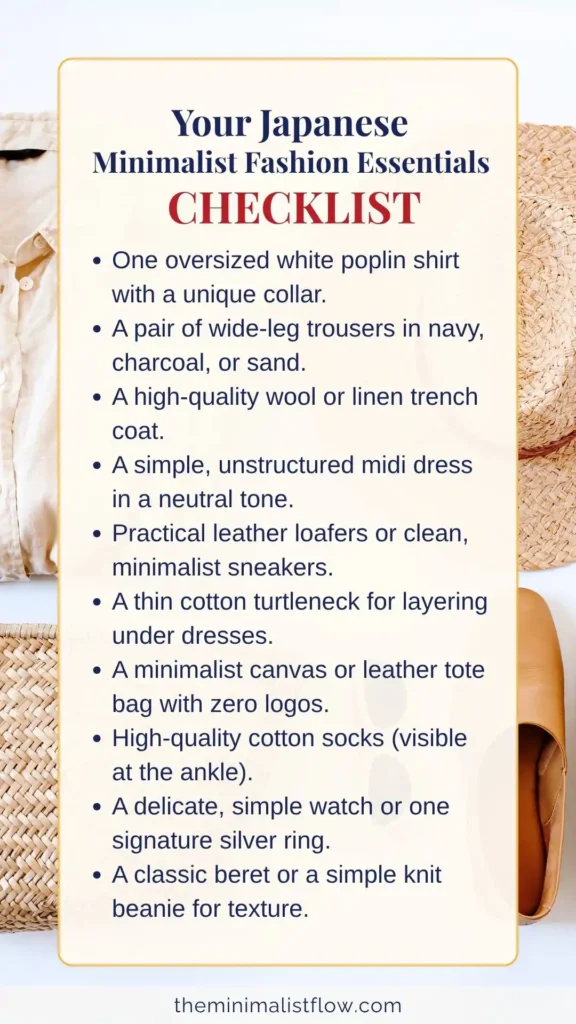
Your Japanese Minimalist Fashion Essentials Checklist
- One oversized white poplin shirt with a unique collar.
- A pair of wide-leg trousers in navy, charcoal, or sand.
- A high-quality wool or linen trench coat.
- A simple, unstructured midi dress in a neutral tone.
- Practical leather loafers or clean, minimalist sneakers.
- A thin cotton turtleneck for layering under dresses.
- A minimalist canvas or leather tote bag with zero logos.
- High-quality cotton socks (visible at the ankle).
- A delicate, simple watch or one signature silver ring.
- A classic beret or a simple knit beanie for texture.
Save this checklist for later!
Try these tips too
- 3-Minute selection: Go to your closet right now and remove three items that make you feel “cluttered” or unhappy.
- Check the texture : Feel the fabrics of your favorite shirts. Are they natural cotton or itchy polyester?
- Try something new: Try on an oversized shirt with your wide-leg pants and see how the extra volume changes your mood.
FAQ
Is Japanese fashion only for tall people?
Absolutely not! The whole point of the architectural silhouette is that it works on every body. It’s about how the fabric drapes, not the size on the label.
Won’t I look messy in oversized clothes?
The secret is balance. If your top is very oversized, make sure your shoes are structured. If your pants are wide, choose a shirt with a crisp, sharp collar.
Where can I find these pieces on a budget?
You don’t need designer labels. Look for 100% cotton or linen at thrift stores or shops like Uniqlo and MUJI. Focus on the fabric tag, not the brand name.
Can I wear any patterns at all?
Usually, Japanese minimalism sticks to solids, but a very subtle pinstripe or a tiny polka dot can work if the colors are muted and earthy.
What if I love bright colors?
You can totally add a pop of color! A bright red bag or a yellow scarf with an all-grey outfit is a very Tokyo street style move.
Is it okay to mix different shades of white?
Yes! Mixing cream, ivory, and stark white actually makes your outfit look more expensive and textured. It’s a very sophisticated look.
How do I take care of these natural fabrics?
Invest in a good steamer and a wool comb. Taking care of your clothes is part of the minimalist philosophy and makes them last forever.
What if I’m just too tired to think about “silhouettes”?
On those days, just grab a matching set. A coordinated top and bottom in a neutral color is the cheat code to looking like you have your life together.
Recommended Reading:
- 11 White Summer Dresses and the Only Accessories You Need
- 12 Cargo Pants Outfit Ideas That Actually Fit a Simple Capsule Wardrobe
- 12 Ways to Style a Brown Leather Jacket With a Minimalist Wardrobe
- 14 White Sweater Outfit Ideas for a Simple Fall Capsule Wardrobe
- 15 Stunning Summer Casual Outfits For Women That Feel As Cool As They Look
Japanese minimalist fashion is a gift you give to yourself.
It’s an invitation to slow down, breathe, and appreciate the simple beauty of a well-made garment.
You don’t need a plane ticket to Tokyo to start living with more intention and style. You just need to choose pieces that make you feel like the best, most grounded version of yourself.
One question for you: How would your life change if your clothes made you feel peaceful instead of stressed?






9 Comments