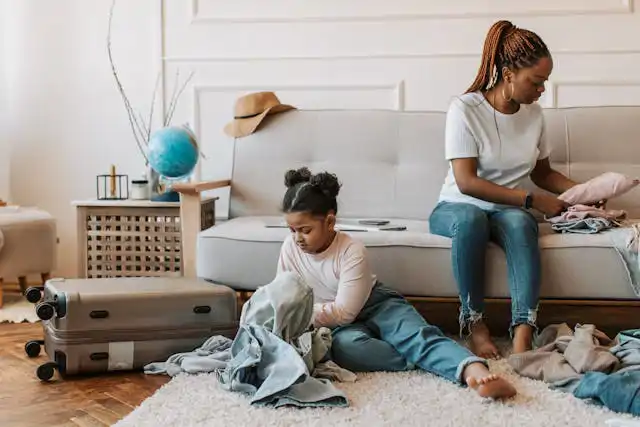
How to Declutter Your Home: 12 Creative Decluttering Tips with Kids
You walk into the living room and immediately feel a sharp, familiar pain in your heel. You have just stepped on a stray plastic dinosaur, and as you hop on one foot, you realize the entire floor is covered in a sea of colorful chaos. From half-finished drawings to toy cars that haven’t moved in months, the clutter feels like it is slowly winning the battle for your sanity.
We all want that Pinterest-perfect home, but the reality of living with children is often much messier. Many parents struggle to maintain a tidy space because children naturally view every scrap of paper as a treasure.
Using effective decluttering tips with kids is about more than just throwing things away; it is about creating a shared family rhythm where everyone participates in keeping the home peaceful.
By turning organization into a game and setting clear boundaries, we can transform a cluttered house into a calm sanctuary for everyone.
Quick Answer: How Do You Successfully Declutter with Kids?
The secret to successful decluttering with kids is involvement and consistency. Instead of purging their rooms in secret, which can lead to distrust, we involve them in the process through age-appropriate games and clear “keep vs. donate” categories.
Focus on the benefits of a tidy space – like more room to play and easier access to their favorite toys – rather than just the act of getting rid of things. Start small, keep the energy high, and use systems that make sense to a child’s brain.
In This Guide
- How to shift from being a “clutter cop” to a clutter coach.
- What you actually need to start a kid-friendly purge.
- 12 creative and fun ways to involve your kids in decluttering.
- A saveable “Quick Clean” routine for busy afternoons.
- Answers to the most common questions about sentimental items.
How It Works: The Clutter Coach Method
Think of yourself not as the person who takes toys away, but as a coach helping your kids manage their “team” of belongings. When a team gets too big, nobody gets enough playtime, right?
We start by explaining that every item in the house needs a home. If an item doesn’t have a place to live, it is just visiting, and eventually, it needs to go back to the store or to another child who needs it more.
This simple shift in language helps kids understand that physical space is limited and valuable.
My Personal Battle with the “Tiny Treasure” Collectors
Believe it or not, my own children are world-class collectors. If it exists on the floor, they believe it is a sacred relic.
My youngest will fight to the death over a piece of dried-up playdough that has the texture of a rock, and my teenager still has posters from three years ago that are peeling off the walls.
At one point, the toy cars and old magazines in the living room were literally calf-deep. I realized that if I didn’t find a way to involve both a preschooler and a teenager, I was going to be swallowed whole by plastic and paper.
I had to stop being the bad guy who threw things out at night and start making them part of the solution.
It wasn’t easy, but these decluttering tips with kids actually turned our home around.
12 Creative Decluttering Tips with Kids
1. The Toy Hospital
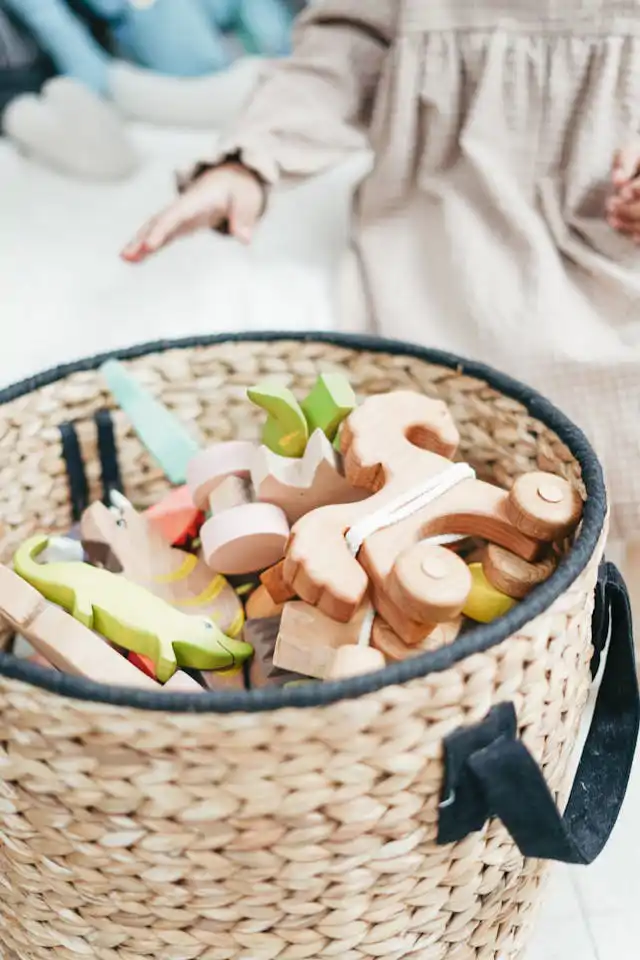
Sometimes a child won’t let go of a broken toy because they feel bad for it. We created a toy hospital box for anything that needs a repair.
- The Routine: If a toy stays in the hospital for more than a month without being fixed, it means we don’t really miss it. We then decide together to recycle it or let it go.
- Lifestyle Detail: A simple cardboard box decorated with a red cross makes this feel like a caring mission rather than a chore.
2. The One-In, One-Out Rule
This is a classic minimalist habit that works wonders for children who love new things. For every new birthday gift or sticker book that comes in, an old one must find a new home.
- The Routine: Before a birthday or Christmas, we do a Pre-Gift Purge to make space for the new arrivals.
- Lifestyle Detail: Imagine your child carefully choosing an old puzzle to give to a younger cousin to make room for a new LEGO set.
3. The Flash Five-Minute Race
Kids love a challenge, especially if there is a timer involved. We use a loud, fun song as our signal for a five-minute speed declutter.
- The Routine: Everyone picks a zone and tries to clear as many non-essential items as possible before the song ends.
- Lifestyle Detail: The sound of upbeat music filling the kitchen while the kids laugh and race to beat the clock.
4. Categorize with The Three Baskets
Avoid the yes/no trap, which feels too final for kids. Instead, use three baskets: keep, donate, and thinking.
- The Routine: The „thinking” basket is the magic key. If they aren’t sure, it goes in there for a week. If they don’t ask for it, it is safe to donate.
- Lifestyle Detail: Seeing three clear bins lined up in the hallway, making the big job feel like a simple sorting game.
5. The Photography Hack for Artwork
As parents, we feel the “sentimental load” of every drawing. But we cannot keep 5,000 papers. According to The Mayo Clinic, physical clutter can actually increase stress levels in families.
- The Routine: We take a high-quality photo of the artwork and create a digital photo book. The physical paper can then be recycled after its “gallery time” on the fridge is over.
- Lifestyle Detail: Scrolling through a beautiful digital album together instead of digging through a dusty box in the attic.
6. Set Parking Spot Limits
Boundaries are a child’s best friend. We use physical limits to manage clutter, like one specific shelf for books or one bin for stuffed animals.
- The Routine: If the parking spot is full, the cars (or toys) have to wait outside until someone else leaves. This teaches them to prioritize their favorites.
- Lifestyle Detail: A tidy, white-painted shelf where every book has room to breathe instead of being jammed in tight.
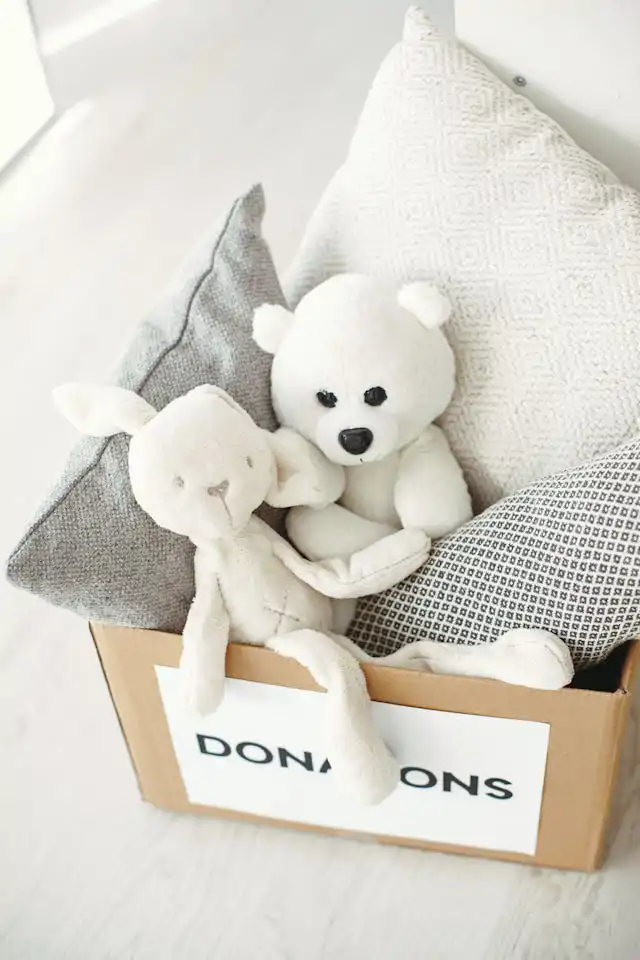
7. The Donation Joy Narrative
Teach kids about the joy of giving. We talk about the “next child” who will love their old toys as much as they did.
- The Routine: Let the kids help you drop off the bags at a local shelter or charity shop so they see the process through to the end.
- Lifestyle Detail: The proud look on a toddler’s face when they realize their old tricycle is going to make someone else happy.
8. Use Clear Bins Only
Out of sight, out of mind is a recipe for clutter. When kids can’t see what they have, they dump everything out to find one specific thing.
- The Routine: Switch all toy storage to clear, labeled bins. Use pictures on the labels for kids who can’t read yet.
- Lifestyle Detail: The calm of looking at a playroom where you can actually see the floor because every toy is visible in its home.
9. Declutter the “Grown-Up” Way
Kids are little mirrors. If they see us clinging to old clothes or kitchen gadgets we never use, they will do the same.
- The Routine: Let them watch you declutter your own closet. Explain your process out loud: “I haven’t worn this in a year, so I’m going to let it go.”
- Lifestyle Detail: Working side-by-side in the master bedroom, modeling the minimalist life we want them to lead.
10. Toy Rotation System
Sometimes the problem isn’t too many toys, but too many toys out at once. This leads to overstimulation and mess.
- The Routine: Keep 50% of the toys in a high closet and rotate them every month. It feels like “new toy day” every time you swap them.
- Lifestyle Detail: The excitement in their eyes when you bring down the hidden box of puzzles they haven’t seen in weeks.
11. Handling the Sentimental Clothes
It is hard to get rid of that first baby onesie or the dress they wore to a wedding. But your teenager doesn’t need a closet full of toddler clothes.
- The Routine: Pick the top three most sentimental items per child and keep them in a legacy box. The rest can go to friends or donation centers.
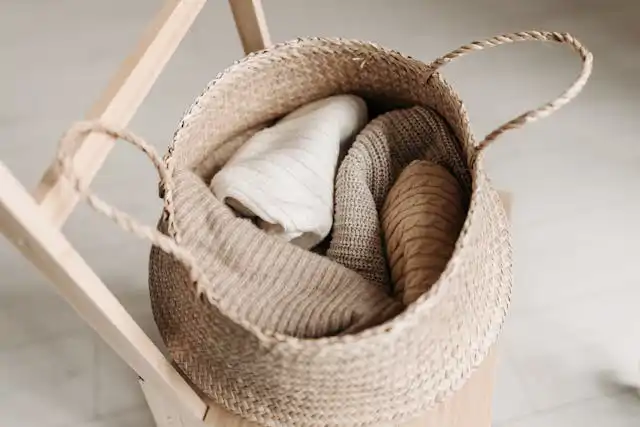
- Lifestyle Detail: Folding a tiny, soft sweater into a beautiful wooden box, honoring the memory without the clutter.
12. Weekly Flat Surface Check
Flat surfaces like dining tables and kitchen islands are clutter magnets. We have a family rule: no “homeless” items on flat surfaces before bed.
- The Routine: Spend three minutes as a family every night clearing the tables.
- Lifestyle Detail: Waking up to a clean, empty kitchen island that catches the morning light.
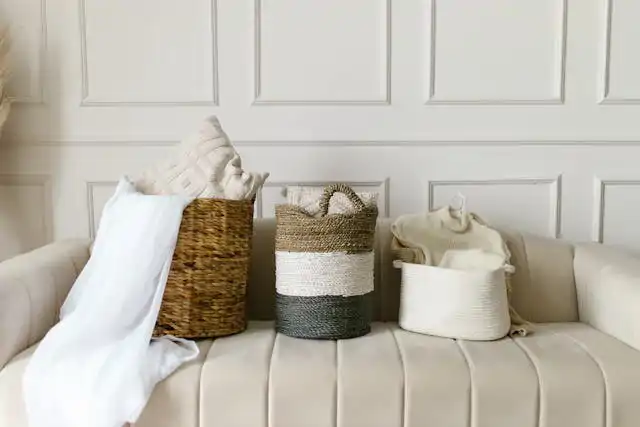
The 10-Minute Family Reset Checklist
Many readers like to save this kind of list for later. Pin this routine so you can come back to it whenever the mess starts to feel overwhelming.
- The Floor Sweep: Gather all stray toys into a central “sorting station.”
- Paper Patrol: Sort the mail and school papers into “Action” or “Recycle.”
- The Dish Dash: Clear all cups and plates from the living areas.
- Surface Wipe: Use a damp cloth to quickly wipe down the main tables.
- The Trash Trek: Take one quick lap with a trash bag for obvious garbage.
- Shoe Shuffle: Line up all shoes in the entryway parking spots.
- The “One Item” Purge: Everyone finds one thing they are ready to let go of.
Micro Action
You don’t need to spend all weekend cleaning. Try these tiny tasks right now to start immediately:
- The Junk Drawer Dive: Spend exactly 3 minutes clearing out one junk drawer.
- The Bag Purge: Empty your purse or diaper bag of all old receipts and wrappers.
- The Toy Triage: Pick up 5 toys that are obviously broken and put them in the bin.
Simple ways to start today
Put a donation bag in the bottom of your closet today.
Take a photo of one bulky piece of artwork and recycle the original.
Set a 5-minute timer and race the kids to clear the coffee table.
What Readers Often Wonder
What if my child cries when I try to donate something? It is okay to pause. If they are truly upset, put the item in the “thinking” basket. Usually, after a few days, the emotional attachment fades. We want this to be a positive experience, not a traumatic one.
How do I manage the constant influx of school papers? Set a one-week display rule. New art goes on the fridge, and at the end of the week, the child chooses their favorite to save, and the rest are recycled.
Is it okay to declutter while they are at school? For very young toddlers, this is sometimes necessary. But for older kids, it is better to do it together. It builds the muscle of decision-making that they will need as adults.
How do I deal with gifts from grandparents? This is a common struggle. Try to suggest experience gifts like zoo passes or movie tickets. If a physical toy arrives, explain to the grandparents that you have a “One-In, One-Out” policy to keep the home peaceful.
My teenager’s room is a disaster. What do I do? Focus on the public areas first. For their room, offer to help them re-style it rather than “clean” it. Teens respond better to the idea of a room refresh than a lecture on clutter.
How often should we do a major declutter? A big seasonal purge twice a year (Spring and before the Winter holidays) is usually enough if you keep up with the small weekly resets.
What do I do with old playdough and broken crayons? These are disposable items. If they are no longer functional, they are trash. Explain to the kids that tools that don’t work take up space where working tools could be.
Can decluttering help with my child’s anxiety? Yes! A study mentioned by Psychology Today shows that clutter can overstimulate the brain and make it harder to relax. A tidy room often leads to better sleep and less stress for kids.
Recommended Reading
- Fall Decorations 2026: 24 Pieces You’ll Still Love Ten Autumns From Now
- Email Overload: What Happened When I Checked Email Twice a Day
- Slow October: How to Actually Enjoy the Season
- 14 Simple Halloween Decor Ideas You Can Reuse for Years – Indoor and Outdoor
Closing Thought
Decluttering with kids is not about achieving a perfect home; it is about teaching our children how to live intentionally. It is about choosing people over possessions and peace over chaos. When we clear the physical clutter, we make room for the memories that actually matter.
What is one “tiny treasure” you can help your child let go of today?



2 Comments