
The 30-Day Declutter Challenge for Busy Moms: One Small Task Every Day
If you have been looking for a declutter challenge that fits into a real, busy, slightly chaotic mom life, the secret is making each task so small that skipping it actually feels harder than doing it. In this post, we are sharing a full 30-day declutter challenge with one simple task per day, so you can clear your home gradually without losing an entire Saturday or your sanity.
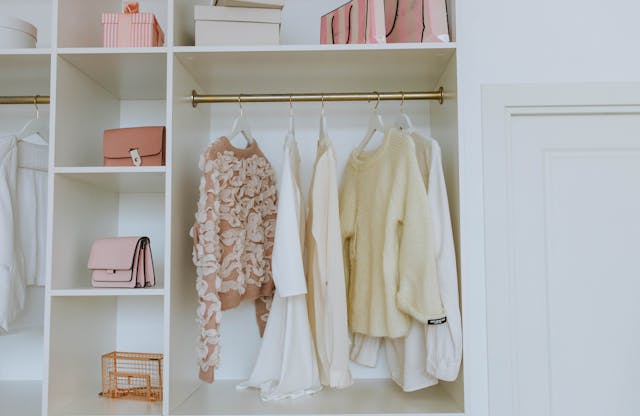
Start in 60 Seconds: Your First Declutter Task Right Now
Go to your kitchen, open the drawer you avoid the most, and take out three things that do not belong there.
Not the whole drawer, not a deep clean, just three things.
Put them away, throw them away, or drop them in a donate box. That is it. You just started your declutter challenge, and it took less than a minute.
What You Will Find in This Declutter Challenge Guide
- Why 30-day declutter challenges actually work when weekend purges do not
- The European mindset around home and clutter that changes everything
- A full 30-day task list, one small action per day
- Tips for doing the challenge with kids in the house
- A saveable checklist to keep on your fridge or phone
- Honest answers to the questions that make most people quit

The Reason Your Last Declutter Attempt Did Not Stick
Most decluttering advice tells you to set aside a full day, pull everything out, sort it into piles, and deal with it all at once. And honestly? That sounds exhausting before you even start.
As it turns out, that method fails most people not because they lack motivation, but because it requires a level of uninterrupted time and energy that busy moms simply do not have on a regular basis.
Research from the Princeton Neuroscience Institute shows that physical clutter competes for our attention and increases cortisol levels, the same stress hormone that spikes when we are overwhelmed. So the more cluttered the space, the harder it is to find the energy to deal with it. It is a loop.
The fix is not a bigger effort. It is a smaller one, done consistently. Ten minutes a day, thirty days in a row, creates more lasting change than one exhausting Saturday every few months.
Think of it like this: decluttering your home in one go is like trying to lose ten pounds in a weekend. It does not work, and it leaves you feeling worse than when you started. Slow, steady, and daily is always the approach that actually changes things.

The European Approach to Clutter That Changed How We Think About Home
There is something I notice every time we visit a home in southern Europe, whether it is a small apartment in Croatia, a simple house near the coast of Greece, or a family home in Italy.
The spaces are not big. They are not packed with storage solutions or carefully curated shelf displays. But they feel calm, lived-in, and genuinely comfortable.
The difference is not aesthetic. It is philosophical.
In many European households (like in Hungary, where me and my family live), particularly in Mediterranean countries, the idea of owning only what you actually use is not a trend. It is simply how people have always lived.
There is no garage full of things you might need someday. No storage unit down the road. If it does not fit, it does not come in. And when something new comes in, something old goes out.
We have been living with that mindset for a while now, and the 30-day declutter challenge is the closest thing to a practical system we have found for bringing that same quiet simplicity into a busy family home.
It does not require a complete lifestyle overhaul. It just requires a little bit, every single day.
Why This Decluttering Challenge Works for Busy, Exhausted Moms
Let’s be honest about what a typical Tuesday looks like. School drop-off, work or home responsibilities, someone needs a snack, someone cannot find their shoes, dinner needs to happen, and somewhere in between all of that you were supposed to declutter the entire playroom.
That is why most decluttering motivation disappears by week two of any challenge. The tasks get too big, life gets in the way, and suddenly you feel behind and guilty, which makes starting again even harder.
This challenge is built around the opposite principle: every single task is something you can do in five to fifteen minutes, often while the kids are nearby, the laundry is running, or dinner is in the oven.
You do not need a free day. You do not need the kids to be asleep. You do not need to be in the mood. You just need five minutes and one clear task.
That is the whole design. Small enough that you actually do it. Consistent enough that it adds up to something real.
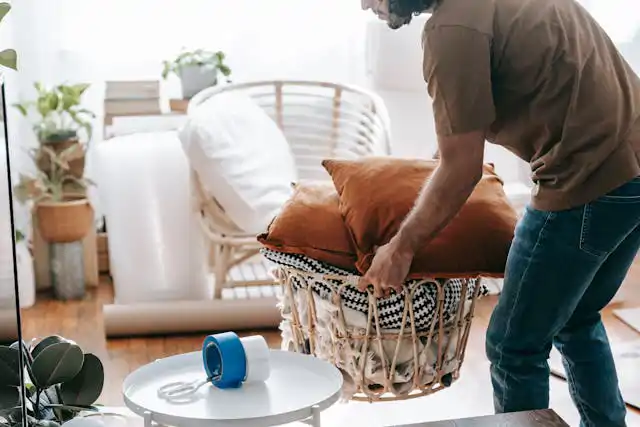
The 30-Day Declutter Challenge: One Task Per Day
Pin this list so you can come back to it every morning. Many readers print it out and tape it to the inside of a kitchen cabinet as a daily reminder.
Week 1: The Kitchen and Entry Areas
- Day 1 – The junk drawer. Remove three things that do not belong. Just three.
- Day 2 – Expired food. Check the pantry for anything past its date and clear it out.
- Day 3 – Duplicate kitchen tools. How many spatulas do you actually need? Keep your favorite two and donate the rest.
- Day 4 – Mugs and cups. Most families have twice as many as they use. Keep what fits comfortably in your cabinet.
- Day 5 – The entry area. Shoes, bags, coats. Remove anything that has not been touched in two weeks.
- Day 6 – Reusable bags. Keep ten. Donate the rest. Yes, really.
- Day 7 – One kitchen shelf. Pick one shelf only and remove anything that does not belong on it.
Week 2: Bedrooms and Closets
- Day 8 – Your own dresser top. Clear everything off. Put back only what belongs.
- Day 9 – Clothes you have not worn this season. Five items into the donate box. That is all.
- Day 10 – Mismatched socks. Spend ten minutes matching and tossing anything without a partner.
- Day 11 – Under the bed. Pull it all out, keep only what is truly stored there intentionally.
- Day 12 – One child’s clothing drawer. Remove anything too small, worn out, or never worn.
- Day 13 – Bedside tables. Clear both surfaces and keep only what you actually use at night.
- Day 14 – Towels and bed linens. Keep two sets per person and donate the extras.
Week 3: Living Areas and Kids’ Spaces
- Day 15 – Broken toys. If it has been broken for more than a month and no one has fixed it, it goes.
- Day 16 – Books your kids have outgrown. A local school, library, or shelter will always take children’s books.
- Day 17 – Old magazines and papers. Recycle anything older than one month that you have not looked at.
- Day 18 – Decorative items that collect dust. If you do not love it or it does not make you smile, it does not need to stay.
- Day 19 – Board games with missing pieces. Check the boxes. Incomplete games are just taking up shelf space.
- Day 20 – The toy overflow area. The floor, the corner, the pile. Spend fifteen minutes sorting and removing five items.
- Day 21 – DVDs, cables, or old electronics. If you have not used it in a year, it is time.
Week 4: Bathrooms, Papers, and the Finish Line
- Day 22 – Expired medications and supplements. Check every cabinet and dispose of anything out of date safely.
- Day 23 – Old makeup and skincare. Anything you have not touched in six months, anything with a changed texture or smell.
- Day 24 – Cleaning products under the sink. Remove duplicates and anything you never actually use.
- Day 25 – Old paperwork. Shred or recycle anything that does not need to be kept legally or financially.
- Day 26 – Your phone and digital space. Delete thirty apps or photos you do not need. Digital clutter counts too.
- Day 27 – The garage or storage area. One box or one corner only. Do not try to do it all.
- Day 28 – Kids’ artwork and school papers. Photograph the pieces you love, then recycle the rest.
- Day 29 – Your own bag or purse. Empty it completely, wipe it out, and put back only what you actually use.
- Day 30 – Walk through every room. Look for one item in each room that you can donate today. One per room. That is your finish line.
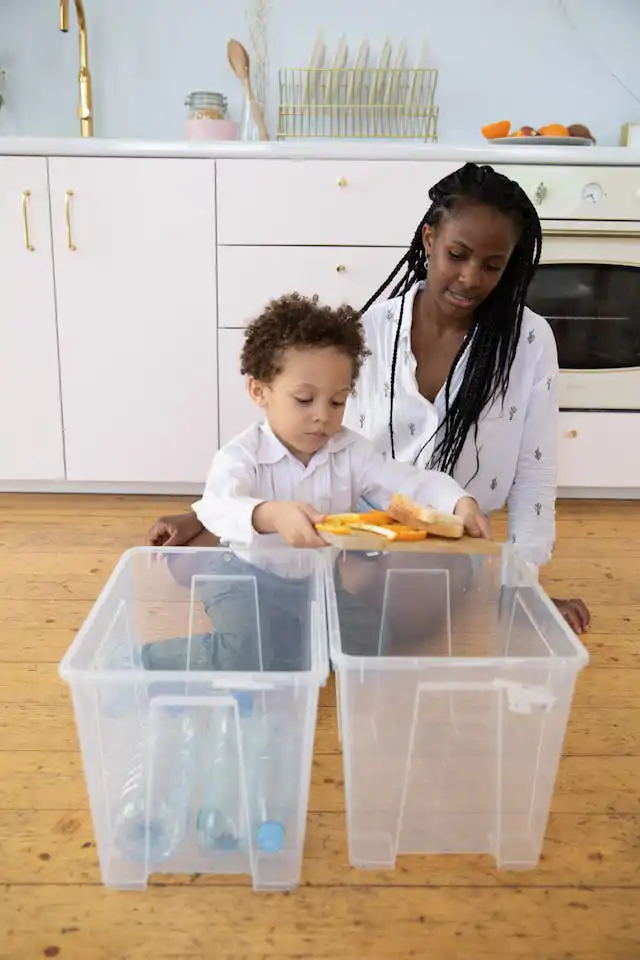
How to Do This Decluttering Challenge with Kids at Home
Some of these tasks are perfect to do alongside your kids, especially the ones involving their rooms and toys.
The key is not to do it secretly.
Children who discover their things missing without being part of the decision often feel their boundaries were crossed, and that creates resistance to future decluttering.
Instead, make it a game. A timer, a fun song, a small reward at the end of the week. Let them choose which five toys go to another child who might love them. Frame it as generosity, not loss.
On the days when the kids are too tired, too loud, or too resistant, do a task from a different part of the house. The bathroom cabinet does not require anyone’s cooperation.
When everyone is melting down and dinner is burning and the dog knocked something over: skip the day. Come back tomorrow. The challenge does not expire.
Related post: How to Declutter Your Home: 12 Creative Decluttering Tips with Kids
Your 30-Day Declutter Challenge Checklist
Print this out or screenshot it and keep it somewhere visible. The fridge, the bathroom mirror, the inside of a kitchen cabinet. Visibility is what makes the habit stick.
- Week 1: Kitchen and entry areas, junk drawer, pantry, tools, mugs, shoes, bags, one shelf
- Week 2: Bedrooms and closets, dresser, seasonal clothes, socks, under the bed, kids’ drawer, bedside tables, linens
- Week 3: Living areas and kids’ spaces, broken toys, books, papers, decor, games, overflow, electronics
- Week 4: Bathrooms and paperwork, medications, makeup, cleaning products, documents, digital clutter, storage, artwork, bag, final walkthrough
- Daily rule: One task, five to fifteen minutes, no exceptions for perfection
- Missed a day? Skip it and move on. Do not go back and double up.
- Finish line: One item donated from every room on day 30
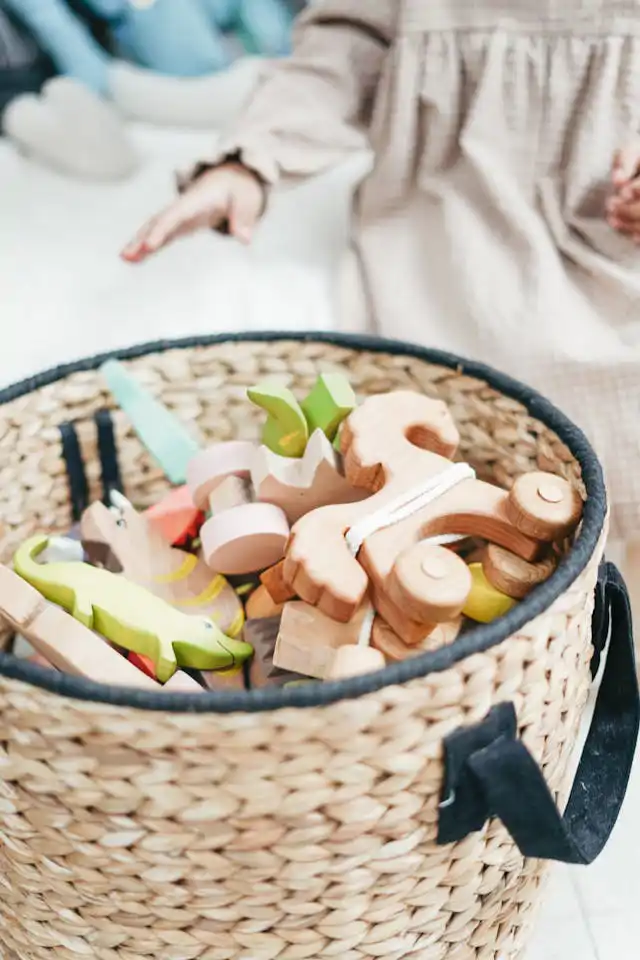
Start Today: Three Tasks You Can Do Right Now
In the next five minutes: Open the kitchen junk drawer and remove three things. That is Day 1 done.
Today: Find an empty cardboard box or bag and place it somewhere visible in your home. This is your donate box for the month.
This week: Tell one person you are doing the challenge. Saying it out loud to someone makes you twice as likely to follow through.
Questions Busy Moms Actually Ask About the Declutter Challenge
1. What if I miss a day?
Skip it and keep going. Do not go back and try to do two tasks in one day, that defeats the whole purpose of keeping things small and manageable. Missing one day does not mean starting over.
2. Do I have to do the days in order?
Not strictly. If Day 12 involves a child’s drawer and your kids are particularly resistant today, swap it for a bathroom task. The order is a guide, not a rule. The only rule is one task per day.
3. My kids resist getting rid of anything. What do I do?
Start with your own things, not theirs. Let them see you doing it. Then involve them in tasks where they have real choice, like picking which five toys to donate. Ownership over the decision makes letting go feel completely different.
4. What if I feel guilty donating something that was a gift?
The gift was the thought behind it, not the object. Keeping something out of obligation does not honor anyone. Donating it to someone who will actually use it is a far better second life for that item.
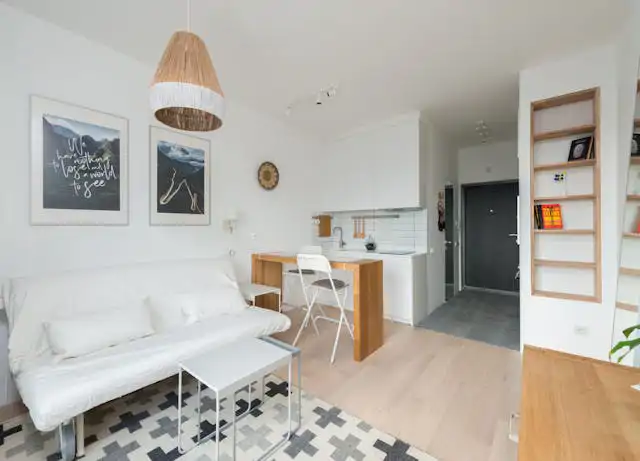
5. Can I do this challenge if I live in a small space?
Small spaces actually benefit the most from this kind of challenge. Every item that leaves a small home has an immediately noticeable impact. You will feel the difference faster than someone working through a large house.
6. What about sentimental items?
Leave those for last, always. Do the easy, practical tasks first. By the time you get to the sentimental things, you will have built up enough momentum and confidence to make those decisions more clearly. Do not start with the baby clothes on day one.
7. How do I stay motivated through the whole month?
Keep the checklist somewhere visible. Take a before photo on day one and compare it at the end of the month. And remember: you are not trying to create a magazine-worthy home. You are trying to create a home that feels easier to live in.
8. Is 30 days enough to make a real difference?
Yes, genuinely. Thirty days of small, consistent action removes more clutter than one big purge because you are building a habit, not just clearing a space. By the end of the month, you will also think differently about what comes into your home.
9. What do I do after the 30 days are done?
Start a donate box and keep it in a visible spot. Whenever you notice something you no longer use, it goes in the box. When the box fills up, you take it out. That is the whole long-term system.
10. What if my partner or family is not on board?
Start with only your own belongings and your own spaces. Do not pressure anyone. In most cases, when they see the results in the areas you control, the idea spreads naturally. Lead quietly and give it time.

Recommended Reading
- Stop Buying Storage Bins You Don’t Need: The Only Organizing Container That Actually Matters
- 12 Creative Decluttering Tips with Kids
- Kickstart Your Week with This Simple Sunday Reset Checklist
There is something that happens around day ten or twelve of this challenge. The tasks have been small enough that you have actually done them, and one morning you walk into a room and it just feels a little different.
That is the feeling we are working toward. Not a flawless home, but a home that does not drain your energy before the day has even started.
You do not need a free weekend, a burst of motivation, or a complete personality change to do this.
You need five minutes and a willingness to let one thing go today.
What is the one corner of your home that, if it were just a little clearer, would make you feel better every single time you walked past it?
You’ll love
-
Fall Decorations 2026: 24 Pieces You’ll Still Love Ten Autumns From Now
Fall decorations 2026 should still look good in 2036, or what’s the point? Here are 24 pieces you can buy once or make yourself, plus the color pairs, the mistakes and the storage habit that keep them out of the landfill.
-
Email Overload: What Happened When I Checked Email Twice a Day
Email overload is not a scheduling problem, it is an opening problem, and I only understood that after I cut down to twice a day. Here is what actually changed at home and at work, the frustrating part nobody mentions, and a 5 week plan to get there without panicking.
-
Slow October: How to Actually Enjoy the Season
A slow october is not a project, it’s a handful of small decisions you make before the month starts. Here are 10 of them, plus the mistakes that quietly ruin an entire autumn.







15 Comments