11 Quiet Habits That Slow Down Time, Backed by Science
Disclosure: This post contains affiliate links. If you make a purchase through these links, I may earn a small commission at no extra cost to you. Thank you for supporting my blog!
Do you ever reach a Sunday night and honestly wonder where the whole week went? You are not lazy and you are not losing your mind, you just want to slow down time before another year quietly slips away. I feel this too, especially now that my son is almost sixteen and my little girl is starting school, and some mornings I catch myself asking how we got here so fast.
The good news is that you do not need more hours in the day, you need more moments that your brain actually bothers to remember.
In this post I am sharing 11 quiet habits that help you slow down time, feel more present, and make your ordinary days feel fuller, without adding one more thing to your already long to-do list.
Some of them are so small you will laugh. One of them completely changed how my mornings feel, and I will get to that.
How we spend our days is, of course, how we spend our lives.
Annie DillardThe Writing Life (1989)
Why Does Time Feel Like It Is Speeding Up?
Here is the strange part. Time is not really moving faster, your brain is just filing less of it away.
When you were a kid, almost everything was new, so your mind recorded it all in high definition. Now most of your days rhyme with the days before them, and your brain shrugs and saves almost nothing.
Researchers call this the memory effect.
As Scientific American explains, we judge how long a stretch of time felt by how many fresh memories we made inside it. A blurred week of the same commute and the same dinners barely leaves a mark. A weekend somewhere new feels huge in hindsight, even though it flew by while you were living it.
There is a physical side to this too.
According to research shared by the University of Michigan, as we age our brains process fewer mental images per second, so the same hour simply registers as less. Professor Cindy Lustig points out that the packed, eventful stretches are the ones that feel long when we look back, while the empty routine ones seem to vanish.
So if you want to slow down time, the trick is not to cram more into your calendar. It is to give your brain something worth noticing.
That is the whole secret, and every habit below is built on it. If you love the nerdy details the way I do, this NBC News piece is a lovely rabbit hole.
If you have ever wondered why your childhood summers felt endless and your last year went by in a blink, here is the quiet math behind it, laid out one decade at a time.
Slow down time — the shrinking year
How big one year feels at each age
By 60, a single year feels roughly one sixth as long as it did at 10, because each year is a smaller slice of the life you have already lived.
Source: proportional theory of time perception, William James, The Principles of Psychology (1890), after Paul Janet (1877).
The One Thing That Actually Slows Down Time
If I had to boil it down to a single word, it would be attention. Time feels slow when you are truly in it, and it races when you are half here and half scrolling. Mindfulness is not a buzzword here, it is just attention that stays put.
Before we get to the list, sit with a few honest questions.
- When did you last eat a meal with no screen in front of you?
- Can you picture what the sky looked like yesterday?
- When did you last do one thing, and only that one thing, from start to finish?
If those made you a little uncomfortable, you are in exactly the right place. None of this is about doing more, it is about being where you already are.
What You Actually Need to Start, Which Is Almost Nothing
Let me save you a shopping trip. You do not need a planner system, a meditation retreat, or a cabin in the woods to slow down time. You need your own attention and a willingness to give it to one thing at a time. That is the entire toolkit.
It helps to see the two ways of living side by side.
- The fast version says yes to everything, keeps the phone glued to one hand, and treats a full calendar as proof of a full life.
- The slow version says a calm no, leaves a few empty squares in the week, and treats a quiet evening as something worth protecting.
One of these leaves you at Sunday night wondering where the week went. The other leaves you with a handful of small moments you can still feel days later.
A couple of gentle tools make it easier, a little notebook and maybe a softer way to wake up, and I will point those out as we go. Everything else is free, and most of it you already own.
11 Quiet Habits That Slow Down Time
1. Chase Tiny Bits of Newness
Your brain wakes right up for anything unfamiliar, so the fastest way to slow down time is to sprinkle small surprises into a normal day.
I do not mean booking a trip to Rome, although I would never say no to that. I mean walking home on the street you never take, ordering the tea you cannot pronounce, sitting on the other side of the table for once.
These little novelties cost nothing, and they leave tiny timestamps in your memory.
A week with three small new things in it feels longer than a week of pure autopilot, even when nothing dramatic happened.
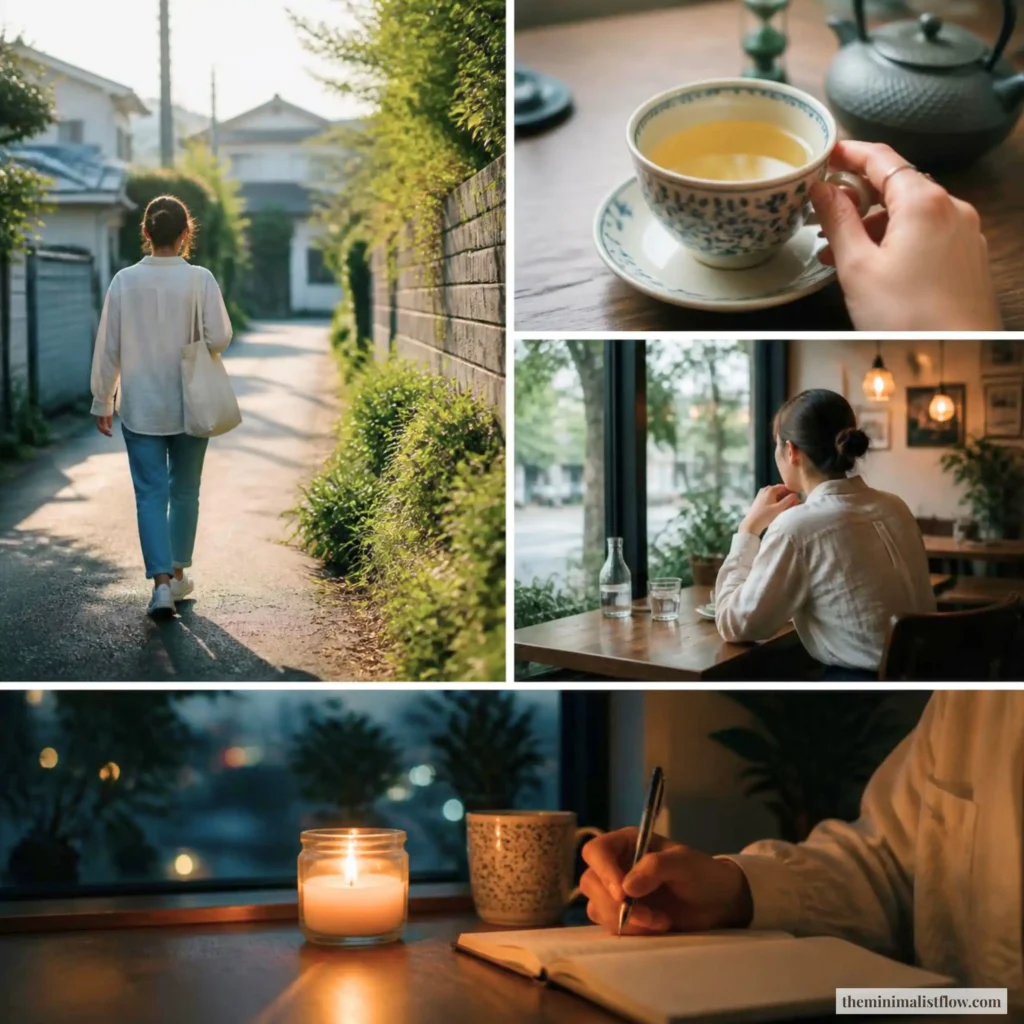
Why it works: novelty is the raw material your memory uses to mark time, so more small firsts means more of your life you can actually recall later. This is one of my favorite minimalist habits tips, because it adds richness without adding a single thing to a shelf.
Try this tonight: pick one thing you do on repeat, do it a little differently, then notice how the evening feels slightly longer.
2. Do One Thing at a Time
We wear multitasking like a badge, but it is quietly stealing your life. When you answer emails while feeding the cat while half listening to a podcast, your brain never fully lands anywhere, so none of it sticks. To slow down time, you have to avoid multitasking and let yourself be gloriously single-minded.
I learned this the slow way as a mom of two. The evenings I actually remember are the ones where I put everything down and just built the block tower, badly, with my daughter on the floor.
Why it works: attention is what stretches a moment, and divided attention is barely attention at all. Single-tasking is not less productive, it is often the only reason you will remember today by Friday.
Do this: choose one task this afternoon, close every other tab, and finish it before you touch anything else.
3. Keep a One-Line Diary
You do not need to journal for an hour to slow down time, you need one honest sentence a day. I keep a little book by my bed, and each night I write the single thing I want to keep from that day. The cat asleep in the July sun. Something surprisingly kind my teenager said before he remembered to be moody again.
Over months, those single lines become a map of a life you might otherwise swear you slept through. I use a One Line a Day five-year memory book, because it stacks five versions of the same date on one page and lets you watch yourself change.

Why it works: writing something down forces your brain to notice it, and noticing is the whole game. This habits idea is so small it feels like cheating, and it is one of the best ways to spend the last two minutes of a day.
Start tonight: write one sentence about today before you fall asleep, no editing, no pressure to be poetic.
4. Guard the First Hour of Your Morning
How you begin your morning sets the speed for the whole day. If the first thing you touch is a glowing rectangle full of other people’s urgency, the day is already running away from you before your feet hit the floor.
A slow, quiet first hour is one of the simplest minimalist habits tips I can offer you.
I stopped using my phone as my alarm and switched to a sunrise alarm clock that wakes me with light instead of a jolt of blue-lit panic. My mornings feel twenty minutes longer, and I did not add a single real minute.

Why it works: a calm start keeps your attention wide and unhurried, which is exactly the state where time stretches out. A frantic start narrows you, and narrow days blur into each other.
Tomorrow: keep your phone off for the first thirty minutes and drink your coffee like it is the only thing happening in the world.
5. Put the Phone in Another Room
Here is a small confession. The reason my weeks used to vanish was mostly sitting right there in my hand. The phone is a kind of time machine, and not the fun kind, it swallows an entire evening and hands you nothing to remember it by.
When I really want to slow down time, I put the phone in another room, face down, on silent. The first ten minutes feel a little itchy, I will be honest. Then something lovely happens, the room gets quieter and somehow bigger, and I can hear my own thoughts again.

Why it works: every glance at your phone is attention leaving the present, and mindfulness is simply attention that stays. If falling asleep without the screen feels impossible, I wrote a gentle guide on how to fall asleep without screens or pressure that might help.
Do this: pick one hour this evening and physically move your phone out of arm’s reach.
6. Step Outside and Actually Look
Nature runs on a slower clock, and standing in it quietly resets yours. I grew up a few hundred meters from the Tisza river, throwing stones into the water and trying to catch fish with the other village kids. I did not know then that those long, slow afternoons were a kind of superpower.
You do not need a forest for this. A balcony, a single tree, the strip of sky on the walk to your car, all of it counts. A few real minutes outside beats an hour of forced relaxation on the couch.

Why it works: outdoor light and living things are full of gentle detail, which pulls your attention out of your busy head and into the moment. Mindfulness comes easily when there is a bird to watch.
Try this: step outside once today with no phone, and quietly name five things you can actually see.
7. Turn a Daily Chore Into a Small Ritual
You already do the same little things every single day, so the least you can do is enjoy them. The morning coffee, the evening tea, watering the plants, these can be rushed through or they can become small ceremonies. I choose ceremony, most days anyway.
When I water my garden in the evening, I am not multitasking, I am just there, hose in hand, watching the light turn gold over the plants I fussed over all spring. It is five minutes, and it feels like a tiny vacation from the speed of everything else.
Why it works: ritual turns an invisible routine into a moment you actually attend to, and attended moments are the ones that slow down time. Same chore, completely different life.
Pick one: choose a single daily task and give it your full, unhurried attention starting tomorrow.
8. Leave White Space in Your Week
A packed calendar does not make a full life, it makes a blur.
This is where minimalism and time quietly meet, because saying no to the extra commitment is how you protect the moments that actually matter to you.
An empty Saturday afternoon is not wasted, it is where memory grows.
I used to believe a good week was a busy week. Now I know the weeks I treasure are the ones with a little room to breathe inside them.
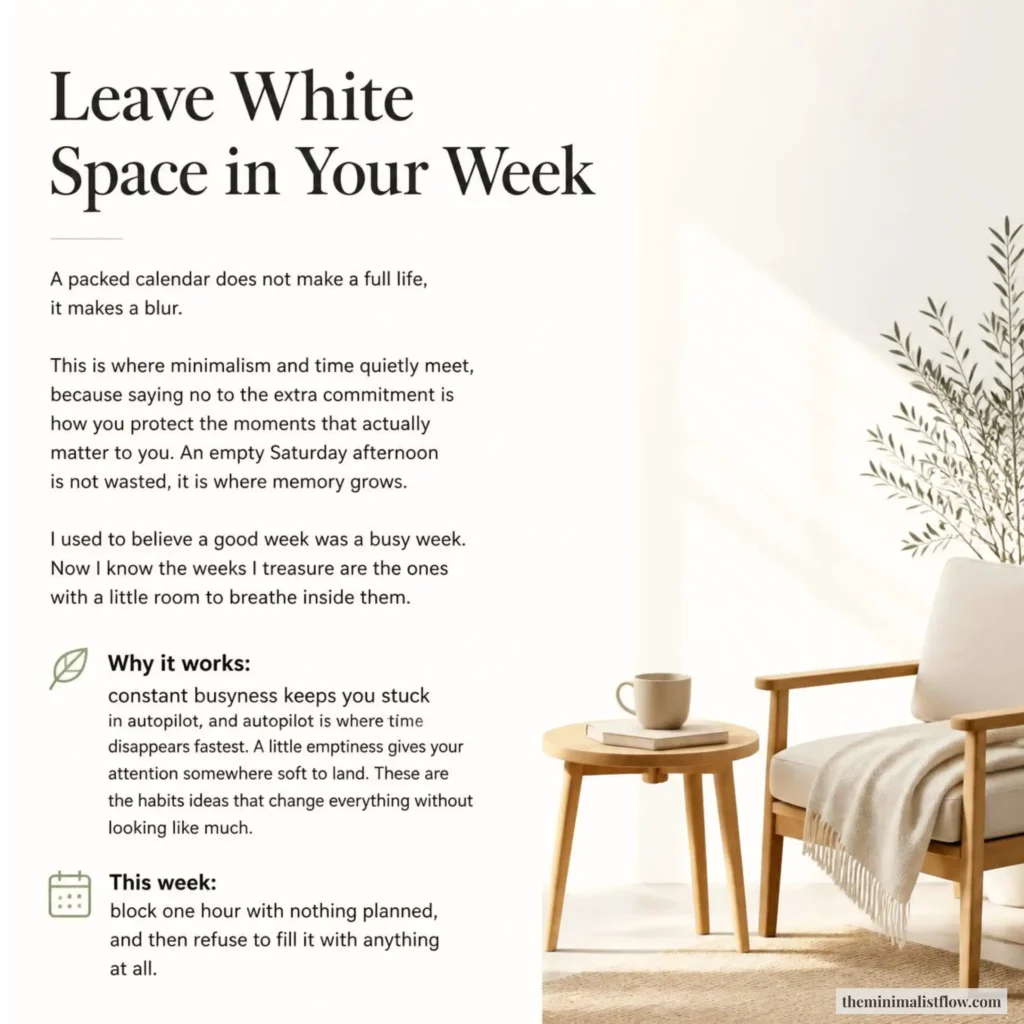
Why it works: constant busyness keeps you stuck in autopilot, and autopilot is where time disappears fastest. A little emptiness gives your attention somewhere soft to land. These are the habits ideas that change everything without looking like much.
This week: block one hour with nothing planned, and then refuse to fill it with anything at all.
9. Take Fewer Photos, See More
We photograph everything and remember almost none of it. When you watch your daughter’s recital through a screen you are holding up, your brain quietly lets the camera do the remembering and checks out of the room. To slow down time, sometimes you have to put the camera down.
I still take photos, I am a sentimental woman and I will not pretend otherwise. But I try to take one, then lower the phone and actually watch. The memory I keep is always warmer than the picture I saved.
Why it works: outsourcing a moment to your camera tells your brain it does not need to encode it, so it politely does not. Being fully present is what makes a moment stay with you. This is the real kind of mindfulness, not the app kind.
Next time: take one photo, then put the phone away and stay in the moment for real.
10. Learn Something Hard on Purpose
Nothing makes time pass as slowly as when you become a beginner again. When I decided, as a grown woman, to learn to play the violin, my mind must have looked something like it does when lightning strikes in the summer. I just had this feeling: this is what I need.
Don’t ask me why—at the time, I just felt that this was what I needed. And that feeling has lasted ever since.
Every shaky, screeching note was a completely new experience, yet I love every minute of it—even when it’s hard and I can’t seem to get the hang of practicing. Or when I just don’t feel like it.
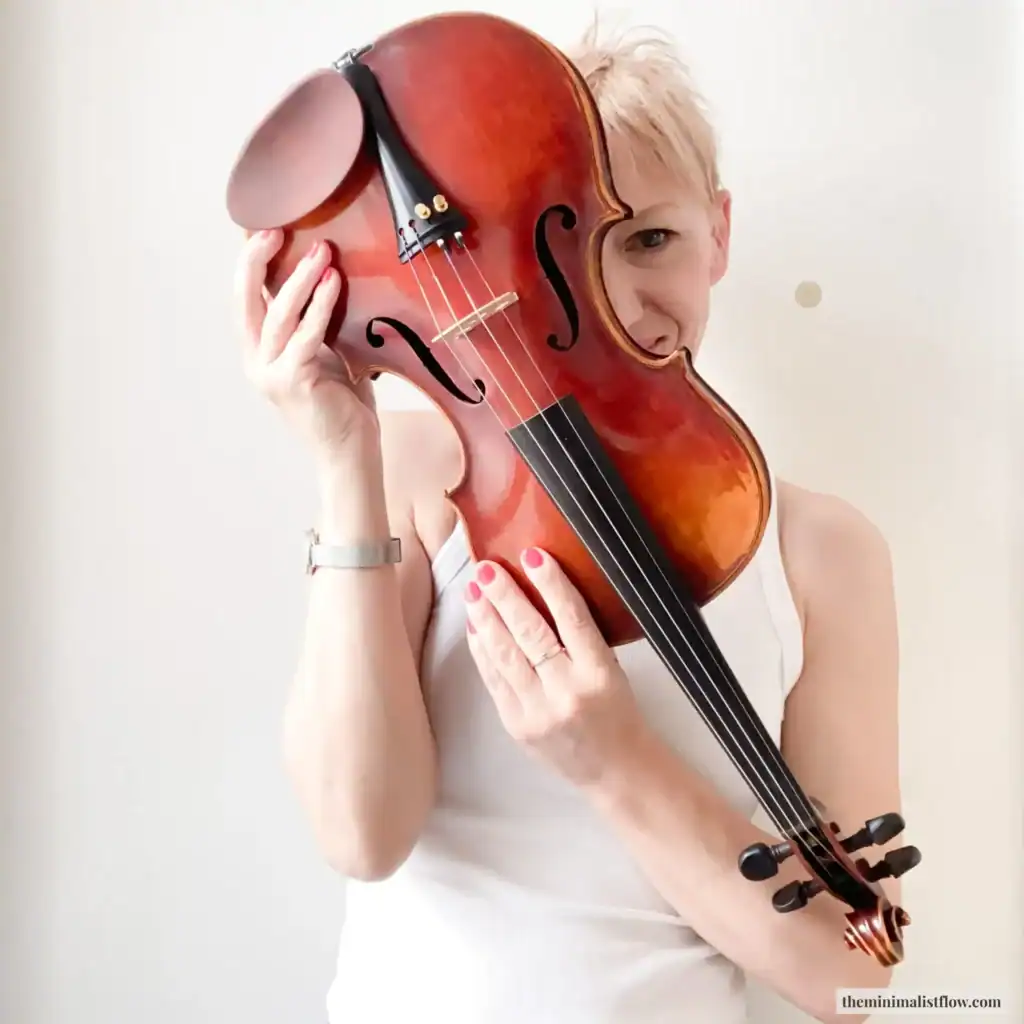
It doesn’t necessarily have to be a musical instrument.
It could be a language, a recipe you keep messing up, a craft project that’s so frustrating it makes you laugh—anything that makes you a little worse before you get better.
Why this works: Learning requires sustained attention and brings a constant stream of new experiences—exactly the combination that makes weeks feel long and meaningful. As Psychology Today notes, learning new skills is one of the most reliable ways to make our lives feel longer from an internal perspective.
Start small: pick something challenging that you’ve always wanted to try, and devote fifteen minutes to it this week with complete dedication.
11. End Your Week With a Quiet Reset
If your weeks smear together, a weekly reset is the seam that keeps them apart. Every Sunday I take twenty quiet minutes to look back, tidy one small corner, and think gently about what I actually want from the days ahead. It is part reflection, part planning, part quiet gratitude.
This little ritual gives each week its own edges, so instead of one long gray stretch you get fifty-two distinct chapters. Journaling helps here, and if you want prompts that go a layer deeper, my shadow work journal prompts are a soft place to begin.
Why it works: marking the end of something tells your brain that a chapter closed, which turns a blur into a story you can remember. It is one of the most underrated minimalist habits tips for feeling like your time is finally yours again.
This Sunday: sit down for twenty minutes and gently review the week that just passed.
It is not that we have a short time to live, but that we waste much of it.
SenecaOn the Shortness of Life
The Village That Taught Me Time Is Not the Enemy
Here is something that might surprise you.
The slowest, richest years of my life were also the ones with the least. I grew up in a small village in eastern Hungary, in the middle of Europe, where we grew our own vegetables and there was no rushing, because there was nowhere in particular to rush to.
We reused almost everything, we sat outside in the evenings, and the summers felt like they lasted a hundred years. It was not that we had more time than you do. It was that we noticed the time we had.
I think most of us have the whole thing backwards. We believe a faster, fuller, more optimized life will feel like more living. Usually it feels like less.
When my birthday wish finally came true and I walked through Central Park in the New York fall, the people who looked most alive were the ones slowing down for a real coffee, not the ones sprinting past it.
Your Slow Down Time Checklist
Keep this somewhere you will actually see it. When a week starts to sprint, come back to these nine small things.
- Do one thing at a time, on purpose
- Write one honest sentence about today
- Keep your phone out of the first hour of the morning
- Step outside and really look, once a day
- Turn one daily chore into a small ritual
- Leave one empty hour in your week
- Put the camera down and stay in the moment
- Learn something that makes you a beginner again
- Close your week with a quiet twenty-minute reset
Pin this so you can come back to it the next time your week starts to disappear.
FAQ – The Questions Women Ask Me About Slowing Down Time
Recommended Reading
If this landed with you, curl up with these next.
12 Cozy Reading Nook Ideas and 21 Cozy Reading Chairs That Turn Any Corner Into a Retreat are both full of slow, gentle little corners to actually be present in.
My Finally Thoughts
Here is what I keep coming back to. You cannot actually add hours to your life, but you can add life to your hours, one noticed moment at a time. The goal was never to slow down time so you could squeeze more tasks in.
It was to be here for the time you already have. The golden evening light. The sleepy old cat on the terrace. The kid who is growing up whether you are watching or not.
Start with one habit. Just one. The rest will come when you are ready for them.
So tell me, which quiet moment do you most want to actually feel this week?
You May Also Like
-
Fall Decorations 2026: 24 Pieces You’ll Still Love Ten Autumns From Now
Fall decorations 2026 should still look good in 2036, or what’s the point? Here are 24 pieces you can buy once or make yourself, plus the color pairs, the mistakes and the storage habit that keep them out of the landfill.
-
Email Overload: What Happened When I Checked Email Twice a Day
Email overload is not a scheduling problem, it is an opening problem, and I only understood that after I cut down to twice a day. Here is what actually changed at home and at work, the frustrating part nobody mentions, and a 5 week plan to get there without panicking.
-
Slow October: How to Actually Enjoy the Season
A slow october is not a project, it’s a handful of small decisions you make before the month starts. Here are 10 of them, plus the mistakes that quietly ruin an entire autumn.