Cozy Minimalist Home for Winter: 9 Changes Under $20
A minimalist home is beautiful in the summer: filled with light and containing only a few objects that radiate a sense of calm. Then autumn arrives, and by 4:30 PM, it is already dark. The space suddenly feels cold and stark—even though, in reality, nothing has changed.
The same room that exuded peace in the summer reveals a completely different side of itself with the onset of autumn and winter: it suddenly feels cold.
Do we need more belongings to make it feel cozier? Perhaps a few blankets and candles are enough to restore that sense of home? And how can we create a warm atmosphere without spending a fortune?
This is a question we must find the answer to anew each winter.
If you long for an intimate, minimalist environment during the winter months, the solution is not to clutter the space with even more objects. The secret lies in creating a warmer effect, using softer lighting, and carefully selecting your home textiles.
In this post I show you 9 small changes, each under $20, that make a minimalist home feel warm without adding clutter.
Disclosure: This post contains affiliate links. If you make a purchase through these links, I may earn a small commission at no extra cost to you. Thank you for supporting my blog!
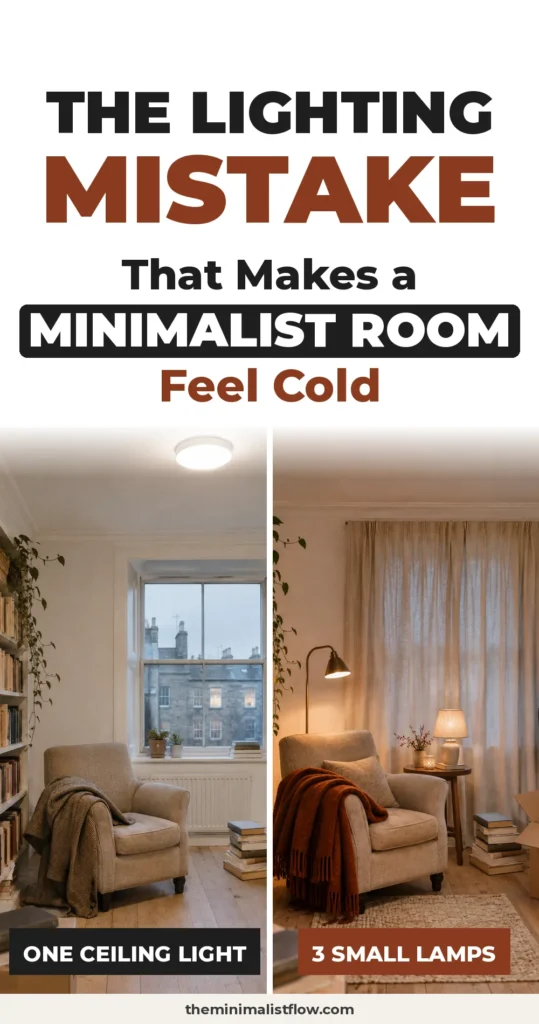
Why does a minimalist home feel so cold in winter? Usually it’s the light. One bright ceiling lamp turns a calm room into a waiting room after dark.
Then come the hard surfaces. Bare floors and nothing soft to sit on.
Cozy and minimal aren’t opposites. They just need different tools in winter.
A cozy minimalist home is a home with few things, where every one of them adds warmth, through light, texture, scent or a bit of nature.
It keeps the calm of minimalism, but it trades cold, empty space for soft, lived-in space.
The way I see it, it’s a home that looks simple and feels like a hug at 6 pm in January.
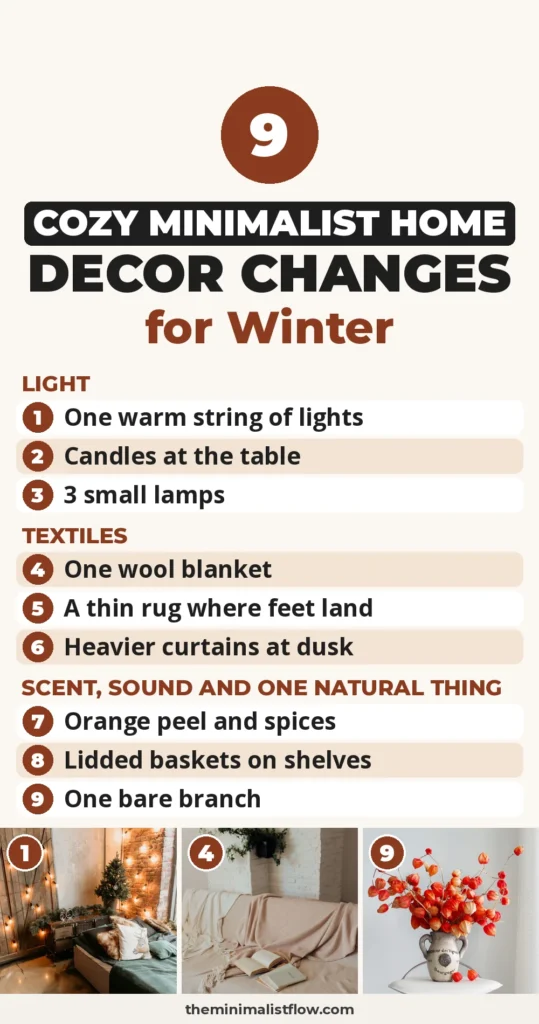
9 Changes for a Cozy Minimalist Home, Each Under $20
You don’t need all 9. Start with the light, it changes the most for the least money.
Which room do you avoid on winter evenings? Sit there for a moment and notice what feels cold: the light, the floor, the silence or the walls. That one thing is where to start.
Light: Changes 1 to 3
Light is the biggest difference between a cold minimalist room and a cozy one. The color of the light matters as much as the amount.
Look for 2700 K on the box. That’s a warm white, close to the old incandescent bulbs. Anything above 4000 K looks bluish and cool, more like an office.
1. Hang one warm string of lights
You’ll need:
- one string of warm white lights, 2700 K or lower,
- batteries or a plug nearby,
- 2 small hooks or clear tape.
Costs about: $10 to $15.
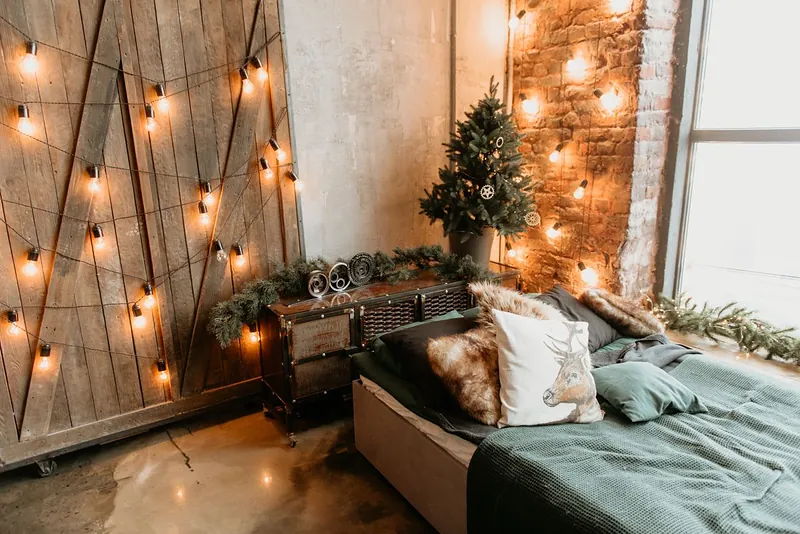
A string of lights isn’t only for Christmas. In a minimalist home, it’s the quickest way to make one corner glow.
Choose one spot. A window frame or the top of a bookshelf both work well.
One glowing spot looks sophisticated. Lights everywhere look like a shop window.
A timer is worth a lot here. If the lights switch on by themselves at 4 pm, the room already feels warm when you come home.
Skip the colored and blinking ones. Warm white on a thin copper or clear wire disappears during the day.
✦ WHERE TO FIND IT ✦
One string is enough for the whole winter, so choose a warm white with a timer.
Warm white string lights with timer→2. Light candles at the table
You’ll need:
- 2 or 3 unscented pillar candles,
- a plate or a tray,
- matches.

Costs about: $8 to $15.
Candles are the oldest way to make winter feel warm. But 15 tea lights on every shelf quickly turns into visual noise.
Put 2 or 3 candles in one place, like the dinner table or the coffee table. Light them at the same time every evening, and they become a small ritual.
Unscented candles are the calmer choice. They don’t fight with the smell of dinner, and they don’t give anyone a headache.
Keep them away from curtains and shelves.
The NFPA recommends keeping candles at least 12 inches from anything that can burn, and putting them out when you leave the room. Always keep this in mind – never skip this step, for the sake of your own safety and that of your family.
✦ IF YOU NEED ONE ✦
A few good pillar candles last longer than a big bag of tea lights.
Unscented pillar candles→3. Swap the ceiling light for 3 small lamps
You’ll need:
- the lamps you already have, moved around,
- 2700 K LED bulbs for each of them,
- one extra lamp only if a corner stays dark.
Costs about: $5 to $20 for the bulbs.
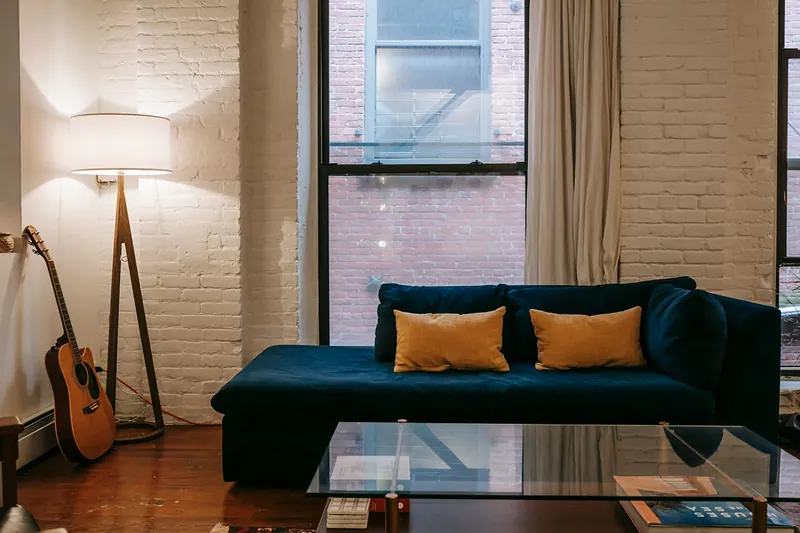
This is the change that does the most. One bright light from above flattens a room. Several small lights at different heights make it feel deeper and softer.
Here’s how many to aim for. The living room needs about 3 lamps, one high, one at table height and one low. The bedroom needs 2, one on each side of the bed. The hallway needs just 1, so you don’t come home to the dark.
Bulbs are the cheapest part. A warm 2700 K bulb in an old lamp changes its whole mood.
Warmer, dimmer light in the evening is also kinder to sleep. Harvard Health notes that blue light at night suppresses melatonin more powerfully than other light, which can lead to poorer sleep quality.
✦ FIND IT HERE ✦
Check the bulbs in your lamps first, a warm bulb often fixes a lamp you thought was ugly.
Warm white 2700K LED bulbs→Related post: If you love warm light in winter, I wrote about it in Scandinavian Christmas Is Not Beige: 12 Ideas Built on Light.
Textiles: Changes 4 to 6
Textiles are the softest way to add warmth without adding objects.
Stick to natural fibers and 2 or 3 calm colors. Wool and linen look simple and age well.
4. Throw one wool blanket over the sofa
You’ll need:
- one wool or wool blend blanket,
- a sofa arm or a basket to keep it in.
Costs about: $10 to $20 secondhand, more if new.
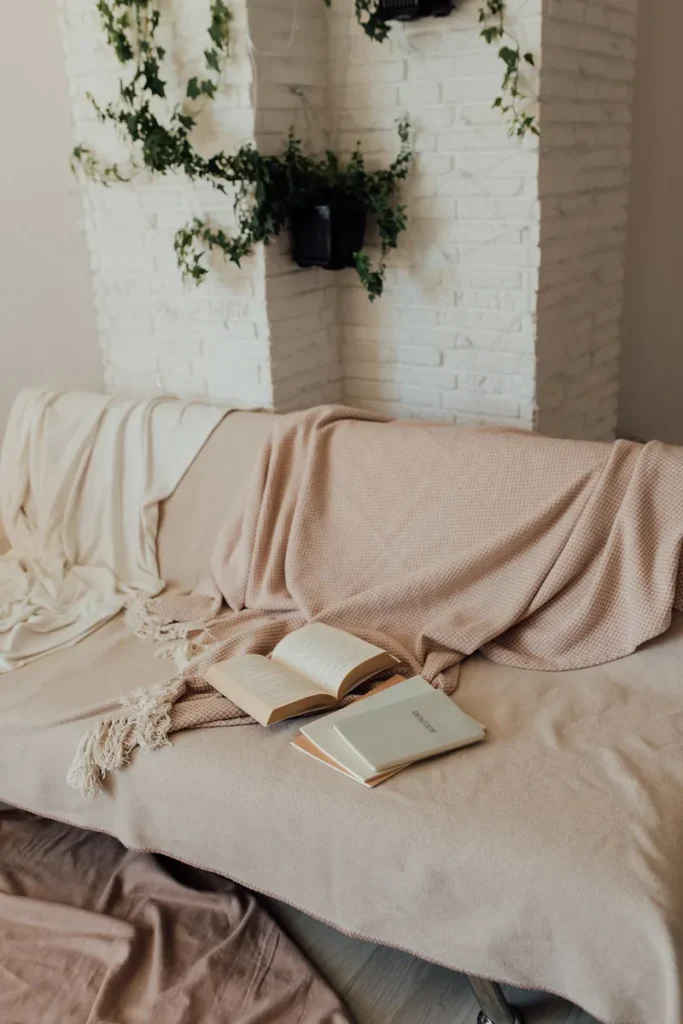
One good wool blanket is worth more than 4 synthetic ones. Wool stays warm and rarely needs washing.
Look in secondhand shops and flea markets first. Old wool blankets are often better quality than new cheap ones, and a gentle hand wash brings them back.
Fold it over the sofa arm, not in a perfect square. A blanket that looks used invites people to use it.
Choose a color that’s already in the room, like oatmeal or a soft gray.
✦ WORTH A LOOK ✦
Look secondhand first, and only buy new if you can’t find a real wool one.
Wool throw blanket→Look in your own closets, there might already be a wool blanket waiting for winter.
5. Lay a thin rug where your feet land first
You’ll need:
- one small flat-weave or cotton rug,
- a non-slip pad if the floor is smooth.

Costs about: $15 to $20 for a small washable rug.
You don’t need a large rug; a smaller piece works just as well – try placing one next to your bed or in front of the kitchen sink.
You don’t need a big rug. A small rug exactly where your feet land does most of the job: next to the bed or by the kitchen sink.
A thin, flat rug looks calmer than a thick shaggy one. It’s also easier to wash, and it doesn’t collect dust.
Washable cotton rugs are practical with kids and pets. Throw it in the machine, dry it flat and it’s back in a day.
✦ WHERE TO FIND IT ✦
One small rug in the right spot is enough, so measure the space by your bed first.
Washable cotton rug→Stand barefoot in each room tomorrow morning, and notice where the floor feels coldest and place a high-quality, easy-to-clean cotton rug there.
6. Hang heavier curtains, and close them at dusk
You’ll need:
- lined curtains, or a lining added to the ones you have,
- curtains that reach the windowsill or the floor.
Costs about: $15 to $20 for a simple lining or a secondhand pair.
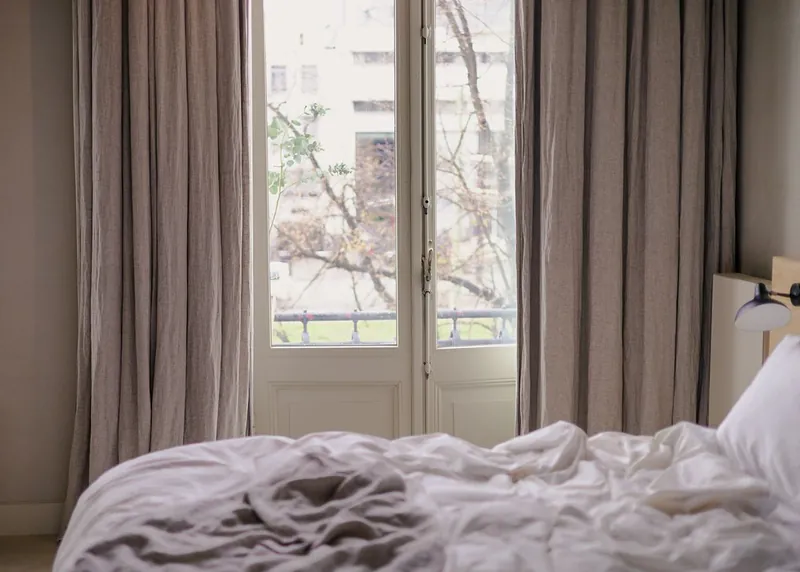
Bare windows look clean in a minimalist home. But in winter, a black window at 5 pm makes the room feel cold and a little exposed.
Curtains help with real warmth, too. Cornell Cooperative Extension notes that loose drapes reduce window heat loss by no more than 10 percent, while lined drapes sealed at the edges can reach about 25 percent.
Close them as soon as it gets dark, and the room feels smaller and warmer at once.
Choose linen or heavy cotton in a light, warm color. They look soft during the day and don’t block too much light.
✦ IF YOU NEED ONE ✦
If you love your curtains, a lining is cheaper than new ones.
Thermal lined curtains→Related: If you want a warm corner for winter evenings, I collected 11 Cozy Reading Nook Style Ideas for Any Small Room.
Scent, Sound and One Natural Thing: Changes 7 to 9
The last 3 changes cost almost nothing. They work on the senses we forget when we decorate.
7. Simmer orange peel and spices on the stove
You’ll need:
- the peel of 1 or 2 oranges,
- 2 cinnamon sticks,
- a few cloves,
- a small pot of water.

Costs about: $2 to $5.
A home can look cozy and still smell like nothing.
Put the peel and spices in a pot of water and let it simmer on the lowest heat. Top up the water every half hour, and never leave it on when nobody’s home.
Scent and memory are closely linked. In a study by Rachel Herz and Jonathan Schooler, memories brought back by smells were more emotional than memories brought back by the same thing seen or named.
So the smell of oranges and cinnamon on a winter afternoon may stay with your family for years.
Do this: Save your orange peels this week instead of throwing them away.
8. Close the open shelves with lidded baskets
You’ll need:
- 2 or 3 baskets with lids,
- the things that now sit on open shelves.
Costs about: $10 to $20 per basket.
In winter we use more things. Gloves, chargers, blankets, school papers. And most of them end up on open shelves.
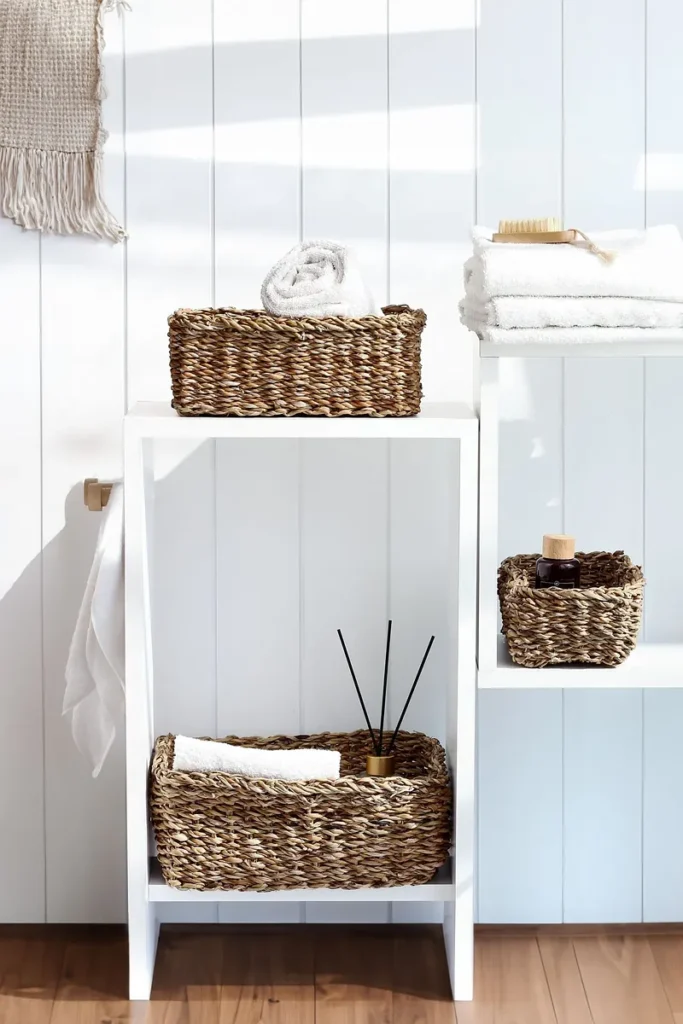
Lidded baskets hide it all. Closed storage makes a room look quiet.
They help with sound, too. A sparse room with hard walls and empty shelves can echo a little. Baskets and curtains soften it.
Choose natural materials like seagrass or cotton rope. They add texture without adding color noise.
✦ FIND IT HERE ✦
Count what’s on your open shelves first, then buy only as many baskets as you need.
Lidded storage baskets→Clear one open shelf tonight and put everything into one basket.
9. Bring in one bare branch or a bowl of dried oranges
You’ll need:
- one branch from a walk, or a bag of dried orange slices,
- a tall vase or a simple bowl.

Costs about: $0 to $5.
A minimalist room in winter often has nothing alive in it. One natural thing changes that.
Pick up a bare branch on a walk, with an interesting shape. Put it in a tall vase, and hang the string of lights on it if you like. It looks like a sculpture and costs nothing.
Or fill a simple bowl with dried orange slices. They glow when the light hits them, and they smell faintly of winter.
✦ WORTH A LOOK ✦
Dried oranges are easy to make in the oven, so buy them only if you’re short on time.
Dried orange slices for decoration→Take a bag on your next walk and bring home one branch.
Every Amazon Find From This List in One Place
These are the only things from this post that might be worth buying, and only if you don’t already have something similar.
Look around your home first, then click.
| Find | Best for you if | Shop on Amazon |
|---|---|---|
| Warm string lights | you want one glowing corner | Warm white string lights |
| Pillar candles | you want a calm evening ritual | Unscented pillar candles |
| 2700K LED bulbs | your lamps give cold, bluish light | Warm white 2700K LED bulbs |
| Wool throw | your sofa needs one warm blanket | Wool throw blanket |
| Washable rug | your floor is cold in the morning | Washable cotton rug |
| Lined curtains | your windows look black and cold at night | Thermal lined curtains |
| Lidded baskets | your open shelves look busy | Lidded storage baskets |
| Dried orange slices | you want a natural touch in minutes | Dried orange slices |
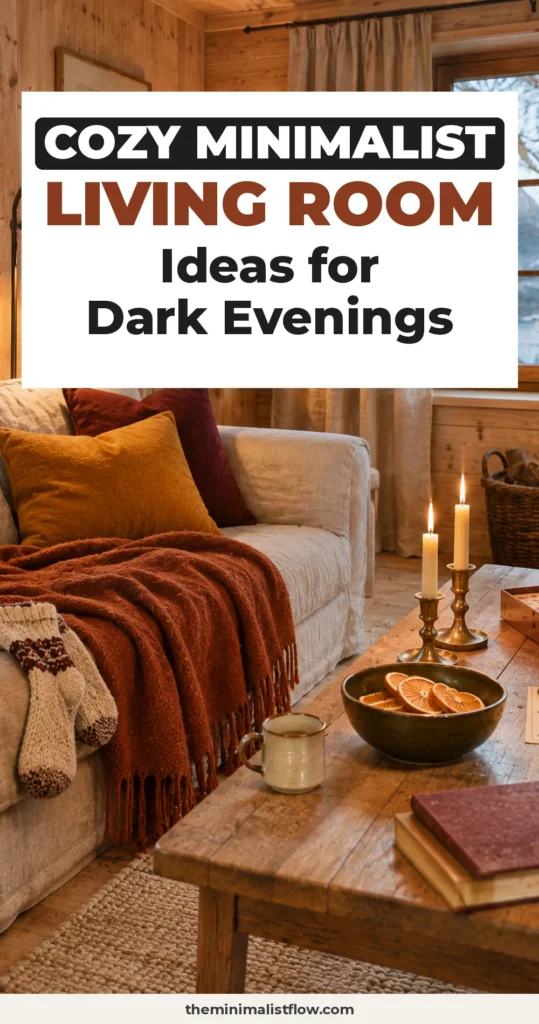
What to Remove First: 5 Things That Make a Room Feel Cold
Sometimes a room feels cold because of what’s in it, not what’s missing.
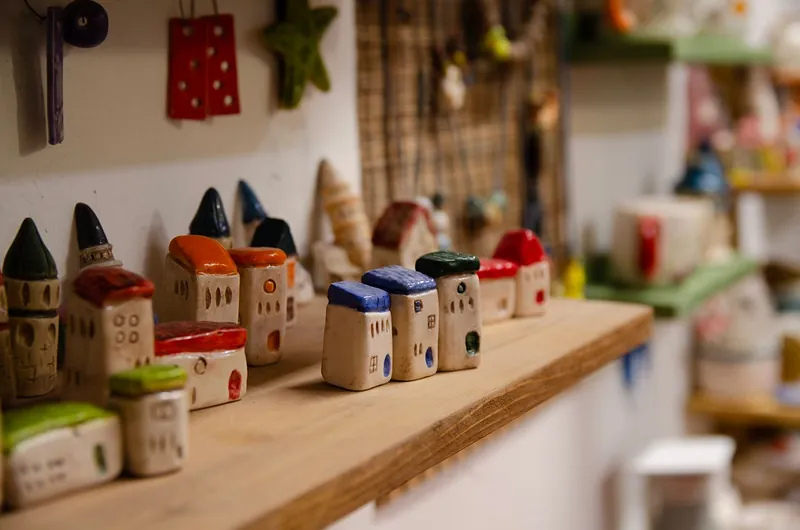
Before you add anything from the list above, take these out.
- Rows of small decorations: many tiny things on one shelf look busy, not cozy. Keep 1 or 2 and put the rest away.
- Clear plastic boxes in sight: they make a home look like a storage room. Move them into closets, or swap them for baskets.
- Cold white bulbs: the bluish light of a 5000 K or 6500 K bulb works in a garage. In a living room, it takes all the warmth away.
- Plastic plants and shiny fake flowers: a bare branch or a few dried stems look much warmer.
- Cables and piles of paper: they pull the eye and make even a calm room look restless. One basket or one drawer solves most of it.
Take out 5 things before you bring in 1. That’s the whole trick.
Warm light isn’t only about mood. Harvard Health explains that light of any kind can suppress melatonin, and blue light at night does so more powerfully. Its advice includes avoiding bright screens 2 to 3 hours before bed. Warm, low lamps in the evening are kinder to the end of the day.
A One-Decision Plan for Each Room
If 9 changes feel like a lot, start here. Just one decision per room is enough for this winter.
Living room: where the evening light is
Decide where you sit in the evening, and put the warmest light there. A lamp at shoulder height and candles on the table.
Bedroom: a warm place to land
Put a small rug where your feet land in the morning and a wool blanket at the foot of the bed. Then switch the bedside bulbs to 2700 K.
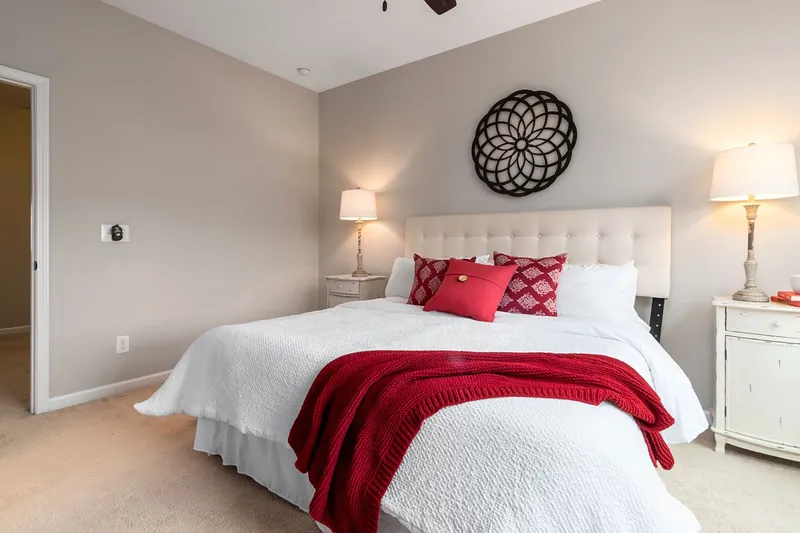
The bedroom should be the warmest-looking room in the house, and the calmest.
Hallway: coming home to light
Coming home to a dark entryway is not exactly an uplifting experience.
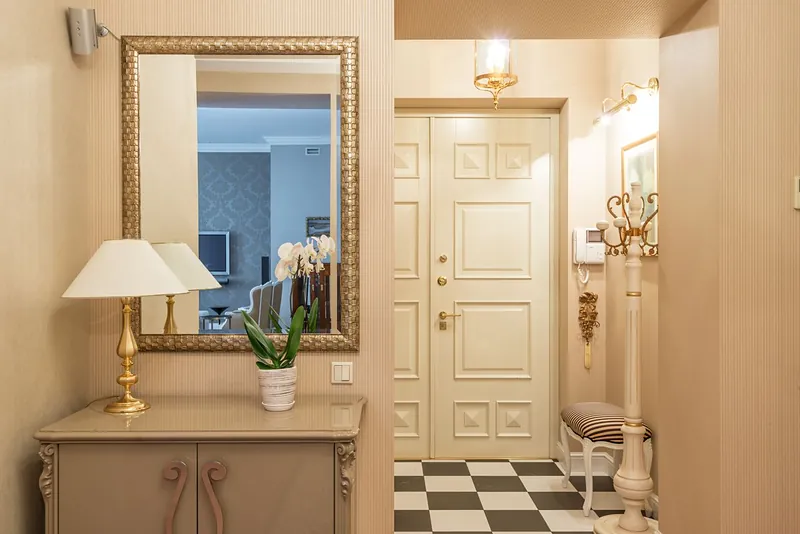
Place a small lamp with a timer on the hallway chest or console table; that way, when you return from work, you won’t be met with total darkness, but rather with a pleasant, warm glow.
Extra tip: set up a hook for the coat you wear every day, and a basket for your gloves and hats.
3 small things to do this weekend
- Switch off the ceiling light and live with lamps for one evening,
- remove 5 small things from your busiest shelf,
- bring home one bare branch from a walk.
Recommended: If winter evenings feel heavy, not only cold, my Slow Living in Fall and Winter: 15 Gentle Habits for Heavy Seasons is a good next read.
Why a Warm Home Needs Fewer Things, Not More
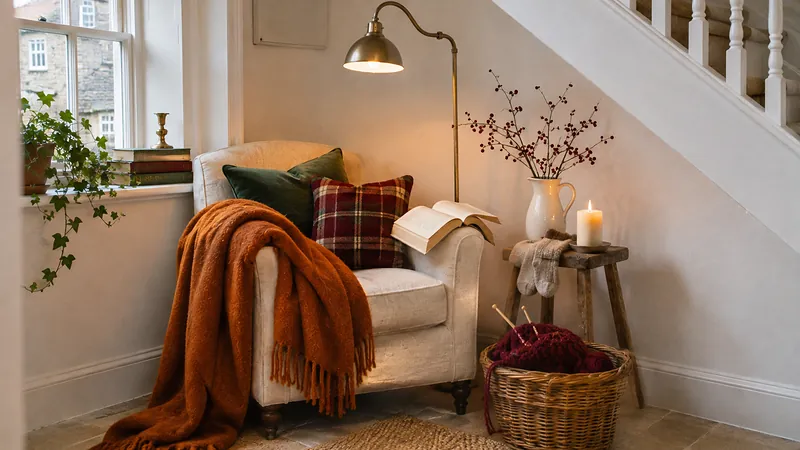
Every winter, the shops fill up with cozy things. Faux fur cushions and little houses that light up.
But coziness rarely comes from a shopping bag. It comes from light at the right height and something soft within reach.
I grew up in a small Hungarian village, and my eye still goes to simple, natural things first. Not the shiny ones, the natural and simple ones.
So my rule is simple: if it doesn’t make the room warmer or calmer, it doesn’t come in for winter.
Cozy Minimalist Home Checklist
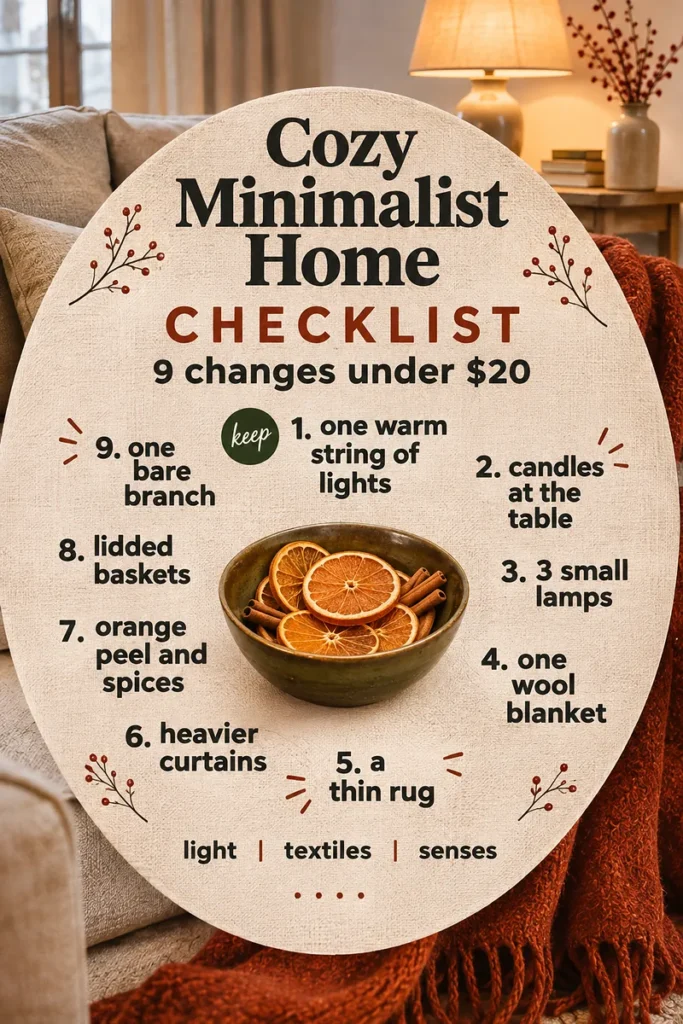
Save this pin for later on your Pinterest board!
Cozy Minimalist Home: Questions Readers Ask
How do I make a minimalist home feel cozy in winter?
A minimalist home feels cozy in winter when you add warmth instead of things: warm 2700 K light from several small lamps, one wool blanket, a small rug and heavier curtains. Add a natural touch, like a bare branch or dried oranges. Remove cold details first, like bluish bulbs and plastic boxes in sight.
What is a cozy minimalist home?
A cozy minimalist home is a home with few things, where each one adds warmth through light, texture, scent or nature. It keeps the calm of minimalism but avoids the cold, empty look. Natural materials like wool, wood, linen and cotton, with warm light in the evening, are what make it feel lived in.
What color light is the coziest?
The coziest light color is a warm white of about 2700 K, close to old incandescent bulbs. It looks soft and slightly golden on walls and fabrics. Bulbs of 4000 K and above look bluish and work better in kitchens or workspaces. In the evening, several low lamps with warm bulbs feel cozier than one bright ceiling light.
How can I make my home cozy on a budget?
Making a home cozy on a budget starts with light, because a few 2700 K bulbs cost very little and change the whole room. After that, look for a secondhand wool blanket and a small washable rug. Simmering orange peel and cinnamon costs almost nothing, and a branch from a walk is free.
How many lamps should a cozy living room have?
A cozy living room usually needs about 3 lamps at different heights: one tall floor lamp, one at table height and one low light, like a string of lights or candles. Light from several points makes the room feel deeper and softer than one ceiling light. A bedroom needs about 2 lamps, and a hallway 1.
What makes a room feel cold even when the heating is on?
A room can feel cold even with the heating on because of cool, bluish light and black windows after dark. Cold floors also make the whole room feel chilly. Warm bulbs, a small rug, lined curtains closed at dusk and one soft blanket make the same room feel noticeably warmer.
Do curtains really help keep a room warm?
Curtains do help keep a room warm, though how much depends on how they hang. Cornell Cooperative Extension notes that loose drapes reduce window heat loss by up to about 10 percent, while lined drapes sealed at the edges can reach about 25 percent. Close them as soon as it gets dark.
How do I decorate a minimalist home for winter without clutter?
Decorating a minimalist home for winter without clutter works best with a few natural, seasonal pieces in one or two places. A bare branch in a tall vase and candles on the table are enough. Take something away for every new thing, and store winter pieces in one box after the season.
Recommended Reading
Slow Living in Fall and Winter: 15 Gentle Habits for Heavy Seasons
How to Stop Wanting New Things and Start Living a Simple Life
How to Have a Minimalist Christmas Without Losing the Magic
You Might Also Like
-
Cozy Minimalist Home for Winter: 9 Changes Under $20
In this post I’ll show you how to make a cozy minimalist home for winter with 9 small changes, each under $20. You’ll also find which light to buy, the 5 things to remove first and a simple plan for the living room, the bedroom and the hallway.
-
Almond Nails: 17 Elegant Designs to Screenshot for Your Nail Tech
In this post I’ll show you 17 almond nails that stay simple, elegant and easy to explain at the salon, with the exact words to tell your nail tech. You’ll also find 4 color pairs for a minimalist wardrobe, a short aftercare routine and a checklist for your next appointment.
-
14 Last Minute Homemade Christmas Gift Ideas You Can Make Tonight
In this post I’ll show you 14 homemade christmas gift ideas you can still make in the last days before Christmas, sorted by the time you have, from 15 minutes to one evening. You’ll also find who gets which gift, wrapping pairs that make a jar look finished, what to write on the tag and…