20 Free Summer Bucket List Ideas That Feel Special Without Spending Money
| If you want a summer that feels full and meaningful without emptying your wallet, the secret is simple: the best summer memories almost never come from what you bought. In this post, I’m sharing 20 genuinely free summer bucket list ideas that feel special, not like budget compromises. These are things you’ll actually remember. Disclosure: This post contains affiliate links. If you make a purchase through these links, I may earn a small commission at no extra cost to you. Thank you for supporting this blog! |

There’s a particular kind of pressure that shows up every summer. The Instagram reels of beach houses and European vacations start multiplying, and somewhere between the third “summer must-haves” reel and the fourth flight deal email, a quiet voice in your head says: I should be doing more.
And then comes the guilt. The feeling that if you’re not spending, you’re not living.
I’ve been there. I grew up in a small village in Eastern Hungary where the concept of a “summer budget” didn’t exist, because there wasn’t one.
What we had was a river a few hundred meters from our front door, a garden full of things to pick and eat, and long evenings with nowhere specific to be.
Some of those summers are the ones I remember most vividly, decades later.
The free summers were the richest ones.
And I think a part of us already knows this — which is exactly why this kind of list gets saved on Pinterest more than almost anything else.
More budget-friendly summer bucket list ideas here:

What You’ll Find in This Post
- Why free experiences often feel more meaningful than paid ones
- 20 genuinely free summer bucket list ideas with real, specific suggestions
- A saveable checklist to take with you
- Practical tips for making these actually happen
- Q&A for the most common questions
Why Free Doesn’t Mean Less
Here’s something worth saying out loud: most of our most meaningful memories cost nothing. The conversation that went until 2am. The afternoon you spent lying in the grass with nowhere to be. The evening you watched the sun go down from somewhere unexpected.
Researchers at Cornell University have found consistently that experiential purchases make people happier than material ones — but the experience itself doesn’t have to cost anything. What creates the memory is presence, novelty, and connection. Not a price tag.
What often gets in the way of free experiences is not money. It’s the habit of waiting for the “perfect” moment, the idea that something small isn’t worth doing properly, or simply never putting it on a list.
That’s what this list is for. Think of it as permission to make the small things count.
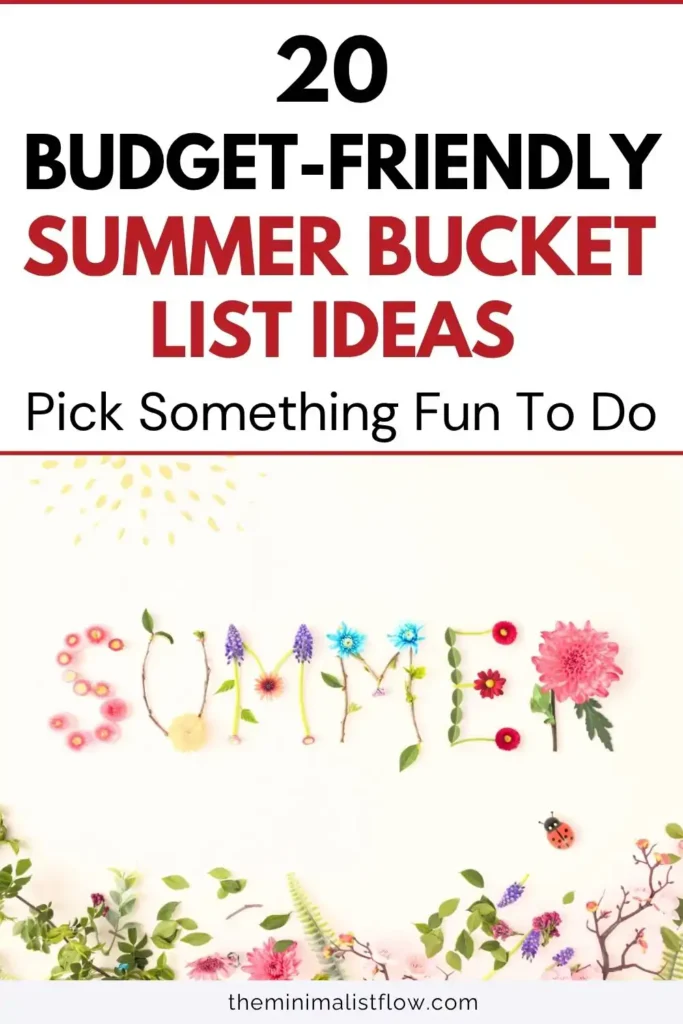
Save this pin if you have no idea what to do in summer!
The 20 Free Summer Bucket List Ideas
1. Watch the Sunrise From Somewhere You’ve Never Been
This one sounds simple until you actually do it. Pick a spot within walking or driving distance that you’ve never watched the sunrise from — a hilltop, a bridge, a rooftop, an empty parking lot on the edge of town. Set your alarm for something slightly painful.
The combination of being slightly sleep-deprived, outside, and watching something that only lasts a few minutes does something to your brain that no vacation can replicate.
You feel present in a way that’s genuinely hard to manufacture. And the sleepiness afterward?
It lasts about an hour. The memory lasts years.
How it works: The novelty of a familiar place seen at an unfamiliar time tricks your brain into laying down a stronger memory. It’s a neurological cheat code for making a Tuesday feel significant.
Listen to my favorite song here:

2. Have a Picnic Somewhere You’ve Never Eaten Outside
Not the same park you always go to. Somewhere new.
Pack whatever’s in the fridge — this isn’t about the food — and find a spot you wouldn’t normally sit in. A public garden, behind a library or on a city rooftop if you have access. Somewhere that requires mild effort to get to.
There’s a particular kind of ease that comes from eating outside in an unfamiliar place.
The combination of fresh air, slightly impractical food logistics, and a view you don’t usually have creates the feeling of being away without going anywhere.
Everyday example: Two pieces of bread, some cheese, and a bottle of water eaten sitting on a riverbank with no phone signal will feel more like a holiday than a restaurant meal eaten while scrolling.

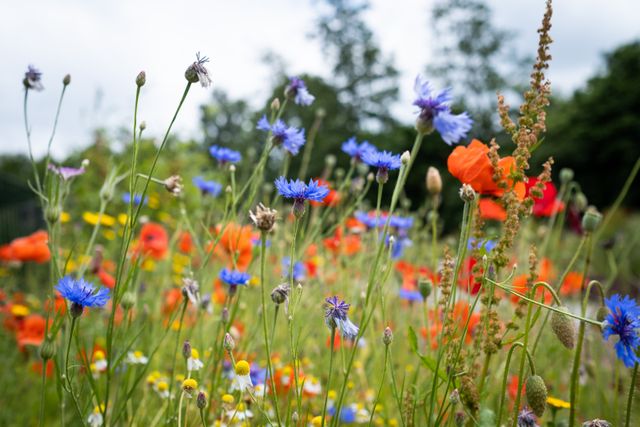
3. Learn to Identify Five Local Plants or Wildflowers
Go outside — your yard, a park, a roadside — and pick five plants or wildflowers you don’t know the names of. Then look them up. Use a free app like iNaturalist or just photograph them and search.
This sounds like something a bored ten-year-old would do. It is also one of the most quietly satisfying things an adult can do on a summer afternoon.
Once you know a plant’s name, you start seeing it everywhere. The world becomes slightly more legible.
Why it matters: There’s a growing body of research on the mental health benefits of “species richness” — knowing the names of the living things around you correlates with lower anxiety and greater feelings of connection to your environment. It costs nothing and takes about forty minutes.
4. Write a Letter to Someone You Haven’t Talked to in Too Long
A real letter. On paper if you have it, in an email if you don’t. Not a text. Not a reaction to their story. A letter where you sit down and actually think about what you want to say to someone specific.
This one is harder than it sounds, which is exactly why it’s on the list. The act of writing a real letter — slowly, with intention — feels different from every other form of communication we use now. And the receiving end is even more powerful. Most people keep letters. Almost nobody keeps a text.
Practical tip: You don’t need a reason. “I was thinking about you and I wanted to write” is a perfectly complete reason. Start there.
5. Sleep Outside at Least Once
Wow, it’s my favorite idea! When I was a child, we slept outside in a tent in the garden at night. I won’t say I wasn’t scared at times, but it was a special experience. I still remember those summer nights.
In your backyard if you have one. On a balcony if you don’t. On a friend’s porch. Anywhere that puts you outside in a sleeping bag or on a blanket under the open sky.
The sounds are completely different. The temperature drops in ways you don’t expect. You will probably wake up earlier than you planned and feel slightly disoriented and very much alive. Kids do this instinctively and then spend their whole adult lives forgetting that it’s one of the best things.
How to make it work: A sleeping bag, a mat or blanket underneath you, and something to pull over your face if the mosquitoes are bad. That’s it. The discomfort is part of the point.
Related post: 10 Ways to Fall Asleep Quickly
6. Go Through Old Photos and Make One Physical Print
Open your camera roll and look for a photo from the past two or three years that you love and have never printed. Pick one. Use a free print service’s introductory offer, or go to a pharmacy or drugstore that offers photo printing for a few cents.
The photo doesn’t need to be displayed prominently. It just needs to exist as a physical object. There’s something that happens when you hold a photograph in your hands that doesn’t happen on a screen, even if it’s the exact same image.
Why this one makes the list: We take more photographs than any generation in history and look at them less. This is one small way to close that gap.
7. Borrow a Book From a Neighbor or Friend
Not from a library (though that counts too). Specifically: knock on a neighbor’s door or text a friend and ask what the best book they’ve read recently is. Then ask if you can borrow it.
Reading someone else’s actual copy — with their dog-ears, their margin notes, the receipt they left as a bookmark — is a completely different experience from reading a new book. You’re reading their reading of it. That adds a layer that has no equivalent.

8. Take a Walk With No Destination
Leave the house with no plan, no route, no podcast, and no timer. Pick a direction and walk until something interesting stops you or until you feel like turning around. No phones for navigation.
This is a genuinely difficult thing to do in 2026. We have optimized walking almost out of existence. Every walk has a purpose, a route, a distance goal, a playlist.
An aimless walk feels almost transgressive. It’s also quietly revelatory in ways that are hard to predict.
The real rule: If you find yourself thinking “I should have just gone home by now,” keep going for ten more minutes.
Related post: Mental Sunday Reset: How to Clear Your Mind Weekly
9. Cook Something You’ve Never Made Before
Using only what you have at home, or adding one ingredient you’ve never bought before. Pick a recipe that seems slightly beyond your current skill level and spend a whole afternoon making it. Invite someone to eat it with you.
The failure version of this is also good. A meal that didn’t quite work, eaten at the kitchen table with someone who doesn’t mind, is still a meal that got made and a story that got told.
How to find the recipe: https://www.jamieoliver.com/
10. Watch a Film Outside
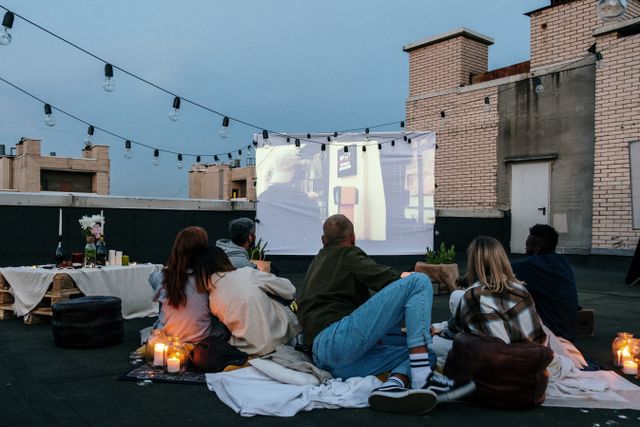
Hang a white sheet on a wall or fence.
Use your laptop or a portable projector if you have one. Borrow one from a friend or a library if you don’t. Make it dark, add blankets, and watch something together.
Outdoor cinema events charge $30 a ticket for the exact same experience you can create in your backyard with a bedsheet and any available screen. The setting does all the work. The same film you’ve seen before becomes a different film outside.
11. Document One Full Day in Writing
Choose a day — any day — and write down everything that happens. Not a curated version. Everything: the coffee, the traffic, the conversation that went sideways, the thing that made you laugh, what you had for lunch and whether it was good.
Set aside twenty minutes at the end of the day and just write it out. You will be surprised how much happened. Most days contain more than we give them credit for. Writing it down forces you to notice.
Why summer: Summer days have more texture — longer light, more time outside, unexpected encounters. The documentation feels more rewarding.

12. Have a Screen-Free Sunday
One full Sunday. No scrolling, no streaming, no checking in. Phones off or in a drawer from the moment you wake up until you go to sleep.
The first few hours are slightly uncomfortable. The kind of uncomfortable that feels a bit like being six years old and bored in the best possible way. By afternoon, you will have done at least three things you would otherwise never have gotten around to.
Practical rule: Tell the people who might need you in advance. Then put the phone in a drawer, not on the counter.
Related post: Mental Sunday Reset: How to Clear Your Mind Weekly
13. Go Somewhere Local You’ve Always Meant to Visit
Every town and city has a museum, a park, a historic building, a market, a neighborhood that the people who live there have never been to. Pick yours and go.
Locals are chronically bad at visiting local things. The tourist sees the old church; the resident drives past it for twenty years without stopping.
This summer, stop. Most of these places are free or very nearly free.
14. Learn Five Songs by Heart
Pick five songs — not your usual playlist favorites, but songs you’ve always liked without quite knowing the words to — and actually learn the lyrics. Sing them. Out loud. Alone in the kitchen counts.
Memorizing music does something specific to memory and mood that researchers don’t fully understand yet but consistently document.
People who know songs by heart seem to carry something portable with them that helps with stress, transitions, and long waits.
15. Volunteer for Something Specific, Once
Not a vague commitment.
One specific morning or afternoon at an animal shelter, a community garden, a food bank, a local event. Pick the day on the calendar now.
Volunteering’s effect on mood is one of the most replicated findings in happiness research. It is reliably, consistently mood-elevating in a way that has nothing to do with how you felt going in.
The science doesn’t care if you’re having a bad week. Show up anyway.
16. Swim Somewhere Natural
A river, a lake, the sea, a reservoir. Somewhere that isn’t a pool. If you haven’t done this in years, it will feel slightly alarming and completely worth it.
There’s a quality to natural water that pool water doesn’t have. The temperature is unpredictable. The floor is uneven. Something moves against your leg that is not a pool noodle.
You come out feeling like you did something.
Safety note: Know the currents, check the water quality, go with someone. Then go.

17. Start a Small Garden, Even on a Windowsill
Buy one packet of seeds — basil, radishes, cherry tomatoes, whatever grows fast — and plant them. Water them. Watch them.
This is on a bucket list because most people mean to do it and never actually start. The barrier is genuinely tiny: a pot, some soil, a few seeds, and a windowsill with light.
What follows is a small daily ritual that connects you to something growing, which turns out to matter more than it sounds.
Related post: 5 Minimalist Garden Project Ideas for Summer: Create Your Own Dream Garden
18. Have One Conversation Without Looking at Your Phone
One dinner, one coffee, one long walk. With someone you care about and haven’t given your full attention to in a while. Phones face-down and preferably in a bag.
This seems like it should be easy. It increasingly isn’t.
The quality of a conversation without phones present is measurably and noticeably different. People make more eye contact. Silences become comfortable rather than awkward. You remember more of what was said.
19. Find Your Favorite Spot for Reading Outdoors
Please don’t choose the armchair or sofa right away. An outdoor spot, specifically.
It might take a few tries — a bench that’s too hot, a park that’s too loud — but at some point you will find the right tree, the right angle, the right bit of shade.
Then go back. The ritual of having a place changes the quality of reading.
You will look forward to it in a way you don’t look forward to reading on the couch. A small, specific pleasure that belongs to this summer.
Read these books:
- Hidden (Sisters of the Heart Book 1)
- Every Summer After
- The Let Them Theory: A Life-Changing Tool That Millions of People Can’t Stop Talking About
20. Do Nothing for One Whole Afternoon
I know, I know. Who has time for this? You’re busy, I’m busy, everyone is busy. Still, it’s necessary to do nothing regularly, no matter how strange it sounds.
Schedule it and block it in your calendar. Tell whoever needs to know. And then spend one full afternoon doing nothing in particular — not productive nothing, not creative rest, not “intentional downtime.” Just nothing.
This is the hardest one on the list for most women who consider themselves productive people.
We have thoroughly convinced ourselves that rest requires justification. It doesn’t.
Boredom is not a problem to solve. Stillness is not wasted time.
The real test: If you find yourself reaching for your phone after twenty minutes, put it back down. Wait it out. Something useful usually arrives in the gap.
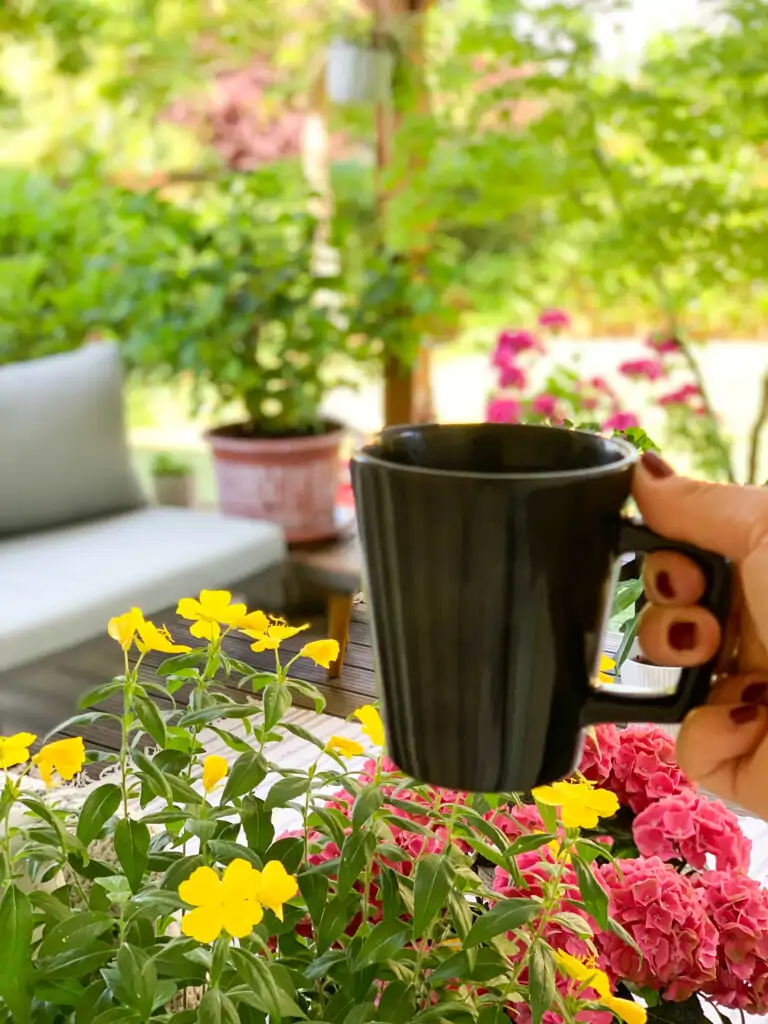
You can see in this photo my favorite patio, coffee mug and our flowers.
Try this:
| Pick ONE thing from this list right now and put it in your calendar for this week. Not next week. This week. A bucket list item that stays a list never becomes a memory. |
Saveable Checklist: Your Free Summer
- Watch a sunrise from a new spot
- Have a picnic somewhere new
- Learn 5 local plants or wildflowers
- Write a letter to someone you miss
- Sleep outside at least once
- Cook something completely new
- Take one walk with no destination
- Have one screen-free Sunday
- Swim somewhere natural
- Do nothing for a whole afternoon
Save this list so you can come back to it all summer.

Do This Today
- Open your calendar right now and pick three dates for three items from this list
- Text someone you haven’t spoken to in months — just to reconnect
- Find out what time sunrise is tomorrow where you live
Save this pin if you want a memorable summer!
Frequently Asked Questions
These all sound great but I never actually follow through on bucket lists. Why would this be different?
Because this one asks for small, concrete things rather than vague aspirations. “Watch a sunrise” is completable in one morning. “Travel more” is not. The simpler the item, the higher the completion rate. Pick three from this list, put them in your calendar with a time and a place, and treat them like appointments.
What if I live somewhere that doesn’t feel like a summer destination?
Honestly, those are sometimes the best places for this kind of list. When you’re not constantly thinking about all the things a “real” summer place would offer, you notice what’s actually there. The river you grew up near. The neighborhood you’ve never walked through. The neighbor you’ve never talked to properly.
I live alone. Can I do most of these alone?
Yes, almost all of them. Some are better alone — the aimless walk, the afternoon of nothing, the day of documentation. A few are better with company — the outdoor film, the long conversation, the picnic. But none require a specific other person. The sunrise doesn’t care if you’re watching it by yourself.
How do I make these feel special and not just like ordinary things I already do?
The difference is intention and documentation. If you go for a walk every day, you’re not watching the sunrise — you’re commuting. If you set your alarm specifically to be somewhere specific at a specific time, and you’re there, that’s different. The framing matters. Make it a small event, not a chore.
What if the weather is bad?
Some of these are better in bad weather. Writing a letter during a thunderstorm. Reading on a covered porch while it rains. Going for a walk in light rain — which is underrated and slightly illegal-feeling in the best way. Adjust for weather, not around it.
I already do most of these regularly. What counts as special?
Doing something intentionally, with attention, is different from doing it by habit. If you already walk every day but you’ve never walked with no destination and no phone, that’s a different walk. The newness doesn’t have to be in the activity itself — it can be in how fully you’re present for it.
Can these work with kids?
Most of them, yes — and kids often make them better. The sunrise watch. The outdoor sleep. The aimless walk (which children do instinctively and then have to be convinced to stop). Learning plant names together is particularly good. They ask better questions than adults do.
How many of these should I realistically aim for?
Pick seven to ten and treat them as genuine goals. Completing ten meaningful things in a summer is more than most people manage, and it’s enough to make the season feel full. Aiming for all twenty at once usually ends in completing none of them.
Recommended Reading
If this post resonated, you might also enjoy:
- 20 Free Summer Bucket List Ideas That Feel Special Without Spending Money
- 75 Summer Bucket List Ideas With Kids That Actually Create Memories
- 66 Realistic Summer Bucket List Ideas for Maximalist Women
One Last Thing
The best summer you’ll ever have probably won’t be the most expensive one. It will be the one where you paid attention. Where you showed up for the small things with enough presence to actually feel them.
The free summer isn’t a consolation prize. It might actually be the real thing.
Which one from this list feels most like you? Tell me in the comments if you feel like it.
Have fun!