12 Minimalist Flower Home Decor – Easy and Aesthetic Floral Decor That Changes a Room
Disclosure: This post contains affiliate links. If you make a purchase through these links, I may earn a small commission at no extra cost to you. Thank you for supporting my blog!
Have you ever walked into your living room, looked around, and felt like something small was missing, even though every shelf was already full? I know that feeling well. That quiet little gap is exactly where minimalist flower home decor steps in, and it asks for almost nothing from you in return.
One stem in the right spot. A simple vase that does not shout. Suddenly the whole room exhales.
In this article we will go through the flower decor ideas that actually hold up in a real home, the kind with kids, a cat who naps in the sun, and not a lot of spare time.
I will show you where to place flowers, which blooms forgive a busy week, and the small styling habits I picked up slowly over the years. Stay with me, because the most useful part is the one most people skip.
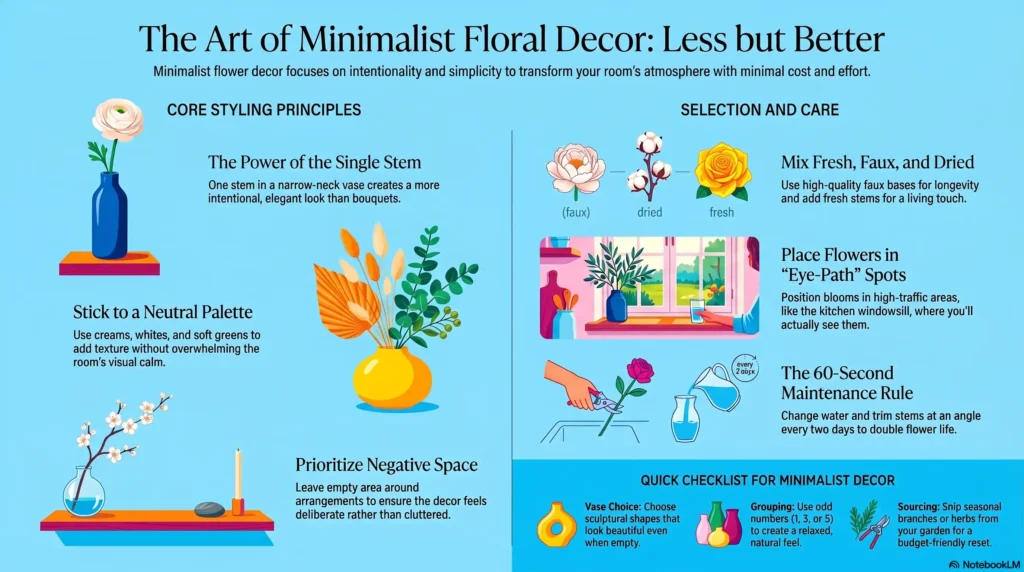
Here is the heart of it, in one line: less, but better, even when it comes to flowers.
Here Is What We Will Cover
- Why a single flower can shift the whole mood of a room
- The 60-second flower trick you can do before your coffee gets cold
- My honest take on fresh flowers versus the faux kind
- Twelve minimalist flower decor ideas that work in a real home
- A save-worthy checklist and a few tiny actions to start today
- Your questions, answered like we are sitting at my kitchen table
| Decor Idea | Floral Selection Tips | Styling Technique | Maintenance Advice | Key Benefits |
| Start With One Single Stem | Select a single bloom such as a rose, a sprig of rosemary, or a single branch. | Use a bud vase or small bottle with a narrow neck to keep the stem straight. Place at eye level on shelves or mantels. | Change the water every couple of days and trim the stem ends. | Creates a quiet aesthetic; provides a place for the eye to rest without competing with other decor. |
| Choose A Neutral Palette | Opt for cream, white, dusty pink, pale green, and warm sandy beige flowers like a white ranunculus. | Hold the flower against the wall to check the undertone (warm vs. cool white) before placing. | Adds texture and life without being visually overwhelming; creates a sense of calm and elegance. | |
| Reach For Dried Flowers | Choose pampas grass, bunny tails, dried eucalyptus, or bleached ruscus. | Keep in a warm, papery texture bunch in hallways or seasonal spots. | Keep away from damp areas and direct sun. Use a hair dryer on a cool setting to remove dust. | Extremely low maintenance; lasts for months; fits a slow living mindset as nothing is thrown away quickly. |
| Place Flowers Where Your Eyes Already Go | Not in source | Place blooms in high-traffic spots like the kitchen windowsill, dining room, or entry table. | Ensures the decor is actually enjoyed daily; lifts the mood of the person living there rather than just guests. | |
| Mix Faux And Fresh | Select quality faux stems with matte, soft leaves and fabric petals; supplement with one or two fresh stems. | Use a quality faux stem as a year-round base and add fresh seasonal touches for realism. | Dust faux stems occasionally to keep them looking fresh. | Budget-friendly and sustainable; reduces waste while maintaining a living, slightly imperfect aesthetic. |
| Let The Vase Do The Talking | Choose stems that complement sculptural vases. | Group three vases of different sizes in odd numbers and varied heights; leave some vases empty. | Dust ceramic or matte vases to keep the finish looking clean. | The vase acts as quiet art even when empty, serving as a permanent decor piece. |
| Bring The Garden Inside | Select windowsill herbs, sprigs of mint, lavender, or daisies from the garden. | Cut stems at an angle early in the morning when they are full of water. | Change water frequently as garden stems can be more delicate. | Costs nothing; provides a grounding connection to nature and the immediate surroundings. |
| Style Small Spaces With A Light Hand | Select single blooms or small sprigs of dried stems. | Keep the scale small; use one bud vase on narrow shelves or bathroom counters. | Adds life without creating clutter; ensures decor does not overwhelm restricted surfaces. | |
| Group In Odd Numbers | Select three or five stems or vases. | Leave ‘negative space’ around the arrangement. Avoid crowding so there is space for other items like a cup of tea. | Odd groupings feel more relaxed and natural; negative space makes the arrangement look intentional. | |
| Add One Branch For Drama | Select bare branches, eucalyptus, pampas, or flowering branches like cherry or forsythia. | Use a tall floor vase to fill awkward empty corners and draw the eye upward. | Dried branches last for ages; flowering branches will open slowly over a week. | Budget-friendly way to replace furniture; adds height and architectural vertical lines to a room. |
| Match Flowers To The Season | Choose tulips in spring, wildflowers in summer, dried grasses in autumn, or evergreens in winter. | Swap the contents of neutral vases to reflect the shift in light and the outside world. | Sustainable and cheaper; keeps home decor from feeling stale by evolving with the year. | |
| Care For Longevity | Not in source | Establish a ‘Two-minute weekly reset’ habit, perhaps on a Sunday. | For fresh: change water and trim ends every two days; keep away from sun and fruit. For dried: dust periodically. | Ensures stems earn their keep; the act of tending flowers serves as a grounding, calming ritual. |
Start Here If You Only Have One Minute
If you want your home to feel calmer without buying a single new piece of furniture, flowers are the cheapest reset there is. You do not need a big bouquet. You do not need a green thumb either.
Ask yourself this. Which corner of your home do you look at the most, and which one always feels a little flat? That spot is where your first flower goes. Not the entryway nobody really notices, not the guest room you walk past. The spot your eyes land on while you drink your morning coffee.
That one small choice does more than any clever shelf arrangement. And the science backs it up, which we will get to in a second.

60-Second Flower Win
Here is a trick I use almost every week. Take one clean glass, fill it halfway with water, and put a single stem in it. Could be a rose from the supermarket, a sprig of rosemary from the kitchen, even one branch you snapped off a bush on your walk.
Set it on the surface you pass most often. Done. Sixty seconds, no special vase, no arranging skills required.
The secret nobody tells you: a single stem almost always looks more intentional than a crowded bouquet. Florists call this negative space, and it is the whole reason minimalist arrangements feel so expensive.
If you want the full styling logic, the team at Afloral breaks it down nicely in their guide on how to style dried flowers.
12 Minimalist Flower Home Decor Ideas For A Real Home
These are roughly in order from the easiest to the slightly more involved. Each one fits a small space, a tight budget, and a normal busy life.
Pick two or three to start. You do not need all twelve at once.
1. Start With One Single Stem
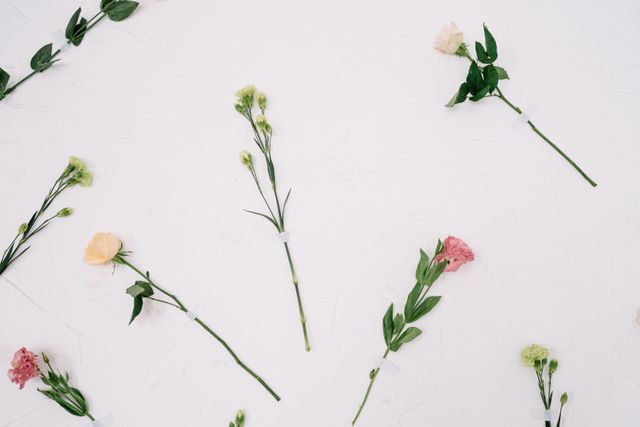
If you take nothing else from this post, take this. One stem in a slim vase beats a full bouquet nine times out of ten when you are going for that quiet, minimalist flowers aesthetic.
A single bloom gives the eye somewhere to rest. It does not compete with your books, your candles, or the mug you forgot to clear. It just sits there looking calm and a little bit elegant, like it knew you were coming.
Choose a vase with a narrow neck so the stem stands up straight instead of flopping. A bud vase, a small bottle, even a pretty glass you already own. Then leave plenty of empty space around it.
If you want a clean starting point, this white ceramic minimalist bud vase is the kind I reach for again and again. Matte finish, neutral, goes with everything.
Try this: put your single stem at eye level, not down low. We notice things more when they sit where we naturally look, which is usually a shelf, a mantel, or the middle of the table.
2. Choose A Neutral Palette
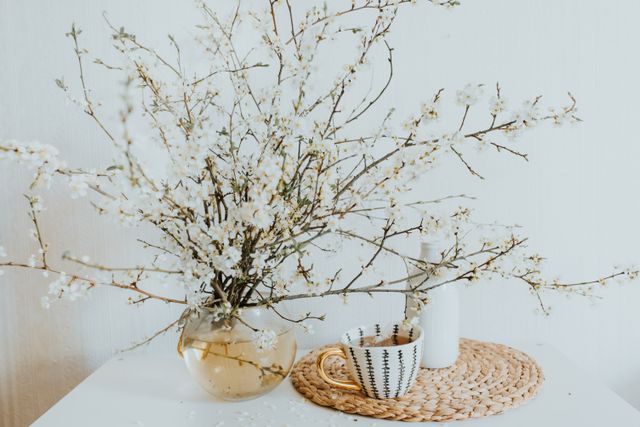
Minimalist flower home decor leans into soft, quiet colors. Think cream, white, dusty pink, pale green, and that warm sandy beige. These shades let the flower add texture and life without turning your room into a paint chart.
Bright, clashing colors can absolutely be beautiful. But they pull focus, and the whole point here is calm. A neutral palette gives your eyes a place to breathe.
This does not mean boring. A single white ranunculus against a cream wall has more quiet drama than a rainbow bunch ever could. The restraint is the elegance.
A small comparison worth knowing: warm whites read cozy and lived-in, while cool whites feel crisp and modern. Hold your flower against the wall before you commit a spot to it. The same bloom can look completely different depending on the undertone behind it.
3. Reach For Dried Flowers When Life Gets Busy
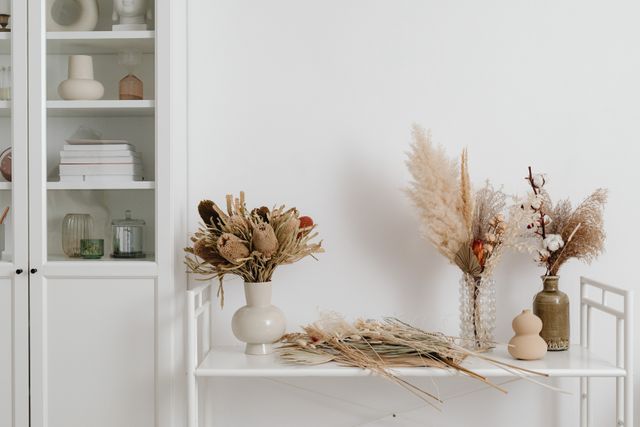
Some weeks there is simply no time to fuss over fresh stems, and that is exactly when dried flower decor saves the day. Pampas grass, bunny tails, dried eucalyptus, bleached ruscus. They last for months, they never droop, and they ask for nothing.
I keep a small bunch of dried stems in my hallway all winter. When the garden goes quiet and grey, that little patch of warm, papery texture keeps the house from feeling cold.
Dried flowers also fit the slow living mindset that runs through everything on this blog. You buy once, you enjoy for a long time, and nothing ends up in the bin on day five.
If you would rather skip the guesswork, this pampas grass set that arrives in its own ceramic vase is an easy, no-fuss way to start. One box, one finished corner.
Quick care note: dried stems hate damp and direct sun. Keep them away from the bathroom and the brightest window, and a soft hair dryer on the cool setting blows the dust off in seconds.
4. Place Flowers Where Your Eyes Go
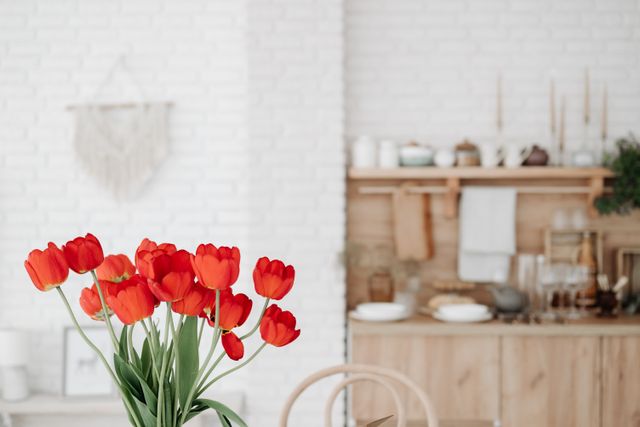
This is the idea people skip, and it is the one that matters most. A flower in the wrong spot is invisible. A flower in the right spot greets you every single day.
Remember the Harvard study from earlier? People wanted to see their flowers first thing in the morning, and they placed them mostly in kitchens, dining rooms, and living rooms. The lesson is simple. Put your blooms on the path you actually walk.
In my home that means the kitchen windowsill and the small table by the front door. Those two spots catch my eye a hundred times a day. The guest room, lovely as it is, gets nothing, because nobody is in there to enjoy it.
A gentle reminder: the flower is for you, not for guests who visit twice a year. Decorate the parts of your home that hold your real, ordinary life.
5. Mix Faux And Fresh Without One Ounce Of Guilt
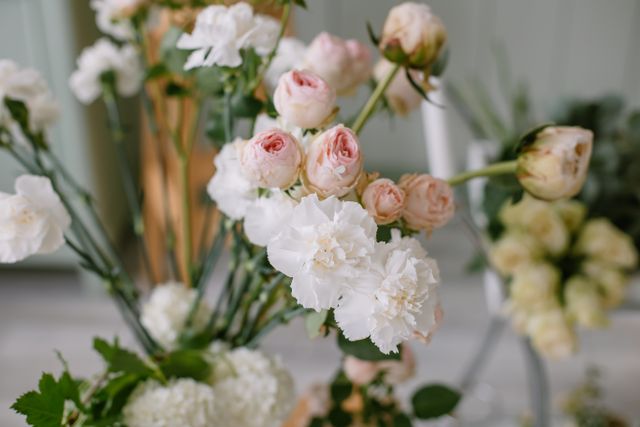
Faux flowers used to look plastic and sad. Not anymore. The good ones now have fabric petals and bendable stems that genuinely fool people from across the room.
Here is how I handle it. A quality faux stem lives in my living room year-round as the steady base. Then, when I feel like it, I add one or two fresh stems beside it for that living, slightly imperfect touch.
Nobody can tell which is which. And I am not tossing a full bouquet every week, which feels a lot kinder to both my budget and the planet.
If you want to go all faux for a low-maintenance corner, that is completely fine. The minimalist flowers aesthetic is about how the space feels, not about proving the petals are real.
One honest test for faux stems: check the leaves, not the flowers. Cheap fakes give themselves away with shiny, too-green plastic foliage. If the leaves look soft and matte, the whole stem usually passes.
6. Let The Vase Do The Talking When It Is Empty
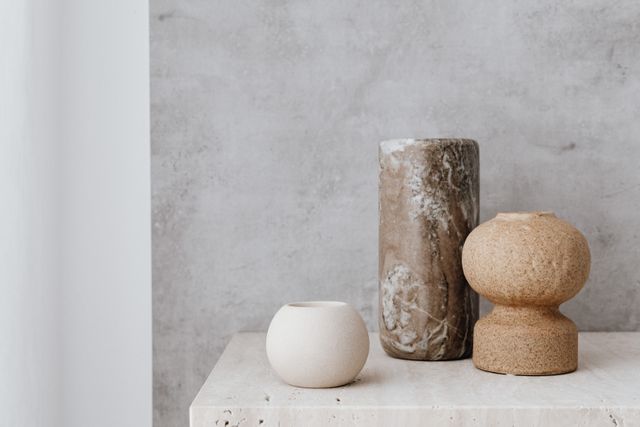
Here is a small mindset shift. A beautiful vase is flower decor even when there is nothing in it. So choose vases you would happily leave out empty.
A sculptural ceramic shape, a soft matte finish, a gentle curve. These read as quiet art on a shelf. When you do add a stem, it is a bonus, not a rescue mission.
A black matte vase like this minimalist ceramic piece anchors a neutral shelf beautifully, with or without a flower inside. And a ring-shaped bud vase doubles as a little sculpture on a coffee table.
Styling tip from years of trial and error: odd numbers and varied heights look natural, while matched pairs at the same height can feel stiff and showroom-like. Group three vases of different sizes and let one stay empty.
7. Bring The Garden Inside, Even A Tiny One
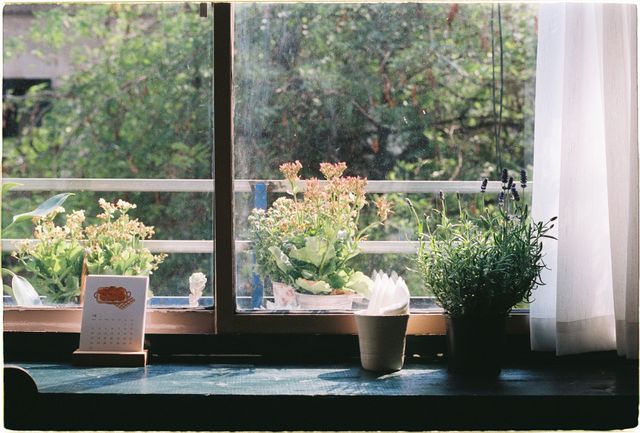
You do not need to buy flowers at all if you have anything growing nearby. A windowsill herb, a single rose bush, a hedge on your street. One snip and you have free flower room decor that smells like the season.
I do this constantly. A sprig of mint, a stem of lavender, a few daisies from the corner of the garden. It costs nothing, and there is something grounding about decorating with what grew right outside your door.
This is the village girl in me talking, the one who watched her grandmother fill jars with whatever the garden gave that morning. That habit never left me, and I am glad.
Related post: If you want to grow a few things specifically for cutting, I put together some simple starting points in my post on minimalist garden project ideas for summer. Even a balcony pot counts.
Cutting trick: snip stems early in the morning when they are full of water, and cut at an angle so they drink better in the vase. They last noticeably longer this way.
8. Create Style Small Spaces with Your Own Hands
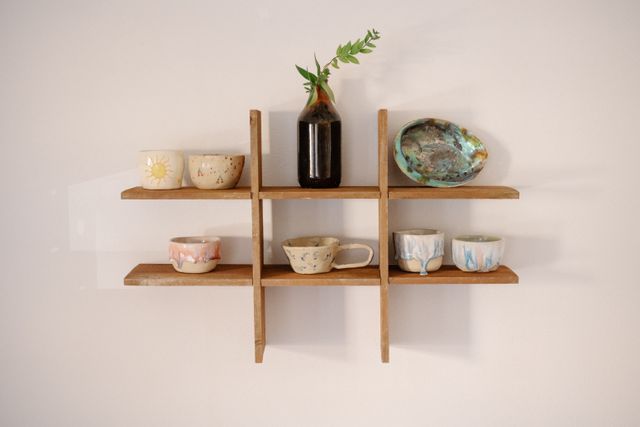
Small home? No problem. Flowers are your best friend, as long as you keep the scale right. The mistake people make is going big. A huge arrangement in a tiny room just eats the surface and makes everything feel cramped.
Instead, go small and singular. One bud vase on a narrow shelf. A short glass of dried stems on the bathroom counter. A single bloom by the bed. Tiny touches, big calm.
In a small space, every object has to earn its spot. Flowers earn theirs by adding life without adding clutter, which is exactly what we want from flower decor for small spaces.
A useful rule for renters and small apartments: if a piece of decor does not make you feel something when you look at it, it is just taking up room. A fresh stem passes that test almost every time, and it leaves no trace when it is gone.
9. Arrange The Flowers in Odd-Numbered Groups
If you do want more than one stem, group them in threes or fives rather than even numbers. Odd groupings feel relaxed and natural to the eye, while pairs can feel posed.
And whatever you do, leave negative space.
The empty area around an arrangement is not wasted. It is the thing that makes the flowers look deliberate instead of dumped.
Picture a single low bowl with three short blooms, surrounded by clear, calm table. Now picture that same table crammed edge to edge. The first one breathes. The second one stresses you out a little, even if you cannot say why.
Here is a quick self-check before you call an arrangement finished: could you set down a cup of tea next to it without moving anything? If yes, you have left enough space. If no, take one stem out.
10. Add One Branch When You Want A Little Drama
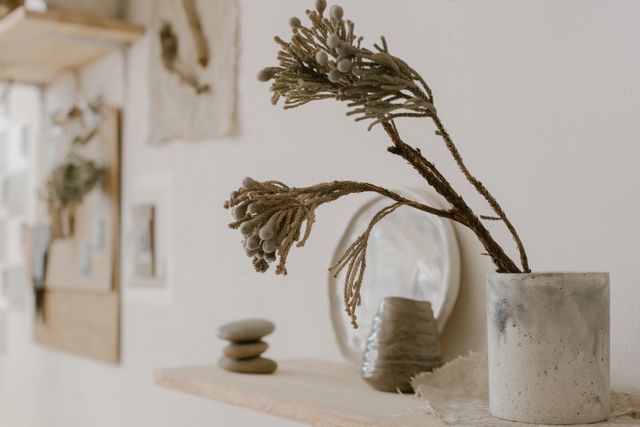
Flowers are not the only option. A single bare branch, a stem of eucalyptus, or a tall piece of pampas can fill a corner with shape and height for almost nothing.
Branches are my secret weapon for empty corners that feel awkward. They add that vertical line a room sometimes needs, and they last for ages, especially the dried kind.
In spring I bring in flowering branches, like cherry or forsythia, and they open slowly indoors over a week. Watching them bloom on the table is its own small, quiet joy.
Budget reality: a tall floor vase with one branch can replace a whole piece of corner furniture. It fills the space, draws the eye up, and costs a fraction of a side table or a lamp.
11. Match The Flowers To The Season, Not The Store
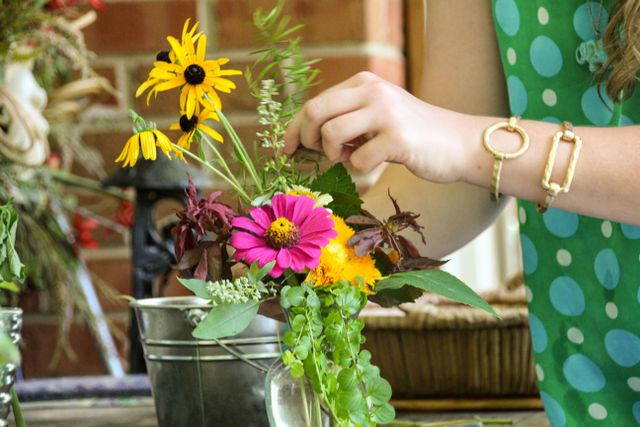
There is a slow, sustainable rhythm to decorating with whatever is actually in season. Tulips and blossom in spring. Wildflowers and herbs in summer. Dried grasses and seed heads in autumn. Evergreen sprigs and branches in winter.
Seasonal flowers are cheaper, they last longer, and they keep your home gently in step with the world outside. It is a small way to feel connected to the year passing.
This is the heart of slow living. Instead of forcing the same look every month, you let your home shift with the light and the seasons. It never gets stale because it is always quietly changing.
A frugal habit I love: the week after a holiday, flowers and greenery go on sale almost everywhere. That is the moment to grab a beautiful bunch for next to nothing.
12. Take Care of Your Flowers
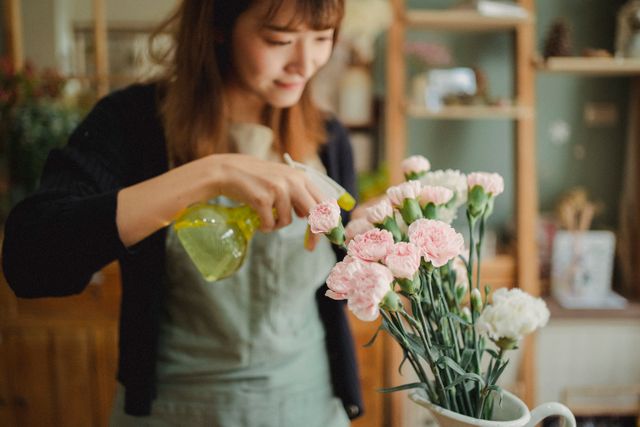
A flower only stays beautiful if you give it a tiny bit of attention. The good news is that a little goes a very long way, and the habits take less than a minute.
For fresh stems, change the water every couple of days and trim the ends. For dried and faux, a gentle dusting now and then keeps them from looking tired. That is genuinely the whole job.
Quietly tending a few flowers is also good for you, not just for the shelf. It is a small, grounding ritual, the kind that fits right alongside the other gentle routines that make a home feel calm.
Recommended post: If you like the idea of building tiny calming habits into your day, you will probably enjoy my post on minimalist habits for a calm home, which pairs nicely with this one.
Two-minute weekly reset: pick a day, refresh the water, snip the ends, pull anything past its best, and dust the dried stems. Tie it to something you already do, like Sunday coffee, so you never forget.
A Quiet Idea From The Other Side Of The World
Here is something that surprised me when I first learned it. The whole minimalist flower look we are chasing is not new at all. It is centuries old.
In Japan there is an art called ikebana, the art of arranging flowers. Unlike the big, full Western bouquet, ikebana celebrates empty space, simple lines, and just a few carefully chosen stems. Sometimes a single branch and one bloom is the entire arrangement, and that is considered the height of beauty.
So when you place one stem in a quiet vase and leave the space around it alone, you are not doing less. You are doing something people have treasured for hundreds of years.
It made me think of those jam jars on my grandmother’s windowsill, half a world away in a small Hungarian village. One stem, picked that morning, sitting in the light.
Turns out simple has always been enough.
The Save-Worthy Minimalist Flower Checklist
- Pick the one corner you look at most and start there
- Begin with a single stem before you try anything bigger
- Stick to a soft, neutral color palette you genuinely love
- Keep dried flowers on hand for busy weeks and winter
- Choose a vase pretty enough to leave out empty
- Group stems in odd numbers and leave negative space
- Use what grows nearby before you buy anything
- Match your flowers to the season for less cost and longer life
- Change the water and trim the ends twice a week
- Keep the scale small in small rooms
Pin this so you can come back to it the next time you are standing in the flower aisle wondering where to start.
Tiny Actions You Can Take Today
- Walk through your home and name the one corner that feels flat
- Put a single stem, real or faux, in a glass and set it there
- Move one vase you already own to a spot you pass every morning
- Snip one thing from your garden or a pot and bring it inside
A Mini Buying Checklist Before You Spend A Cent
If you are about to buy, run through this quick list first so you only bring home what earns its place.
- Does the vase look good empty, not just full?
- Is the color soft enough to blend with the rest of the room?
- Will it fit the scale of the spot you have in mind?
- If it is faux, do the leaves look matte and soft, not shiny?
- Could you happily leave it in place for a whole season?
Your Questions, Answered Like We Are At My Kitchen Table
Where do I even start if I have never decorated with flowers?
One stem, one glass, the corner you look at most. That is the whole beginner move. Live with it for a week and notice how often it makes you smile. Then add a second spot.
Are dried flowers actually still in style, or will they look dated?
They are very much in style, and the minimalist, neutral kind has real staying power because it is simple rather than trendy. Pampas grass, bunny tails, and dried eucalyptus feel calm and timeless. The look that dates fastest is the loud, dyed, rainbow version, so stick to soft tones.
How do I keep fresh flowers alive longer than a few days?
Trim the stems at an angle, change the water every two days, and keep them out of direct sun and away from the fruit bowl, since ripening fruit makes flowers fade faster. Those three small habits can easily double their life.
Real or faux, which should I choose?
Honestly, both. Keep a quality faux stem as your year-round base, then add fresh ones when you feel like it. You get the living look without the weekly cost or the waste. There is no rule that says it has to be one or the other.
I have a tiny apartment. Will flowers just make it feel cluttered?
Not if you keep the scale small. One bud vase on a shelf, a short glass of dried stems on the counter, a single bloom by the bed. In small spaces, restraint is what keeps flowers feeling like calm instead of clutter.
What if I always forget to take care of them?
Then lean on dried and faux flowers, which need almost nothing, and keep just one fresh stem somewhere you pass daily so it is hard to forget. Tie the water change to a habit you already have, like your Sunday reset.
Do flowers really affect my mood, or is that just marketing?
It is real, and it is well studied. The Rutgers research found flowers lifted mood and eased anxiety, and the Harvard study found people felt more compassion and less worry with fresh blooms at home. Placement matters too, so put them where you actually look.
Which flowers are best for a minimalist look on a budget?
Single stems of supermarket tulips, ranunculus, or a few daisies cost very little and look lovely alone. Dried pampas and a branch from outside cost even less. Minimalist decor and a small budget actually get along really well.
How many flowers should I have around the house?
Fewer than you think. Two or three thoughtfully placed spots beat flowers in every room. The empty surfaces are part of the look, so resist the urge to fill them all.
Can I use the same vases all year and just swap what goes in them?
Yes, and that is the smartest, most sustainable way to do it. A few good neutral vases plus seasonal stems means your home shifts with the year without you buying anything new each month.
One Last Thought Before You Go
Decorating with flowers was never really about the flowers. It is about pausing long enough to bring a little life into the room, and to notice it while you drink your coffee.
You do not need a big bouquet or a perfect shelf. One stem, one quiet corner, one minute of your day.
That is genuinely enough to make a home feel softer and more like yours.
So here is my question for you, the one I would ask if we were sitting together right now. Which corner of your home are you going to give a flower to first?