What Slow Living Actually Looks Like in Europe – Country by Country
If slow living keeps sounding like something you would need a cottage and a free month for, the European version is the opposite: it’s a set of small, ordinary habits that already sit inside a normal working week.
Disclosure: This post contains affiliate links. If you make a purchase through these links, I may earn a small commission at no extra cost to you. Thank you for supporting my blog!
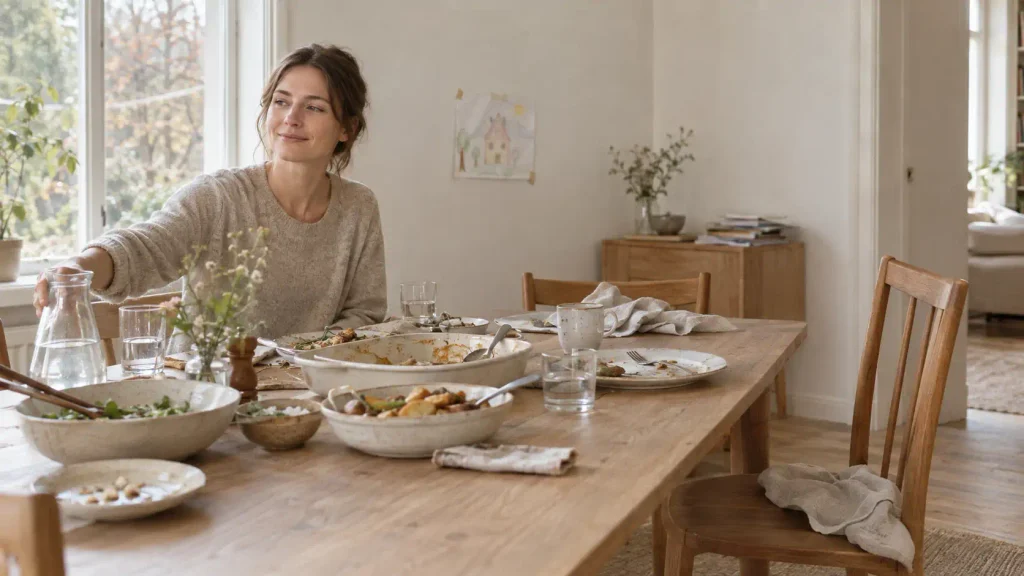
The first time an American friend visited us in Budapest, she asked what we were doing on Sunday. I said lunch. She waited for the rest of the sentence.
There wasn’t any rest. Lunch was the plan, the whole plan, and it took four hours.
That’s the part that doesn’t photograph well. Slow living here isn’t an event you schedule, it’s the shape the ordinary day already has. Nobody calls it anything. My mother would laugh if I told her she practices slow living habits.
I’ve been reading American slow living content for two years now, and something bothers me about it. It’s always a project. There’s a plan, a tracker, a 30 day challenge, a shopping list of linen things.
And that’s the fastest possible way to do slow living, if you think about it.
In this post I’m sharing 10 of them, from five countries, with the honest version of what happens when you try them.
What Is Slow Living, Really?
Slow living is choosing to do fewer things at a pace that lets you notice them, instead of fitting the maximum number of activities into a day. It started as a food protest and grew into a way of running a whole life.
The movement has a birthday. Slow Food was founded in Italy in 1986, and the international movement now runs in more than 160 countries.
Here in Hungary nobody uses the phrase. My grandmother would have found it funny that we needed a word for sitting down to eat.
When was the last time you did one thing for two hours without checking anything? For me it’s usually Sunday lunch, and it took me until my late thirties to stop feeling guilty about it.
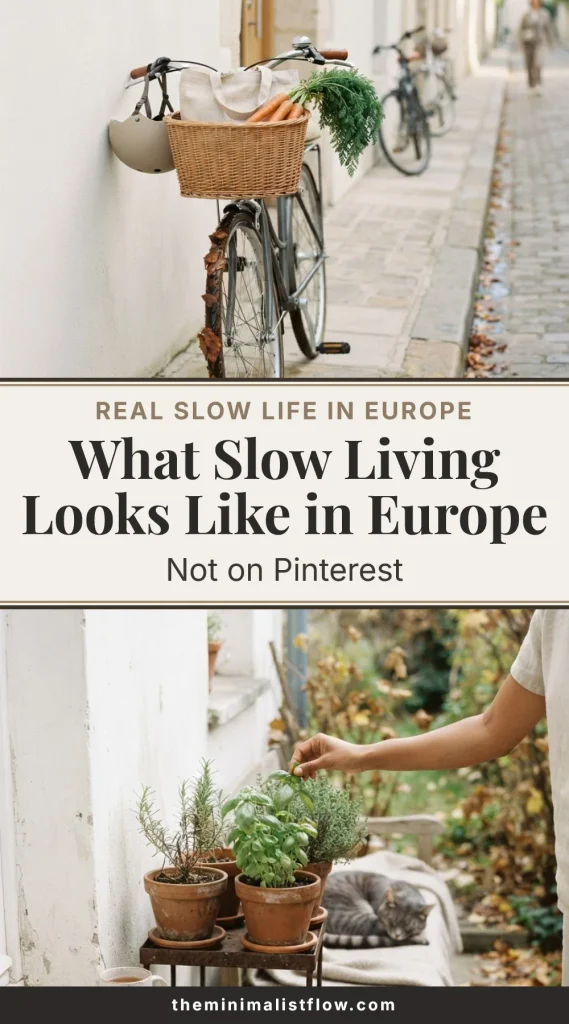
10 European Slow Living Habits That Fit a Real Week
None of these need a free weekend. Most of them need one decision and about 20 minutes.
1.) Cook one thing that takes longer than it should – Italy
Here’s where the whole thing started, and it wasn’t in a magazine.
In 1986 a group of Italians protested against a fast food chain opening near the Spanish Steps in Rome, and out of that came Slow Food, which now runs in more than 160 countries. You can read the movement’s own history if you want the proper version.
The practical version in my kitchen is a pot of bean soup with smoked meat that sits on the stove for two hours while everyone else gets on with their day.
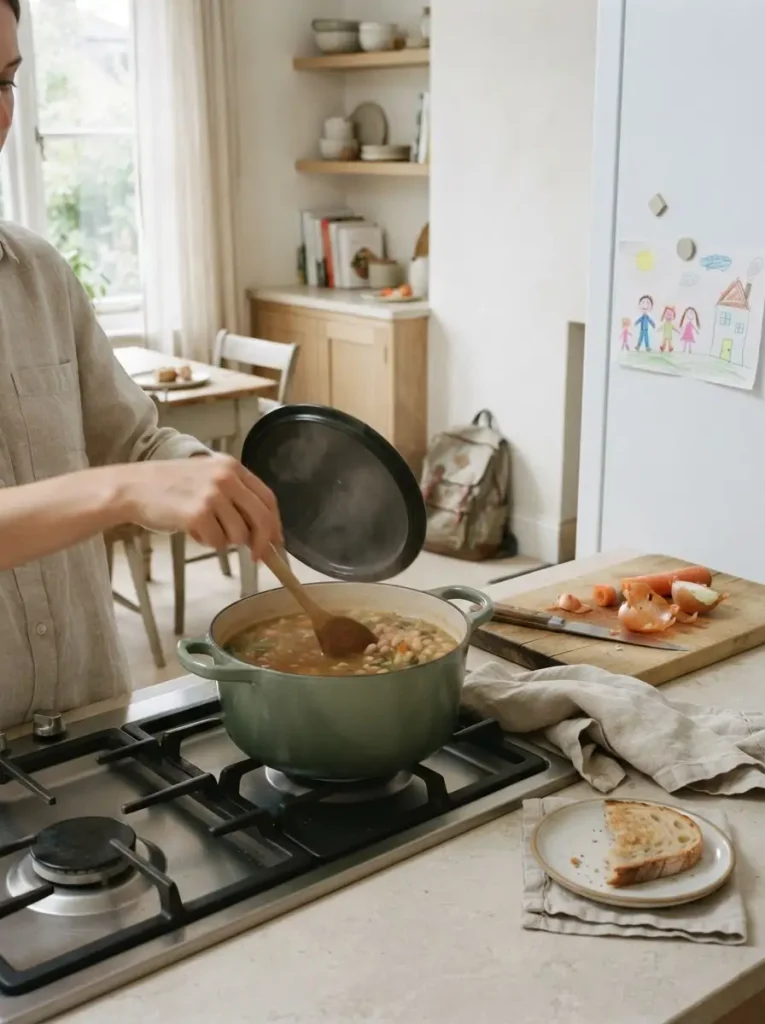
If you cook this way more than twice a month, a heavy enameled cast iron Dutch oven is the one kitchen thing I’d argue for, and ours is 14 years old.
The food isn’t really the point, the smell in the house for the rest of the afternoon is the point.
I’m not standing over it. I’m helping with homework at the kitchen table with something quietly cooking behind me, and the day feels different for it.
Stewed plums are the other one. My daughter eats them straight out of the jar with a spoon, standing at the open fridge, which is not how I imagined this going. Yummy anyway!
Choose the one slow dish you’ll make on Sunday and buy for it on Saturday. Deciding on Sunday morning never works.
2.) Make the table the event, not the food – France
The French have the strongest version of this, and it’s official.
UNESCO put the gastronomic meal of the French on its intangible heritage list in 2010, and if you read what they actually protected, it isn’t the recipes.
It’s the ritual of sitting down together, the order of the courses, the talking.
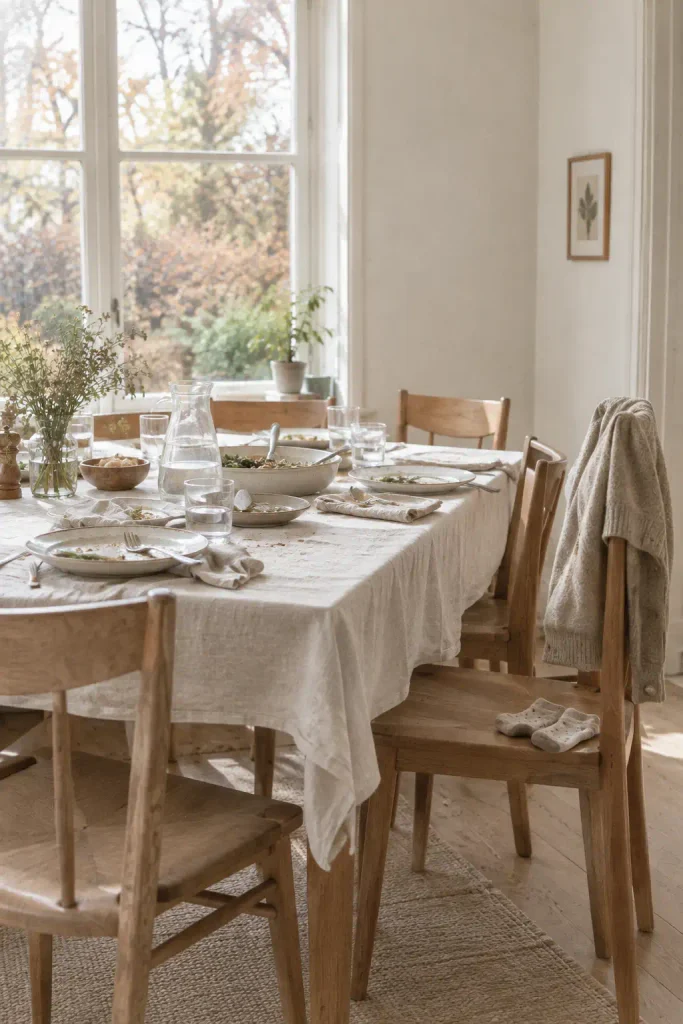
That’s a thought worth sitting with. The heritage is the sitting, not the sauce.
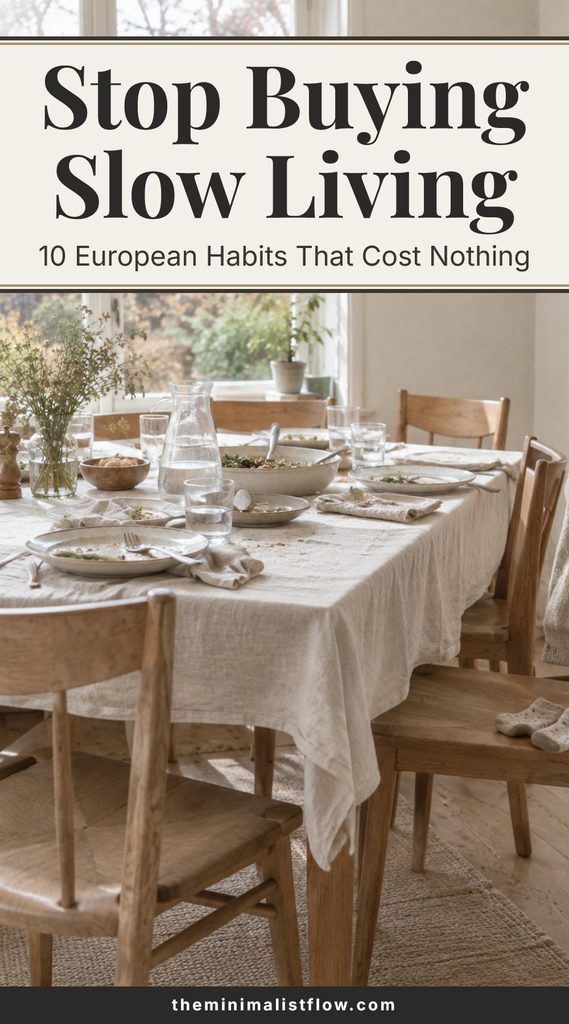
So the slow part costs nothing. You don’t need better food, you need a longer table and nobody standing up to clear plates after 12 minutes.
We do this badly during the week and properly on Sundays. My 16 year old still checks his phone under the table, so I’m not going to sell you a fairy tale here.
But he stays. That’s the whole win, and it took about a year of insisting.
Pick one meal a week where nobody clears the table for 40 minutes. Put the serving dishes on the table so people have a reason to stay.
3.) Put the break in the calendar before you earn it – Sweden
In Sweden there’s fika, and Americans usually translate it as a coffee break, which misses it completely.
A coffee break is what you take when you’ve earned it. Fika is on the schedule whether you deserve it or not, often twice a day, and people stop working for it.
You might be surprised at this point, but wait, let me explain what I mean.
The difference isn’t the coffee. It’s that the break isn’t a reward, so it doesn’t get cancelled when the week gets busy.
A break you have to earn is the first thing that disappears on a Wednesday.
Mine is at 10. Coffee, standing at the kitchen window, looking at the garden. Eight minutes, not an hour.
Recommended: If your week has already eaten every gap, my post on the 11 habits I quit to slow time down is the place I’d start.
Put one 10 minute break into tomorrow with an actual start time. Not after lunch, not when things calm down. 10 o’clock.
4.) Let the slow part of your day be how you get there – Denmark
Denmark does the thing nobody wants to hear: the commute is where the slow living happens.
Copenhagen is built for bikes, and the Danish numbers are not a lifestyle statement, they’re just infrastructure. People ride because it’s the sensible way to get to work.
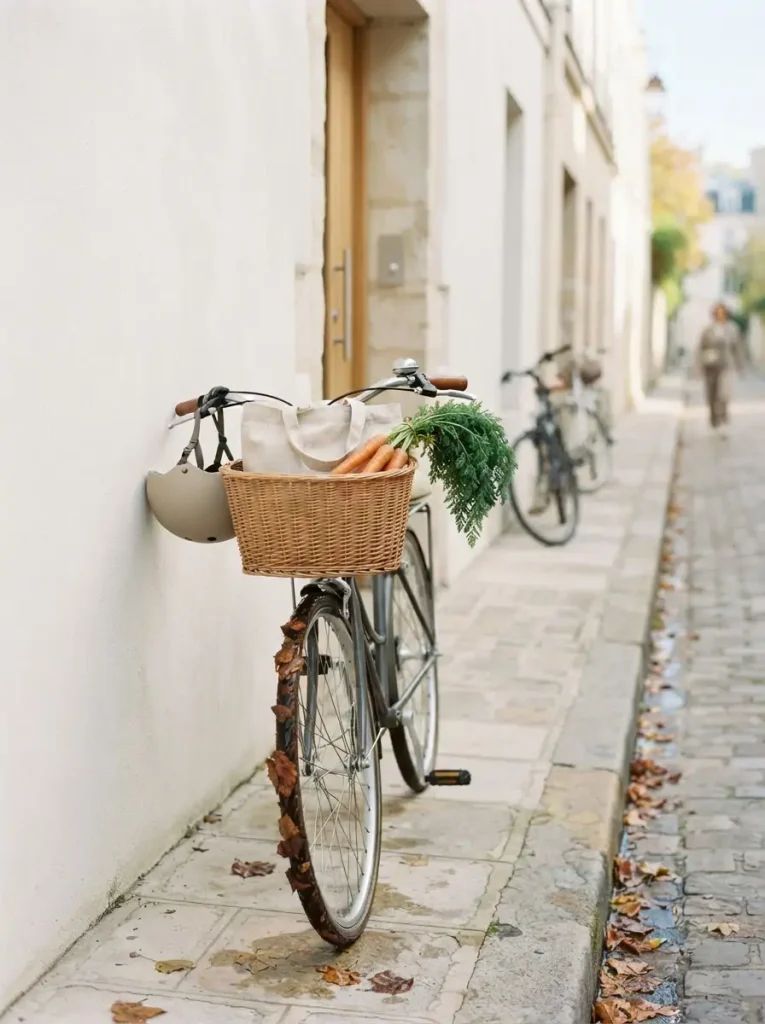
I know most American towns aren’t built like that, and I’m not going to pretend otherwise.
But the transferable bit isn’t the bike. It’s that the journey gets to be a part of the day instead of dead time between the real parts.
Park further away on purpose. Get off one stop early. Walk the kids to school instead of the 4 minute drive, on the two mornings where it fits.
Seven extra minutes you chose beats an hour you didn’t.
Work out your longer route this week, before you need it. Deciding at the junction never happens.
5.) Walk into the woods like you own them – Sweden and Norway
This one genuinely surprises Americans.
In Sweden and Norway there’s a legal right to walk, swim and camp on land you don’t own, and it’s written into law. The Swedish version is called allemansratten, and the Swedish Environmental Protection Agency explains it plainly: don’t disturb, don’t destroy, otherwise the countryside is yours.
Growing up in a small village by the Tisza river, we had the unofficial version of the same thing. We went where we went. Nobody owned the riverbank in any way that mattered to a 9 year old.
Nature stopped being a destination when it stopped needing a plan.
There’s a forest a few minutes from our house now, and I walk the same path in it most weeks. Same trees, same muddy bit near the top.
The repetition is the point. A new walk is an outing you have to organize, and the same walk is just a Tuesday.
Pick one route close to home and walk it three times this month. The route matters more than the schedule.
6.) Grow three things and let the rest of the garden go – Hungary
My grandmother grew potatoes, corn, beets, grapes, tomatoes, apples and strawberries, and we never once went to a market. I’m not doing that.
I have a garden in an outer district of Budapest, a job and two kids, and I grow three things well and let the rest be whatever it wants to be.
Herbs on the terrace, tomatoes, badly, and a quince tree that mostly looks after itself.
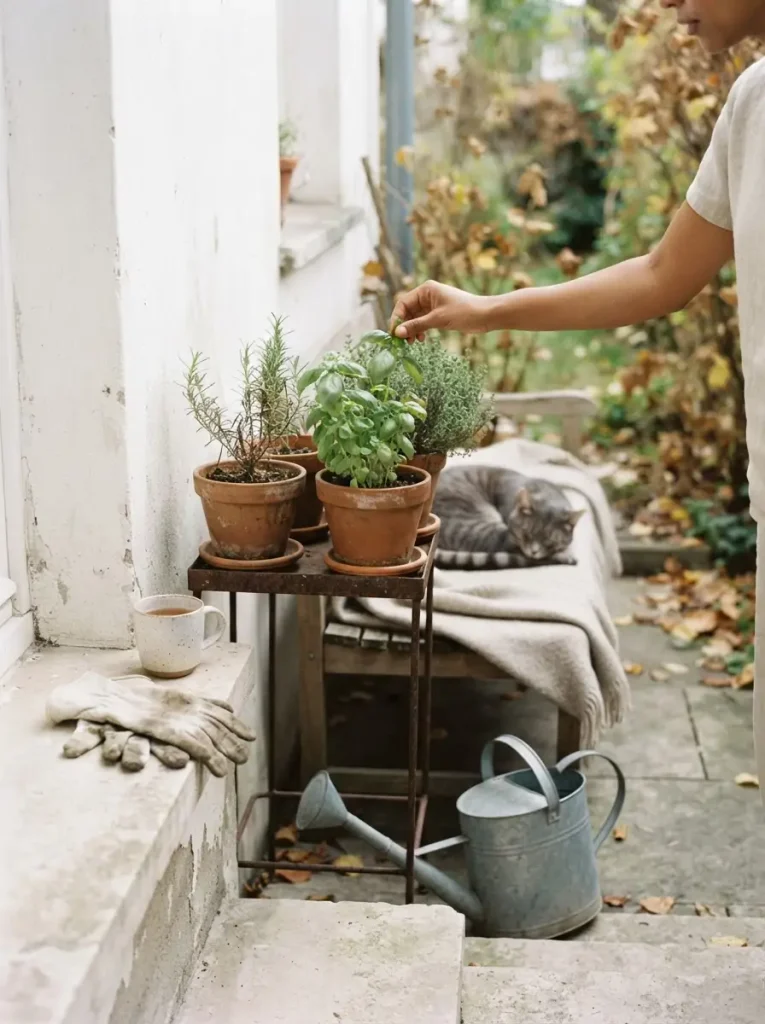
Slow gardening is not a smaller version of real gardening, it’s choosing three plants you’ll actually walk out to every day.
The lawn is the part I let go of completely. It’s a bit wild at the edges, there are more songbirds in the trees than there were five years ago, and I’ve stopped apologizing for it.
Related post: If you want somewhere gentle to start, these 5 minimalist garden project ideas are small enough for one Saturday morning.
Name your three plants this week and put them where you walk past them. Anything behind the shed will die.
7.) Buy for the fifth autumn, not for this season
Italian women taught me this by accident. We spent a week in Milan and I turned my head so many times my son asked if my neck was all right.
Simple clothes, hardly any color, and every single woman looked immaculate. What I eventually worked out was that nothing they wore was new.
Slow fashion isn’t a different shopping list, it’s a different question: will I still want this in five autumns?
I buy two or three things a season now, and I buy them in September when I already know what’s missing, not in July when everything looks appealing.
The wardrobe swap is the same logic. Fifteen minutes at a time, and anything unworn last autumn goes into the donation bag without a long conversation with myself about it.
Recommended: The rest of my thinking lives in my simple capsule wardrobe for every season.
Before the next thing goes in the cart, say the number of autumns out loud. Five, or it stays in the shop.
Reading on paper beats reading on a screen for comprehension, and the gap has been getting bigger, not smaller. A meta analysis of 54 studies with more than 170,000 readers found the paper advantage grew over the years the studies were run.
8.) Read on paper, one book at a time
This is the slow habit with the most evidence behind it.
A meta analysis of 54 studies covering over 170,000 people found that people understand more when they read on paper than on a screen, and the effect got stronger in more recent studies, not weaker. You can see the study itself here.
Slow reading in practice is very boring and very effective. One book, paper and your phone in another room.
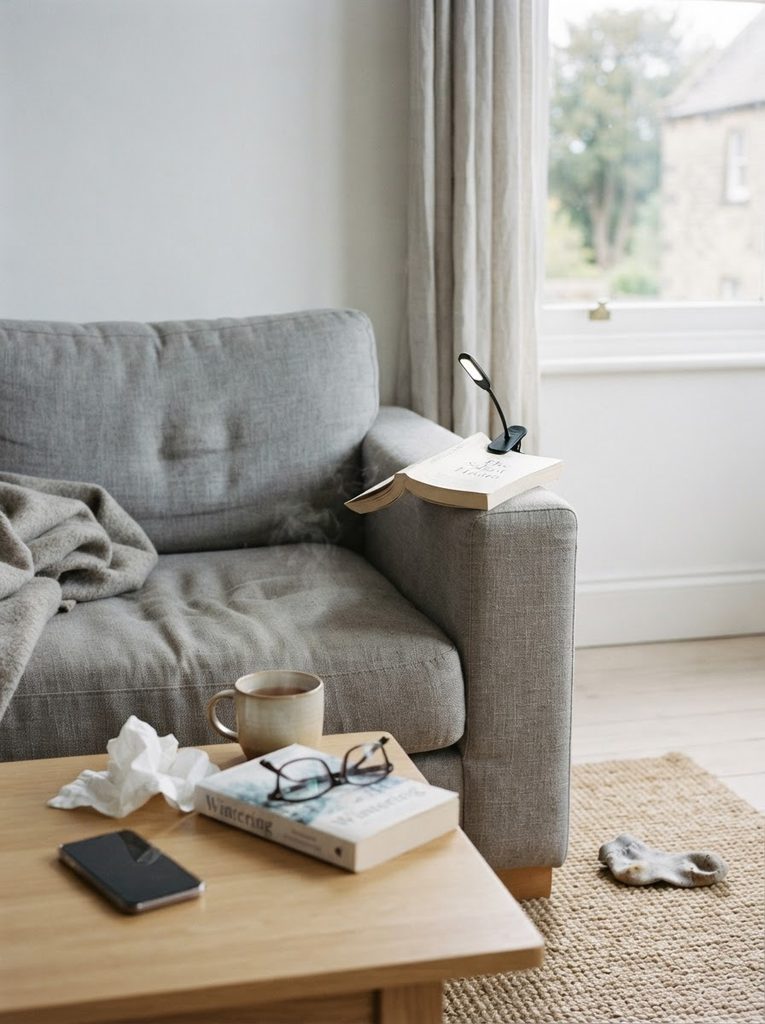
Twenty minutes with a paper book does something that two hours of scrolling never manages, and I say that as someone who scrolls plenty.
I keep the current book on the arm of the sofa, face down and open, because a book inside a drawer is a book I won’t read. A small clip on book light is the one purchase that made this stick for me, because it means I don’t have to wake anyone to finish a chapter.
You might also like: If you want the chair-and-lamp version of this, my 11 cozy reading nook ideas work in a small room.
Put tonight’s book somewhere you’ll trip over it. The nightstand drawer is where reading goes to die.
9.) Give the children one hour nobody planned
Slow parenting sounds lovely until 4 o’clock on a Wednesday. So here’s the specific version: one hour a week that has nothing written in it, and no adult running it.
There’s research behind this, and it’s not gentle reading. Peter Gray’s paper on the decline of play in the American Journal of Play lines up the fall in children’s free, unsupervised play with the rise in anxiety and depression over the same decades.
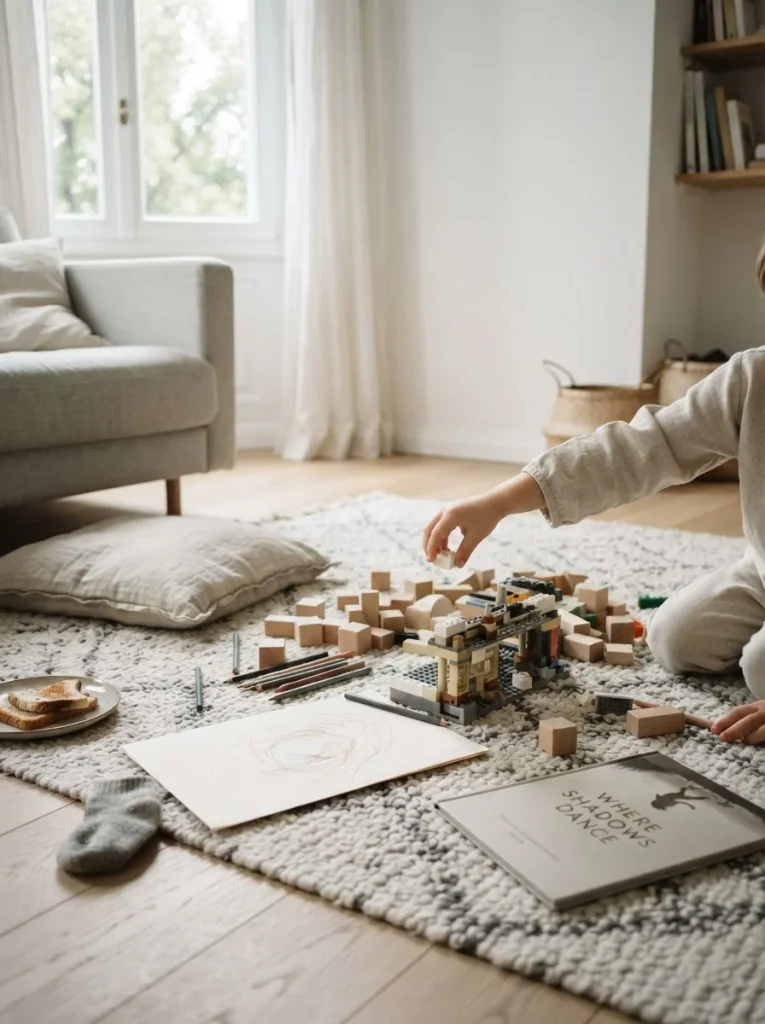
I grew up with the extreme version. We threw stones in the river, tried to catch fish, swam where we absolutely should not have. No adult knew where we were for hours at a time.
I’m not recommending the river. I am saying that an hour with no plan is not an hour wasted, and my daughter is better company after one.
Trust me on this one. The first 20 minutes are complaining, and then something happens.
Block one hour this week and write nothing in it. An untitled hour is much harder to book over than one called free time.
10.) Pick something you’ll be bad at for two years
This last point is my favorite.
The fastest thing in my life used to be my hobbies. Everything had a goal, a deadline and a result.
Then I started learning the violin, which is a spectacularly slow instrument to be bad at. I’ve been at it long enough to know I won’t play the Four Seasons this year, or next year, and Vivaldi is going to have to wait.
A hobby with no deadline is the only part of my week that can’t be optimized, and that’s exactly why I keep it.
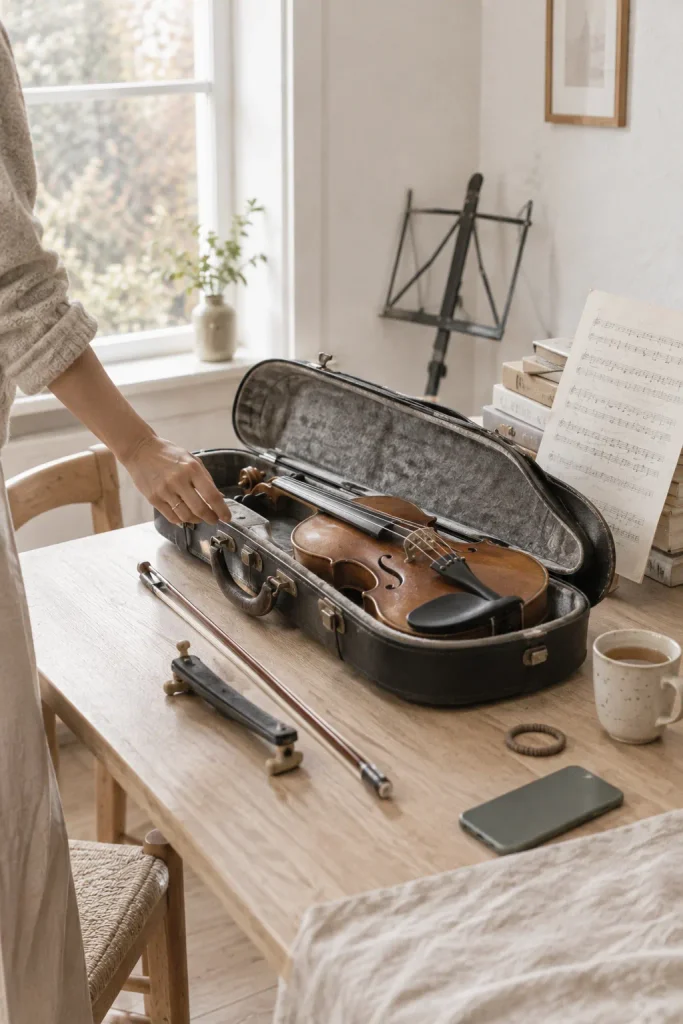
It doesn’t have to be an instrument. Bread, knitting, drawing, a language, a garden, any of these work as long as you’re genuinely bad at it for a while.
Slow hobbies are the ones you can’t finish.
That’s the test. If you can finish it this weekend, it’s a project, and projects are the fast life wearing a cardigan.
Read this post: If you want smaller, these 32 minimalist crafts for adults are a reasonable way in.
Choose the thing you’ll be bad at, and book the first 30 minutes this week. Don’t tell anyone, it makes quitting easier and starting harder.
What Actually Transfers, and What Doesn’t
Here’s the part where I stop being charming about Europe.
Some of this doesn’t move. Cycling to work needs a city built for it, and a four hour Sunday lunch needs people who also think a four hour Sunday lunch is normal. If your whole street eats in 20 minutes, you’ll be sitting at that table alone.
Has anything actually changed for me? You’re right to ask. Quite a lot, but not the parts I expected.
The habits that transferred were the cheap ones. The scheduled break. The same walk. The paper book. Not one of those depends on a country, a budget or a season, and that’s why they survived past February.
The ones that didn’t transfer are the ones that need other people to agree. That’s not a personal failing, it’s just arithmetic.
And there’s a version of American slow living I genuinely admire, which nobody mentions. The willingness to just start. When I walked in Central Park on my birthday a few years ago, the thing that struck me was not the park, it was how directly people went after the thing they wanted.
We Hungarians are better at slowness and much worse at that. The best version is probably the two together: European pace, American nerve.
Pick the smallest habit on this list, the 10 minute break, and give it an actual clock time tomorrow. A break with a time survives the week. A break called later does not.
Practical Tips for Starting Slow Living Without Making It a Project
This is the part I’d tell a friend over coffee, after she’d said yes to all of it and then done none of it.
Attach the new habit to something you already do
A slow living habit that stands on its own gets skipped by day 8.
The break goes right after the school drop off. The slow pot goes on while homework is happening. The paper book goes on the sofa arm, not the shelf.
Pick two, not nine
Two habits kept for a month beat nine kept for four days. I
f you can’t choose, take the scheduled break and the same walk. They carry the most weight per minute.
Do the thinking on Sunday
Ten minutes on Sunday to decide the walking route, the one slow dish and the break time is worth more than any amount of good intentions on Wednesday morning.
My mental Sunday reset covers the whole hour.
The mistakes worth avoiding
- Buying slowness. A basket of candles and three linen throws don’t make a week slower, they just make it more expensive.
- Turning it into a challenge with a tracker and a printable. That’s the fast life again, in a nicer font.
- Announcing it to the family as a new household rule. Do it quietly and let people wander into it.
- Starting with the hardest one. Nobody’s first slow living habit should be a four hour lunch.
If your job is the problem
Sometimes it is, and no amount of candles fixes that. The one thing that moved for me was batching the small interruptions, which I wrote about in what happened when I checked email twice a day, and the longer thinking is in the art of slow productivity.
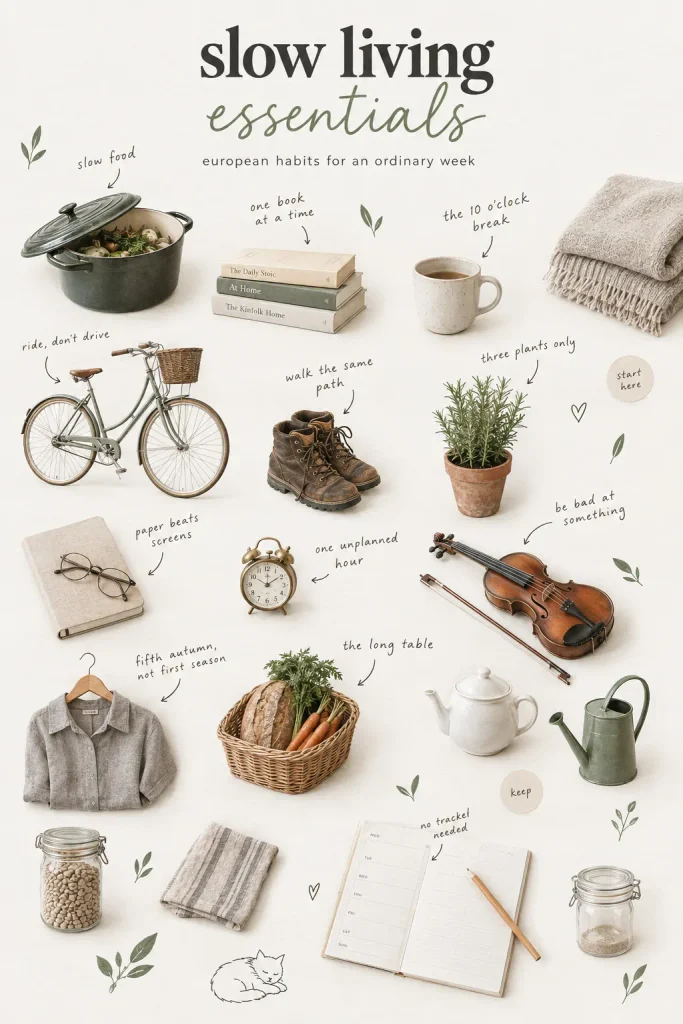
A Saveable Slow Living Checklist
Save this list somewhere you’ll find it on the first hectic Monday of the month.
Slow Living: The Questions Readers Actually Ask
What does slow living actually mean day to day?
Slow living day to day means doing fewer things at a pace where you notice them, rather than fitting the maximum into every hour. In practice it looks like one meal that takes longer than it needs to, one break with a clock time, and one walk you don’t have to plan. It’s a pace, not a list of purchases.
How do I start slow living as a beginner without changing my whole life?
Start slow living by picking two small habits and attaching each one to something you already do every day. The break goes after the school run, the book goes on the sofa arm. Two habits that survive a month beat nine that collapse in a week, and you don’t need to quit anything to begin.
Is european slow living just a nicer way of saying lazy?
European slow living is about choosing where your attention goes, and laziness is not choosing at all. Most Europeans I know work hard and then stop completely, which is the actual difference. The pace isn’t lower all day, it’s that the stopping is real and it isn’t apologized for.
Can I do slow living with young children at home?
Slow living works with young children when the slow thing includes them instead of waiting until they’re asleep. The pot on the stove, the same weekly walk, the long table on a Sunday all work with a small child attached to your leg. The unplanned hour is the one you’ll need help with.
What is the difference between slow living and minimalism?
Slow living is about pace and minimalism is about quantity, and they overlap more than they compete. A minimalist lifestyle removes the things you don’t use, slow living changes the speed you move through the day. You can own very little and still live in a permanent rush.
Do I need to spend money to start slow living?
Slow living costs less than the fast version, which is the part that gets left out of the pretty pictures. Walking the same route, cooking one pot of beans, reading a book you already own and taking a 10 minute break are all free. The expensive version you see online is a shopping style wearing slow living’s clothes.
Which of these european slow living habits transfers best to an American week?
The scheduled break transfers best, because it needs nothing from anyone else. The same walk and the paper book come next. The habits that need other people to agree, like a long Sunday table, take longer and depend on who you live with rather than on you.
How does slow living work in october and the fall specifically?
Slow living in october is easier than at any other time of year because the weather still lets you outside without effort and the school rhythm has settled. Fall slow down habits like a weekly walk and a slow pot on the stove start well in mild weather, and habits started in mild weather tend to survive the cold ones.
I tried slow living before and lasted a week. What went wrong?
Most slow living attempts fail because they’re built as a new routine on top of a full life instead of attached to something that already happens. The other common reason is starting with the biggest habit. Pick the 10 minute break, attach it to a fixed point in your day, and drop everything else for now.
How long before slow living actually feels different?
Most people notice a difference in the second or third week, once the walk has happened a few times and stopped needing a decision. The first week feels like extra effort because you’re still deciding each time. That’s normal, and it’s the reason a fixed route and a fixed time matter more than motivation.
Recommended Reading
Slow October: How to Actually Enjoy the Season
Slow Living in Winter: 15 Gentle Habits for Heavy Seasons
A Beginner’s Guide to Mindful Living
The Hungarian Version of All This
My grandmother never heard the phrase slow living and she would have laughed at it. She grew what we ate, sat down at the same time every day, and repaired things until they genuinely could not be repaired again.
None of that was a philosophy.
It was just how you got through a week in a village with no money.
What we’re all doing now is buying back, one habit at a time, something that used to come free with an ordinary life. I find that funny and a bit sad, and it’s still worth doing.
So: one break with a clock time, one walk you don’t plan, one pot that takes too long. That’s the whole thing, and you can start tomorrow.
Which one would survive your actual week?
Recommended Posts
-
Sweater Outfits: 11 Fresh Ways to Wear One Burgundy Sweater All Winter
In this post I’ll show you how to wear one burgundy sweater 11 different ways, from a Monday at the office to Christmas Eve dinner. You’ll also find color pairs, the mistakes that make a knit look tired, and simple care tips that keep it soft for years.
-
Christmas Savings Challenge: A Printable Tracker for Weekly and Biweekly Paydays
This christmas savings challenge turns the cost of December into small, planned amounts you set aside from now until the holidays. You’ll find 8 simple challenges with the real math for weekly and biweekly paydays, plus a free printable tracker to color in.
-
Christmas Mantle Ideas: 13 Calm Looks With Zero Clutter
These christmas mantle ideas help you build an elegant fireplace display that looks calm instead of crowded. You’ll find 13 looks, from a lush garland with burgundy velvet to a mantel with a TV above it, plus color pairs and the mistakes worth skipping.