Outdoor Patio Rugs: What to Buy and Where to Put It
One outdoor patio rug changed our terrace in an afternoon. Not an expensive one. Just the right size, the right material, in the right place.
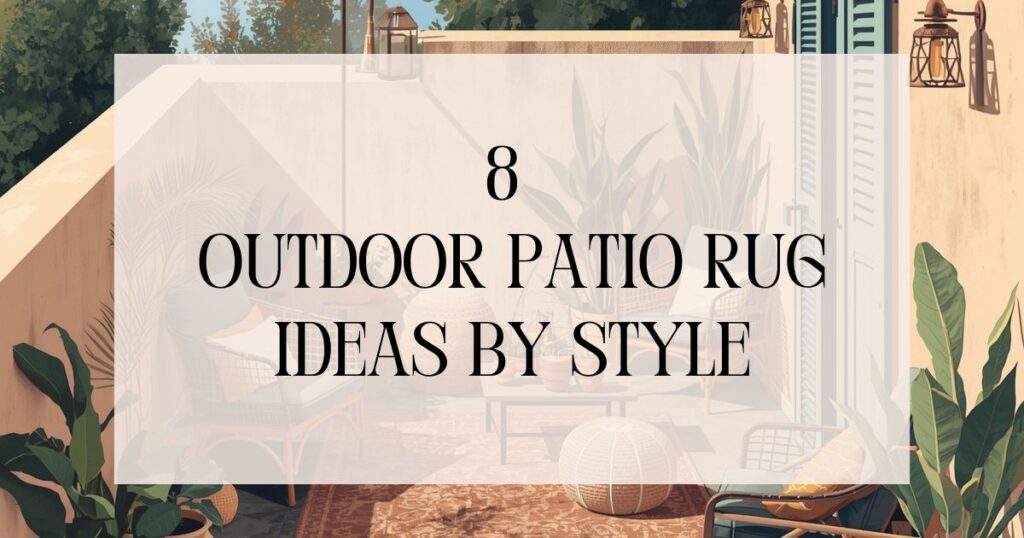
Before that, the space looked fine but never felt finished. The furniture was there, the plants were doing their thing, and something was still off.
Turns out it was the floor. I had tried a few wrong rugs before getting there: one that was too small and looked like a doormat under a full seating group, one that arrived in a shade of green that fought with everything else, one that turned into a mold situation after the first rain.
What I know now is that outdoor patio rugs follow a few simple rules that nobody explains upfront. Get those right and the rest is just picking what you like.
What an Outdoor Patio Rug Actually Does for a Space
The functional answer: it protects the surface underneath it, defines the seating area, and gives bare feet somewhere comfortable to land. Concrete and wood decking are hard and unforgiving. A rug changes that immediately.
The visual answer is more interesting. An outdoor patio rug does what an indoor area rug does for a living room: it pulls the furniture together into something that looks like a decision rather than a collection of separate pieces. Without it, chairs and a table sit on a deck. With it, you have an outdoor room.
A well-chosen rug also adds the one element most outdoor spaces are missing: softness. Even a flatweave rug in a geometric pattern reads as warmer and more livable than bare stone or wood. It signals to everyone who steps onto the patio: this is a place where you are supposed to slow down.
For more on how to make an outdoor space feel like a genuine extension of the home rather than just furniture on a deck, the 30-Day Declutter Challenge for Busy Moms article the same intentional approach applied to the whole home.
Outdoor Patio Rug Materials: What Holds Up and What Does Not
This is the part most people skip and then regret. The material is the difference between a rug that lasts three seasons and one that is already buckled and fading by August.
Polypropylene
The most practical outdoor patio rug material available. It resists UV rays, dries fast after rain, does not grow mold or mildew, and cleans up with a garden hose. It comes in every style imaginable, from clean modern geometrics to classic stripes to rag rug textures. For an exposed, uncovered patio: this is the material.
Recycled PET (Recycled Plastic)
Soft underfoot, genuinely weather-resistant, and made from recycled bottles, which is a nice thing to know. These rugs have improved significantly in quality over the past few years. Many are now washable rugs that can go into the machine, which makes them especially good for households with kids or pets.
Jute and Sisal
Beautiful. Not for uncovered outdoor spaces. Natural fibers absorb moisture and break down faster than synthetic ones when exposed to direct rain and prolonged sun. If your patio is fully covered, jute is a lovely choice. If it is not: stick with synthetics that mimic the look. As Wayfair’s outdoor rug buying guide notes, jute and sisal are best kept on covered porches where moisture is not a consistent factor.
Polyester
Rich color saturation and a softer feel than polypropylene, but it does not hold up as well in direct sun over time. Good for covered patios and screened porches. Not the first choice for fully exposed outdoor patio rug situations.
Outdoor Patio Rug Sizing: The Rule That Changes Everything
Too small is the most common mistake. A rug that only sits under the coffee table and leaves the chairs floating off the edge does not anchor the space. It just adds an object to the middle of it.
The sizing rule for a seating area: all front legs of the furniture should be on the rug. Ideally all four legs, but at minimum the front two. For a dining area: the rug needs to be large enough that chairs stay on it even when pulled out from the table. That usually means adding at least 24 inches to the table dimensions on every side.
Quick size reference for outdoor spaces:
- Small patio or balcony: 5×7 or 5×8. Enough to anchor a bistro set or a pair of chairs with a small side table.
- Medium patio with a seating group: 8×10. The most versatile outdoor rug size for a standard sectional or sofa with two chairs.
- Large patio with a dining set: 9×12 or larger. Size up rather than down. You can always add a second rug to define a separate lounge zone.
- Narrow paths and entries: A runner rug, usually 2×8 or 2×10, is the right call for long, thin spaces between zones.
- Small round bistro set or corner nook: A round rug in a 6 or 8-foot diameter gives the arrangement a finished quality without the rigidity of a rectangle.
Leave about 18 inches of visible flooring around the edges of the rug if the space allows. This frames the rug rather than making it look like it ran out of room.
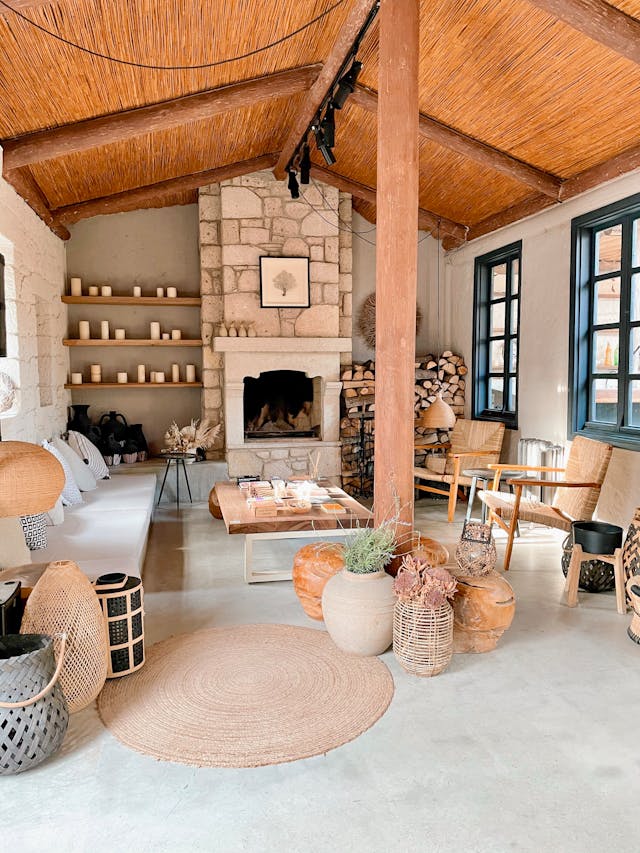
8 Outdoor Patio Rug Ideas by Style
Now the part that is actually fun. Once you know the material and the size, the style decision is the one you get to make based on what the space actually needs.
1. The Striped Rug for a Clean, Timeless Look
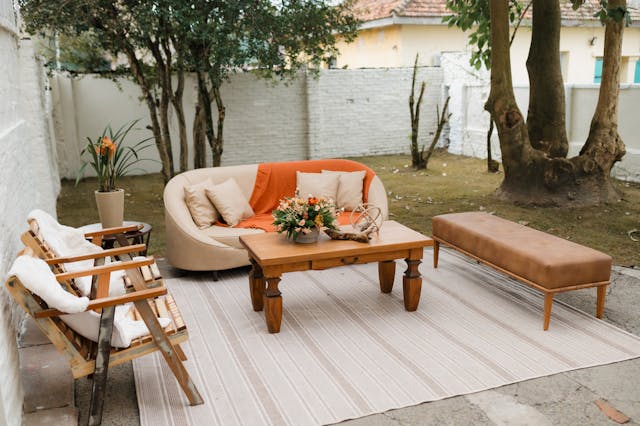
A striped rug is one of the most versatile outdoor choices available. Coastal stripes in navy and white, earthy tones in cream and terracotta, bold black and white for a more graphic look. Stripes work with almost any furniture style and do not compete with other patterns in the space the way a busy geometric can.
They also have a directional quality that most other patterns do not: a horizontal stripe makes a space feel wider, a vertical one makes it feel longer. On a narrow balcony or terrace, the orientation of the stripe is worth thinking about before you buy.
Extra Idea: Use a striped rug in navy and cream under a natural rattan or teak furniture set and add one bold navy throw pillow on the sofa. The rug and the pillow create a color echo across the space without anything needing to match exactly.
2. The Navy Rug as an Anchor Color
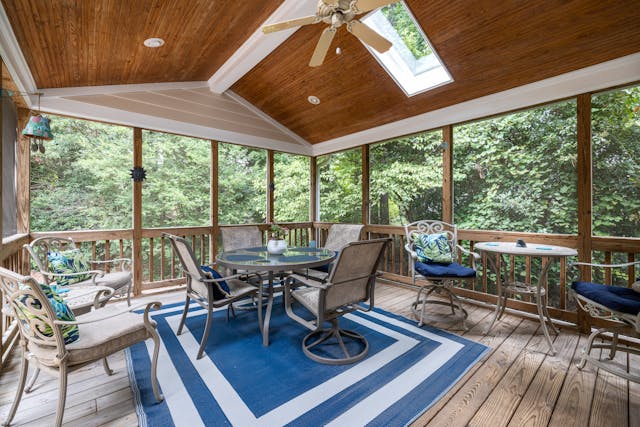
A navy rug outdoors does something specific: it grounds the whole space. Navy reads as sophisticated but relaxed, which is the exact tone most people want from an outdoor living area. It works against natural wood decking, terracotta tile, concrete, and gray stone equally well.
The key with a solid navy rug is what goes around it. Natural materials, warm neutrals, and a plant or two are all the styling it needs. Navy is doing enough on its own. As HGTV’s guide to the best outdoor rugs confirms, a strong base color like navy is one of the most reliable anchor choices for outdoor furniture groupings.
Extra Idea: Navy and terracotta is one of the best outdoor color combinations right now. A navy outdoor patio rug with terracotta pots and warm wood furniture is the whole scheme. Nothing else is needed except maybe one cream or linen cushion to keep it from feeling heavy.
3. The Modern Rug for a Geometric Statement
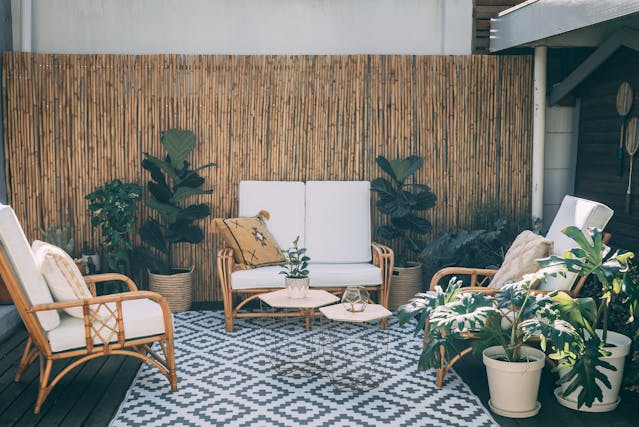
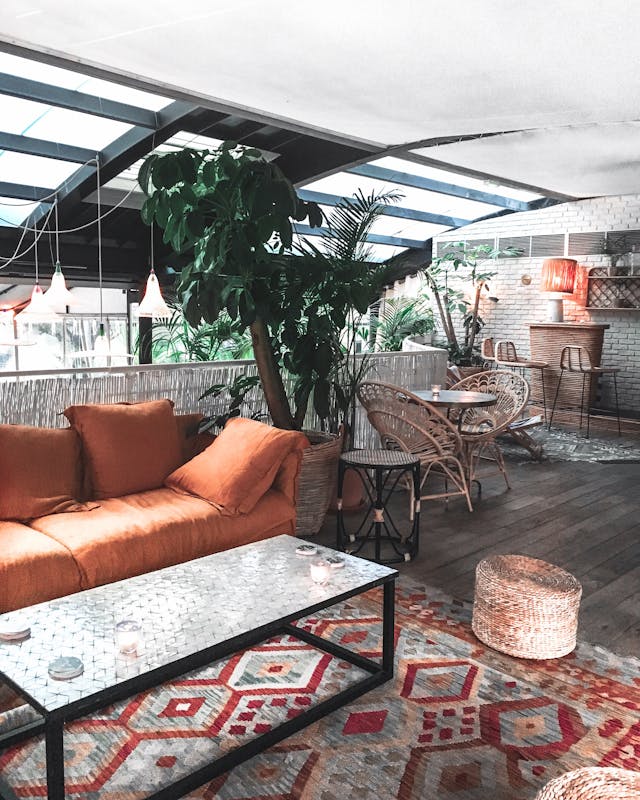
A modern rug with a geometric print brings structure and personality to an outdoor space that would otherwise feel like a furniture catalogue. Diamond patterns, abstract shapes, bold color-blocked designs. These rugs are for people who want the outdoor space to feel intentional, not just pleasant.
The rule with a geometric is the same as with decorative pillows: let it be the statement and keep everything else quiet. A bold modern rug under simple metal or concrete furniture, with no competing pattern anywhere else in the space, is an arrangement that looks completely put together without requiring any additional styling effort.
Extra Idea: If you want the look of a modern rug without committing to one pattern for the whole season, check Ruggable’s washable outdoor rug collection. The covers are removable and machine washable, and you can swap them out when you want something different. The insert stays, the look changes.
4. The Washable Rug for a Practical Outdoor Space
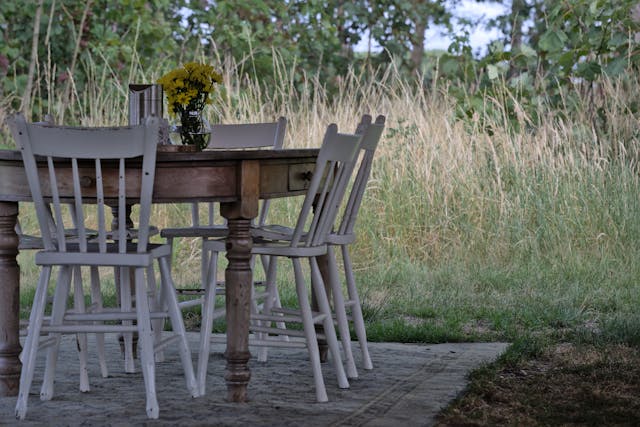
If there are kids involved, or a dog, or both, a washable rug is not optional, it is necessary. Machine-washable outdoor rugs are made from recycled PET and polypropylene blends that hold up in the wash without losing their color or shape. They also tend to be flatweave, which means they dry quickly and do not hold dirt between the fibers the way a higher-pile rug would.
The practical choice is not usually the one that sacrifices style. Washable outdoor patio rugs now come in the same quality of patterns and colors as non-washable options. The convenience is just built in.
Extra Idea: Keep a washable rug in your outdoor entertaining space and treat it the way you treat your outdoor furniture cushion covers: wash it at the end of the season, let it dry completely before storing flat, and it will look new when you bring it back out the following spring.
5. The Round Rug for a Bistro Set or Small Nook
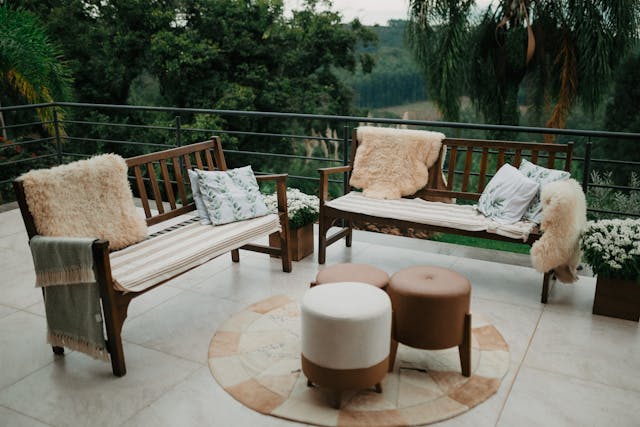
A round rug under a round bistro table is one of those combinations that works so immediately and so well that it is almost obvious once you see it. The shapes mirror each other, the space feels complete, and the rug does not have corners poking out beyond the edge of the furniture on all four sides.
Round rugs also work well in corners of larger patios where you want to create a secondary seating area. A round rug defines the circle of chairs around it as its own zone without needing a wall or a divider to signal the separation.
Extra Idea: On a large deck with two distinct zones, try a large rectangular outdoor patio rug under the main seating group and a smaller round rug under a corner reading chair and side table. The two shapes define the two areas and the difference in scale prevents the space from feeling repetitive.
6. The Rag Rug or Textured Flatweave for a Relaxed, Lived-In Feel
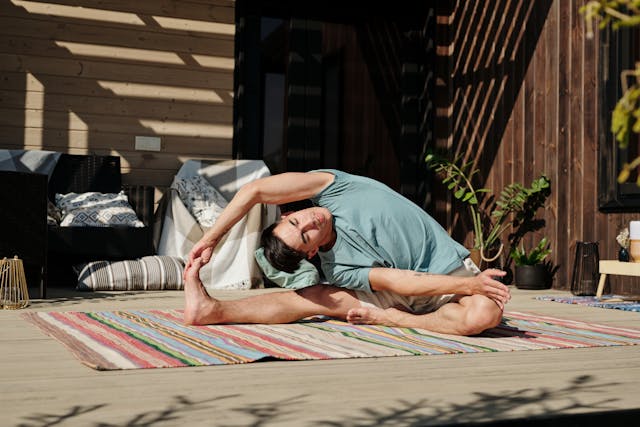
A rag rug outdoors is unexpected in the best way. The texture, the slightly irregular surface, the layered tones that come from the woven strips of color, all of it reads as genuinely personal rather than catalog-styled. It is the rug that says someone lives here and actually uses this space.
Rag rugs and chunky flatweaves work particularly well on covered porches and screened outdoor spaces where the relaxed aesthetic of the rug matches the slower pace of the space itself. For an uncovered patio in a rainy climate, a synthetic version that mimics the rag rug look gives you the same warmth without the moisture risk.
Extra Idea: Layer a rag rug over a larger solid flatweave outdoor patio rug. Put the solid down first in a neutral color. Layer the rag rug on top, slightly off-center. The layered rug look, which has been working beautifully in indoor spaces for years, translates directly to outdoor areas and makes a covered porch feel genuinely cozy.
7. The Runner Rug for Transitions and Entryways
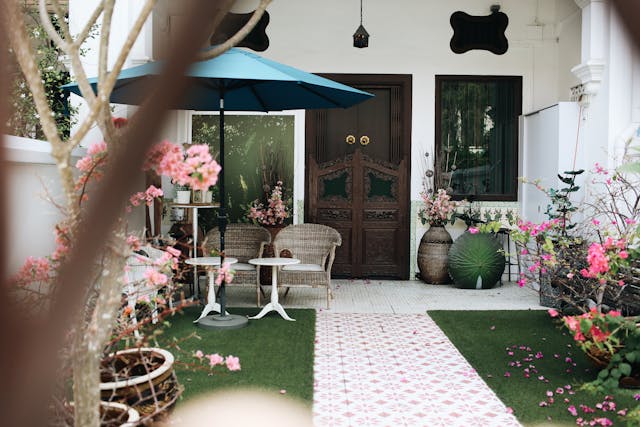
A runner rug on an outdoor staircase, along a garden path, or connecting the back door to the main seating area does something the area rug cannot: it gives the space a sense of movement and direction. It says here is where you walk, and here is where you arrive.
Runners are also the right call for long, narrow balconies where a wide rug would overwhelm the space but leaving the floor bare feels unfinished. A 2×8 or 2×10 runner along the length of a narrow terrace turns a corridor into a space worth pausing in.
For more on how small, intentional outdoor additions create a space that genuinely works for a family, the summer bucket list with kids post covers the broader idea of making outdoor spaces part of how the family actually lives in summer, not just looks at from inside.
Extra Idea: Use two matching runner rugs side by side on a wide outdoor staircase instead of one wide rug. It is easier to lift, dry, and store at the end of the season, and the gap between the runners adds a visual detail that looks deliberate rather than like a budget compromise.
8. The Budget Outdoor Rug That Actually Looks Good
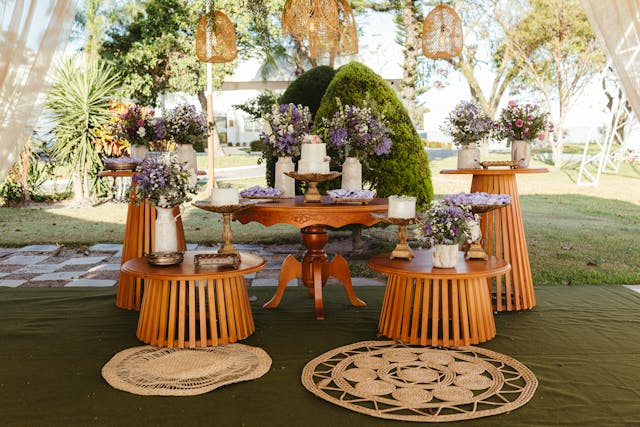
Good patio decorating ideas on a budget usually start with the rug, and for good reason. A $40 polypropylene outdoor rug in a solid color or simple stripe can look as intentional as one that costs four times more if the size is right and the placement is correct.
The two things that make a budget outdoor patio rug look expensive: correct sizing and a rug pad underneath. A rug pad keeps it from shifting, adds a small amount of underfoot cushion, and prevents moisture from sitting between the rug and the surface below. It costs ten dollars and makes a visible difference in how the rug sits and wears. As Lowe’s outdoor rug buying guide points out, the material and placement decisions often matter more than the price point when it comes to outdoor rug longevity.
Extra Idea: Shop for outdoor patio rugs at the end of summer. Most retailers discount their outdoor rug inventory significantly in August and September. The selection is still strong, and the same rug that was full price in May costs a fraction of that in late summer. Store it flat, rolled, in a dry place, and it is ready for next spring.
How to Care for Outdoor Patio Rugs So They Last
Most outdoor patio rugs are easier to care for than indoor ones. A garden hose, a mild soap if needed, and a spot in the sun to dry completely. The important part is the drying. A rug stored or left rolled while still damp is a mold situation waiting to happen, even a synthetic one in a very wet climate.
Once a month during the season: shake it out and hose both sides. Every few months or after a heavy use period: scrub lightly with a soft brush and mild dish soap, rinse thoroughly, and leave it flat in the sun to dry for a full day before putting furniture back on it.
At the end of the season: clean it, dry it completely, roll it, and store it somewhere dry. A garage shelf, a storage bench, a closet. A clean, dry rug comes back out in spring looking nearly new. A rug stored damp does not.
Outdoor Patio Rug Shopping Checklist
Go through these before you buy anything.
- Measure the space and decide on size before looking at styles
- Check whether the patio is covered or exposed and choose material accordingly
- For exposed patios: polypropylene or recycled PET only
- For covered patios or screened porches: wider material options including jute
- Make sure the size puts at least the front legs of all furniture on the rug
- If kids or pets: look specifically for washable rugs in recycled PET
- Consider a rug pad for stability and moisture protection
- Check care instructions before buying: garden hose is easiest
- Plan for end-of-season storage: roll it, dry it, store it flat
Save this before your next outdoor patio rug purchase.
Do This Today
- Measure your patio. Specifically the area where furniture sits. Write it down. Every rug decision starts from that number.
- Look at your current outdoor floor. What is it made of? What color? That surface is the background the rug will sit against. Pick your rug in relation to it, not independently of it.
- Decide on one style direction. Striped, solid, geometric, textured. One direction. Then find the best version of that thing in the right size and the right material.
Q&A: Outdoor Patio Rugs
1. Can I use an indoor rug outside?
Not on an exposed patio. Indoor rugs are not treated for UV resistance, moisture, or mold and they will degrade quickly outside. On a covered, dry porch with minimal weather exposure, a durable indoor rug might survive, but it is a risk. Outdoor patio rugs are designed for outdoor conditions. Use the right tool for the job.
2. Do outdoor rugs get moldy?
They can if they stay wet for extended periods. Polypropylene and recycled PET rugs are the most mold-resistant options because they do not absorb water. The key is not letting any rug sit damp against a surface without airflow underneath. Lift it occasionally to check.
3. What is the best outdoor rug for a windy patio?
A heavy flatweave polypropylene rug, anchored with a rug pad or furniture sitting on top of it. You can also use weatherproof rug anchoring clips at the corners, especially on corners that are not covered by furniture. They are inexpensive and add years to a rug’s life on an exposed patio.
4. Can I leave my outdoor rug out all year?
In mild climates with low rainfall: yes, with monthly maintenance. In climates with heavy rain, snow, or freezing temperatures: bring it in for the winter. Freezing and thawing damages even synthetic rugs over time, and a rug stored dry in a garage comes back out in spring looking significantly better than one that spent winter outside.
5. What size outdoor rug do I need for a 12×12 patio?
An 8×10 or 9×12 depending on how much of the furniture you want on the rug. For a full seating group with a sofa and chairs: 9×12. For a smaller seating group with room to walk around the edges: 8×10. Leave 18 inches of visible floor around the rug’s perimeter if the space allows.
6. Are striped outdoor rugs still in style?
Yes. A striped rug is one of the most enduring outdoor rug styles because it works with nearly every furniture style and does not date the way trend-specific patterns do. Navy and white, cream and sage, rust and natural, all work well and all feel current without chasing a trend.
7. What outdoor rug works on a budget?
A solid or simply striped polypropylene outdoor patio rug in the correct size is the highest-value option. The size matters more than the pattern or brand. A correctly sized $45 rug looks better than an undersized $150 one. Shop end-of-season sales for the best prices on good quality options.
Recommended Reading
- How to Choose Throw Pillow Combinations That Actually Work in Your Home because the same principles that make an outdoor rug arrangement work, color anchoring, texture variety, and intentional scale, apply directly to the pillows that go on the furniture above it
- Stop Buying Storage Bins You Don’t Need for the broader case for buying fewer, better things for every space in the home, including the outdoor ones
- Realistic Summer Evening Routine Ideas because an outdoor space that actually feels good to be in is one of the best places to build an evening wind-down routine in the warmer months
Last Thing
The terrace I mentioned at the beginning of this post now has a striped flatweave polypropylene rug in cream and warm sand under the main seating group and a small round jute-look synthetic under a single chair in the corner.
Neither of them cost very much. Both of them changed the whole feel of being out there.
The floor is almost always the last thing people think about outdoors and the first thing that makes a difference when you get it right. You do not need new furniture or a redesign. You need the right rug in the right place.
What does your outdoor floor look like right now, and what is the one thing it is missing?
You May Also Like
-
Sweater Outfits: 11 Fresh Ways to Wear One Burgundy Sweater All Winter
In this post I’ll show you how to wear one burgundy sweater 11 different ways, from a Monday at the office to Christmas Eve dinner. You’ll also find color pairs, the mistakes that make a knit look tired, and simple care tips that keep it soft for years.
-
Christmas Savings Challenge: A Printable Tracker for Weekly and Biweekly Paydays
This christmas savings challenge turns the cost of December into small, planned amounts you set aside from now until the holidays. You’ll find 8 simple challenges with the real math for weekly and biweekly paydays, plus a free printable tracker to color in.
-
Christmas Mantle Ideas: 13 Calm Looks With Zero Clutter
These christmas mantle ideas help you build an elegant fireplace display that looks calm instead of crowded. You’ll find 13 looks, from a lush garland with burgundy velvet to a mantel with a TV above it, plus color pairs and the mistakes worth skipping.