Declutter Your Closet This Fall Before Back to School Takes Over

Do you open your closet every morning and feel a small wave of dread before you even pick an outfit?
If that sounds familiar, you are exactly who I had in mind, because learning how to declutter your closet properly, just once, can quietly fix that feeling for good.
My daughter starts school for the very first time this year, and somehow that one fact turned into three trips for shoes, a backpack we absolutely did not need, and a pile of tiny clothes that no longer fit anywhere near her arms.
Between the school shopping and the shift in weather, my own closet started to feel like it was bursting at the seams too. I know I am not the only mom who felt that particular kind of chaos in late August.
Here is a quick way to check where you stand right now.
Open your closet and ask yourself how many pieces you have actually worn since June. If the number feels embarrassingly low, that is not a personal failure. That is simply what a closet looks like after a full season with no real edit.
In this article, you will find realistic, doable ways to declutter your closet before the school year fully takes over, plus a few tools I genuinely use myself and a checklist you can save for later.
Disclosure: This post contains affiliate links. If you make a purchase through these links, I may earn a small commission at no extra cost to you. Thank you for supporting my blog!
A Small Confession Before We Start
Where I grew up – in Central and Eastern Europe – we hardly ever threw anything away. Not a glass bottle, not a spare button, not even a sweater with a hole in it. Whatever we could, we reused or turned into something new.
We didn’t have recycling bins either, because there was no need for them given all that.
Looking at a pile of old clothes, my grandmother somehow saw three more years of use in every single piece.
So when I see those closet makeover videos where everything is perfectly organized in labeled boxes and color-coded, part of me smiles, and part of me thinks that’s not really what it’s all about.
You don’t need an expensive system or a matching set to have an organized closet.
What you need is honesty about what you actually wear, and a few quiet hours that you intentionally set aside for yourself. That’s really the whole secret—no hocus-pocus or magic.
Or as we say here in Hungary: “All you need is common sense, nothing more.”
Save pin for later!
14 Realistic Ways to Declutter Your Closet This Fall
1. Start With the One Shelf You Keep Avoiding
Every closet has that one shelf, drawer, or corner nobody wants to touch. Start there instead of the easy stuff, because that spot is usually where the real clutter is hiding.
Give yourself fifteen minutes and a trash bag, nothing more.
Real Simple’s August closet refresh guide makes a similar point, starting small keeps the whole task from feeling impossible before you even begin.
2. Pull Everything Off Season Out First
Before you decide what to keep for fall, take all your T-shirts, sandals, and swimsuits out of your main closet. You can’t make good decisions about your fall wardrobe while your closet is still full of summer clothes.
With a set of high-quality vacuum storage bags, this step will be a breeze.
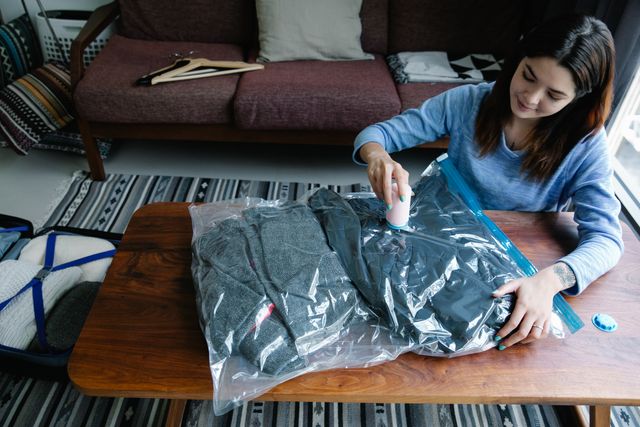
I like these Amazon Basics vacuum storage bags because they shrink bulky summer clothes down to almost nothing, and they hold up season after season without splitting.
3. Try the Twelve Month Test
Hold up each piece and ask one honest question: have you worn this in the last twelve months, including all four seasons? If the answer is no, and it is not a genuinely sentimental item, it is probably time to let it go.
This one small rule does more work than any fancy organizing method.
It removes the guesswork and the guilt in one move, because the twelve month window already covers every season, every holiday, and every random Tuesday you might have needed it.
4. Separate the Life You Have From the Life You Miss
We all hold onto a few items that we used to wear—or thought we’d wear. A blazer from a job you’ve already quit, a pair of jeans that no longer fit, or that one dress you swore you’d wear again someday.
Keep two or three of them if they’re important to you, and let the rest go with a smile.
I think the most important thing is not to get attached to any of them. Remember: they’re just clothes.
5. Build a Small Fall Capsule From What You Already Own
Before buying anything new, lay out everything you kept and look for a color story that already exists in your closet. Most of us own more matching pieces than we realize, we just never put them side by side.
A simple, repeatable color palette makes mixing and matching almost automatic.

Related post: I wrote a full breakdown of the Japanese color palette that never goes out of style if you want a ready made framework instead of guessing.
6. Match Your Hangers So Your Eyes Can Actually See What You Own
This sounds small, but a mismatched pile of wire, plastic, and wooden hangers makes even a clean closet look chaotic. Matching hangers give your eyes one less thing to sort through every single morning.
A set of slim, non slip hangers also frees up real space on the rod.
I switched to these velvet non slip hangers two years ago and honestly fit close to a third more clothes in the same closet afterward.
7. Give Worn Out Basics an Honest Goodbye
Stretched out t shirts, pilled sweaters, tights with runs, these do not need a dramatic decision. They need a bag by the door and a trip to the donation bin or the textile recycling drop off at your local grocery store.
If it would embarrass you to be seen wearing it in public, it does not belong in the closet anymore.
That one sentence has cleared out more of my closet than any organizing method ever has.
8. Store What’s Leaving the Rotation the Right Way
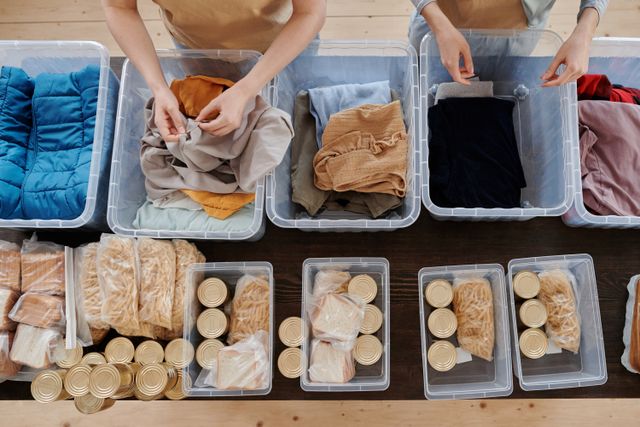
Not everything you keep needs to live on the main rod. Off season formalwear, maternity clothes you are saving, or your daughter’s outgrown clothes waiting for a younger cousin all deserve proper storage instead of a random pile on a shelf.
Clear, stackable bins let you actually see what is inside without digging.
These stackable storage bins with lids are the ones sitting in my own closet right now, and I can find anything in about five seconds flat.
9. Protect the Pieces That Actually Matter
Every closet has a handful of pieces worth extra care, a wool coat, a special occasion dress, a leather jacket you saved up for. These deserve better than a bare hanger collecting dust and pet hair for eight months.
A breathable garment bag keeps moths, dust, and sun fading away without trapping moisture.
These gusseted garment bags work well for coats and dresses alike, and they fold flat when you are not using them.
10. Handle the Kids’ Closets at the Same Time
If back to school shopping is what pushed you toward this whole project, do not stop at your own closet. Kids grow so fast that last year’s fall clothes are often already too small, and there is no reason to store clothing nobody can wear.
Sort with your child sitting right there if they are old enough.

Let them try a few things on, hand you what feels too tight or too short, and turn the whole task into ten minutes instead of an afternoon you dread.
11. Borrow a Few Style Rules Instead of Buying More
Once your closet is edited down, resist the urge to immediately refill it. A smaller, well chosen wardrobe almost always looks more put together than a full one, because you actually know what you own.
Look for outfit formulas built around pieces you probably already have.
These Italian fall outfits that look expensive without the price tag are a good place to borrow ideas from before you spend a single dollar on something new.
12. Set a Five Minute Reset for Every Sunday
A decluttered closet does not stay that way on its own, mine certainly does not. Five minutes every Sunday evening, rehanging anything that slipped off, refolding one messy stack, is usually enough to keep the whole thing from sliding backward.
Treat it the same way you treat brushing your teeth, small, boring, and non negotiable.
The habit matters far more than the amount of time you spend on it.
13. Swap Kids’ Clothes With Another Family Instead of Buying New
Kids outgrow fall clothes so fast that a jacket worn for one season can look brand new. Before you buy anything for the new school year, ask around, a friend, a cousin, a neighbor with a slightly older or younger child often has exactly what you need.
This one habit alone can cut your back to school spending in half.
It also means the clothes you are removing from your own closet get a second life instead of sitting in a donation pile for months, which fits nicely with a slower, less wasteful way of dressing a family.
14. Take a Before and After Photo of the Space
This step feels almost silly, but it works. Take one photo of your closet before you start, then another once you are done, even if the difference looks small to anyone else.
Seeing the actual change keeps you motivated for the Sunday reset habit later.
On the days when the closet slides back into chaos, and it will, that photo reminds you how good calm actually looked, and how little effort it took to get there.
Save pin for later!
Why Fall Actually Works In Your Favor
Fall has a funny way of making decluttering feel less like a chore and more like a natural reset. The air turns cooler, school starts, and we are already pulling out sweaters and boots, so we might as well decide what stays and what goes while everything is out of the closet anyway.
Research on home clutter and mental well being backs this up.
One widely cited study found that a cluttered home takes a measurable toll on our stress levels over the course of a day, and that effect showed up more strongly in the women running the household than in their husbands, even after accounting for things like mood and marriage satisfaction.
You can read more about that research on the Institute for Family Studies blog, which is a fascinating rabbit hole if you have ten minutes.
A separate study published in the Journal of Environmental Psychology on ScienceDirect found something similar. Clutter chips away at how good we feel in our own home, though the effect softens quite a bit once a space starts to feel visually calm again. In other words, clearing even one shelf can genuinely change how a whole room feels.
Even the writers behind Balance Through Simplicity, who build their entire philosophy around slow living, put it beautifully: autumn quietly teaches us how good it feels to let things go.
I happen to agree, and I suspect it might be the calendar working in our favor as much as the crisp morning air.
I always assumed I was the exception here, until I looked at the actual numbers. Around a quarter of what hangs in the average closet has not been touched in a year, which is exactly why the twelve month test below works as well as it does.
Before you get started on these steps, ask yourself two quick questions.
1.) Have you organized the contents of your closet so that you can get dressed quickly, even on a hectic morning?
2.) And if a friend were to open your closet right now, would you be proud of it, or would you rather quietly close the door?
Answer very honestly, because that’s what will help you the most. Don’t try to please me or anyone else – just yourself.
Save This Closet Declutter Checklist
Save this list for later so it is ready the next time you have a free hour and the motivation finally hits.
- Pull every off season item out of the closet first
- Ask the twelve month question about every piece you are unsure of
- Set aside a donation bag and a trash bag before you begin
- Sort kids clothing at the same time if school shopping started this
- Choose one simple color palette for your fall capsule
- Switch to matching, slim hangers if your budget allows it
- Store keepsakes and off season pieces in clear bins, not random boxes
- Protect your good coats and dresses with breathable garment bags
- Do a five minute reset every single Sunday
- Wait one full week before buying anything to replace what you removed
3 Small Actions You Can Do Today
Do this before you even start reading anything else about closet organizing. These take less than twenty minutes combined and give you real momentum.
1.) Grab one trash bag and fill it with anything visibly worn out, no thinking required.
2.) Pull three hangers of clothes you have not touched since spring and put them by the door.
3.) Set a timer for ten minutes and clear just the top shelf, nothing else
FAQ – Common Questions
For most closets, plan on two to three hours if you are doing a proper edit for the first time in a while. Break it into two shorter sessions if a whole afternoon is not realistic with kids around, one hour rarely finishes the job but it still moves things forward. After that first deep edit, the seasonal refresh usually takes under an hour because you are only sorting through what changed since spring.
Always before. Shopping first almost guarantees you will buy pieces that do not fit the wardrobe you actually have, and you will end up decluttering the new stuff too.
Many grocery stores and retailers, including several major chains, now accept textile recycling even for stained or torn items. Check the customer service desk before you assume something has to go straight in the trash.
It matters even more in a small closet, honestly. Less space means every wasted inch costs you more, and matching hangers or stackable bins make a bigger visible difference in a small space than a large one.
Give them the final say on a small decision, like which drawer holds their favorite shirts, while you handle the bigger sorting. Kids resist decluttering less when they feel some control over the outcome.
Yes, and honestly it saves time rather than costing it. Fewer, better pieces mean fewer decisions every single morning, which matters a lot more once school drop off is part of your routine again. Most moms I talk to worry a smaller wardrobe will feel boring, but in practice it just means everything you own actually gets worn, instead of half the closet sitting untouched for years.
Buying organizing products before doing any actual editing. Bins and hangers only help once you know what needs to be organized, otherwise you are just paying to store clutter more neatly.
Twice a year works well for most households, once in early fall and once in spring. Kids’ closets often need a quicker check every few months since sizes change so fast.
Keep a small, defined box for these, not an entire section of the closet. A wedding dress or a baby’s first outfit deserves a proper home, but it does not need to compete with your everyday clothes for space.
For some people, yes, especially if the closet has been a source of daily stress for years. For most of us though, an honest afternoon and a checklist like this one gets you ninety percent of the way there for free.
Every fall, I come back to a simple thought.
A closet isn’t just for storing our clothes; it’s a small part of the daily rhythm we create for ourselves and our families. When it works well, mornings feel easier. When it doesn’t, we feel the impact even before our coffee.
So the real question isn’t how many pieces of clothing you should own, but rather what feeling the contents of your closet evoke in you when you open the door.
Here’s a quick question: what would you get rid of this weekend if you allowed yourself to get started?