
9 Kitchen Cleaning Hacks That Save You Time While You Cook
It’s one thing to cook – if you’re a mom, you know what I’m talking about – but it’s not okay when you’re finally done cooking and you still have twenty minutes to clean up, and something’s wrong.
In this post, I’ll show you 9 kitchen cleaning tricks so you don’t have to waste extra time cleaning up after cooking.
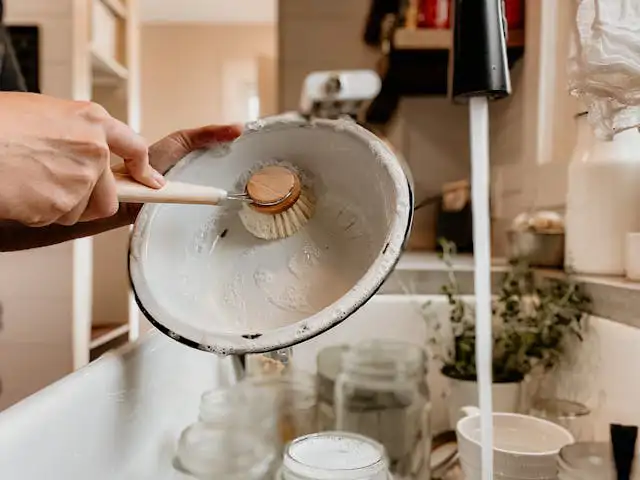
I hate mess. Always have. It is not something I decided one day. It is just how I am wired. A cluttered counter makes me tense before I have even started cooking.
So a long time ago I stopped thinking of cooking and cleaning as two separate events. I clean while I cook.
When something is on the stove and I am waiting, I put things away. I wipe the counter. I load the dishwasher. By the time dinner is on the table, the kitchen is mostly clean already.
I do not leave a disaster zone behind me. Not because I am particularly organized or have extra time. Just because I never let it build up to that point.
These nine tips are exactly how I do it. They work for busy days, for people who cook every night, and for anyone who is tired of cleaning up after cooking feeling like a second job.

Why Cleaning While You Cook Changes Everything
Most people cook, sit down to eat, and then face the kitchen. By that point the food has dried on every surface, the pan is stuck, and there are three cutting boards you do not remember using.
The problem is not the cooking. The problem is letting everything sit.
A spill that takes three seconds to wipe up fresh takes three minutes to scrub off later. Dried pasta water on the stovetop is completely avoidable if you wipe it while the pot is still warm.
This is what professional chefs call clean as you go. It is not a cleaning technique.
It is a way of cooking. And once it becomes a habit, you will not remember how you cooked without it.
What You Need Before You Start
- A damp microfiber cloth within reach at all times
- A small garbage bowl on the counter for scraps
- A bowl of warm soapy water in the sink for used utensils
- An empty dishwasher before you start cooking
- A spray bottle with an all-purpose cleaner nearby
None of this takes more than two minutes to set up before you start. And it makes every tip below much easier to follow.
One Habit That Changed My Kitchen Routine
Before I found my rhythm with this, I used to cook and then spend thirty minutes cleaning. The kitchen looked fine while I cooked but by the end it was a mess I did not want to deal with.
The shift was simple: I stopped cooking from start to finish and then cleaning.
I made cleaning part of cooking. Every time I stirred something or waited for water to boil, I did one small thing. Put the milk back in the fridge. Rinse the colander. Wipe the counter.
Small things. None of them took more than a minute. But by the end of cooking, almost everything was done.
If you are also working through a bigger kitchen or home reset, the 30-Day Declutter Challenge for Busy Moms is a good place to start. One small task per day, no overwhelm.
Try This
Right now, before your next meal: empty the dishwasher completely. This is the single most useful thing you can do before cooking.
When the dishwasher is empty, dirty dishes go straight in instead of piling up in the sink. Three minutes of prep, thirty minutes saved later.

The Hungarian Kitchen Standard
In Hungary, where I live, there is a quiet expectation that the kitchen is tidy by the time you sit down to eat. Not spotless, but functional. Dishes are not piled up. The stove has been wiped.
It is not a rule anyone states out loud. It is just what cooking looks like.
You cook, you put things away as you go, you sit down to a meal and a manageable kitchen. Not a war zone you avoid looking at.
This is the standard I grew up around and it is the one I cook by. The nine tips below are how I keep it.
9 Kitchen Cleaning Hacks to Use While You Cook
1. Start With an Empty Dishwasher and a Clean Sink
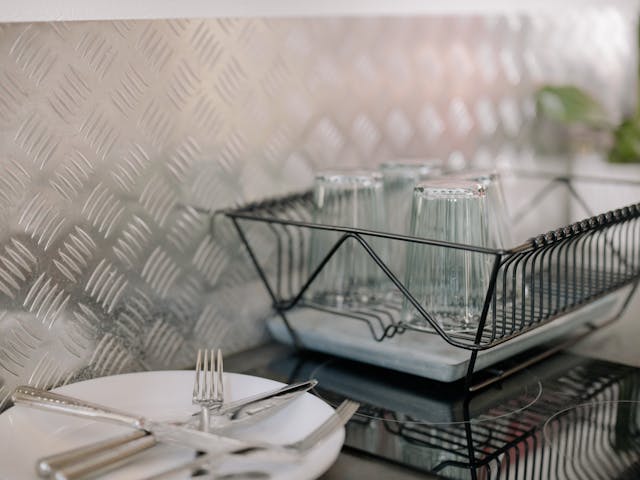
Before you cut a single vegetable, empty the dishwasher and clear the sink.
This takes three minutes and it changes the entire flow of cooking. When both are clear, used dishes and utensils go straight where they belong instead of piling up on the counter.
A cluttered sink during cooking means you cannot rinse things, cannot soak things, and cannot find space to work. A clear sink is a working tool, not just a place to stack dirty dishes. Treat it that way.
Same with the dishwasher. If it is full of clean dishes when you start cooking, every dirty thing you produce has nowhere to go except the counter. Two minutes before dinner prep saves twenty minutes after.
Why it works: You remove the main reason dishes pile up. There is simply nowhere else for them to go except where they belong.
2. Put a Garbage Bowl on the Counter Before You Start
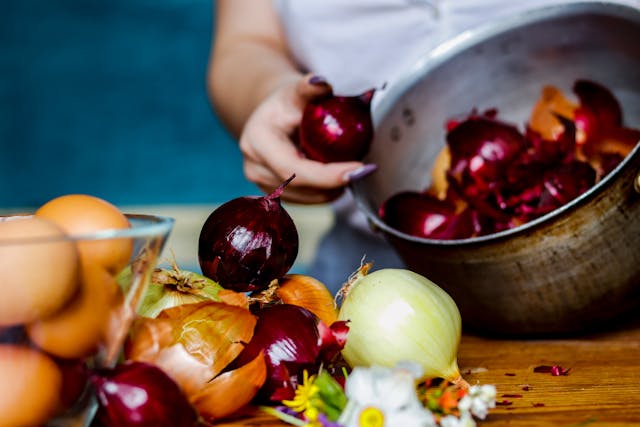
Place a medium-sized bowl directly on your prep surface. Every scrap goes in there: onion skins, vegetable peels, egg shells, packaging, anything you would otherwise carry to the bin or leave on the counter. When you are done, one trip to the bin and the counter is clear.
This sounds minor until you watch yourself make four or five trips to the garbage can during a single meal prep. Those trips break your focus and slow you down. The garbage bowl eliminates all of them.
You can also use a large zip-lock bag laid flat on the counter. Same result, and you can seal it and toss it directly if the contents are messy. This is especially useful when working with raw meat where you do not want scraps sitting in an open bowl.
Why it works: You stop making micro-trips and keep your prep area clean without thinking about it.
3. Fill a Bowl With Warm Soapy Water for Used Utensils
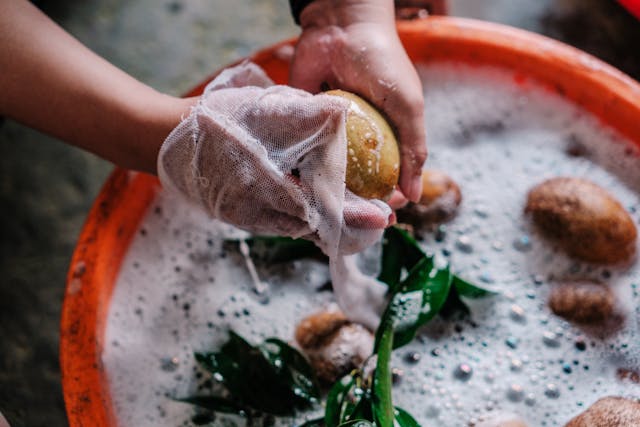
Fill a large bowl or half the sink with warm water and a squeeze of dish soap before you start cooking. Every time you finish with a spoon, whisk, ladle, or measuring cup, drop it in. Food does not dry onto it. When you are done cooking, a quick rinse and it is clean.
This is one of the oldest professional kitchen tricks and it works because it solves the real problem: food that dries onto utensils requires scrubbing. Food that soaks comes off with almost no effort.
Keep raw meat utensils separate from the soak, and keep knives out entirely. But for everything else, this bowl removes ninety percent of the post-cooking scrubbing.
Why it works: Soaking takes zero extra time since it happens while you cook. Cleanup afterward is a fraction of what it would be.
4. Wipe Spills the Moment They Happen
A damp cloth within arm’s reach is not optional. Keep one folded on the counter next to where you work. The second something drips, spills, or splatters, wipe it. Do not wait until you finish the step you are on.
Tomato sauce on the stovetop takes two seconds to wipe when it is fresh. When it dries and heats again, it takes five minutes and a lot of effort. Every spill you leave gets harder. Every spill you wipe immediately costs you almost nothing.
The same applies to the floor. If something drops, pick it up now. Stepping on a piece of raw chicken or slipping on a wet spot later is worse than the two seconds it takes to deal with it immediately.
Why it works: Fresh spills take seconds. Dried spills take minutes. There is no reason to wait.
5. Put Away Ingredients as Soon as You Are Done With Them
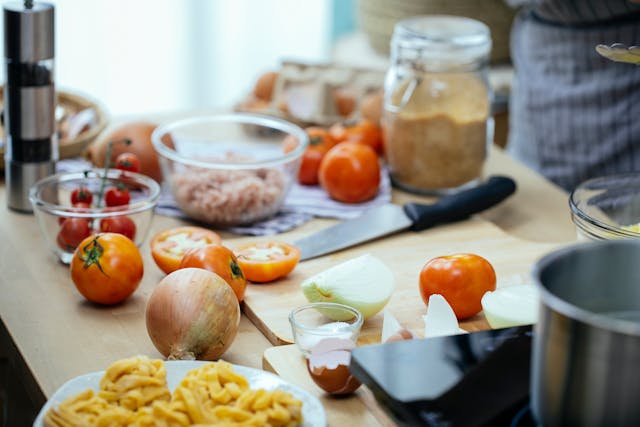
Flour goes back in the cupboard the second you measure it, not when you finish baking. Milk goes back in the fridge the moment you close the carton. Every ingredient you finish using goes away before you pick up the next one.
This habit alone cuts post-cooking cleanup by a third. When you finish cooking, the counter has only what you actively used in the last step. Not everything you pulled out over the last forty-five minutes.
It also makes cooking easier. A clear counter means you can see what you have, find things quickly, and actually have space to work. Clutter slows you down while you cook, not just when you clean.
Why it works: You never face the full reset at the end. Ingredients disappear back to where they came from throughout cooking.
6. Use Your Cooking Wait Times for One Small Task
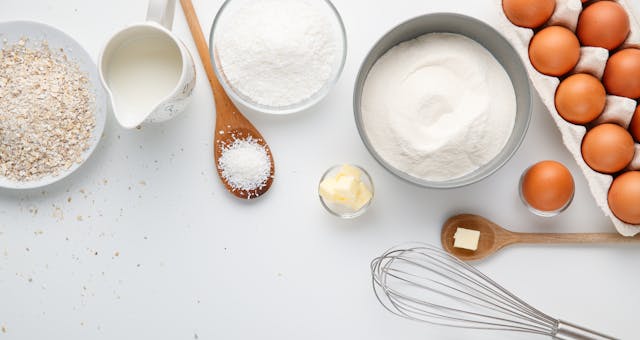
The onion needs two more minutes to soften. The pasta water is still coming to a boil. The oven has twelve minutes left. These pauses are not downtime. They are cleaning time.
One small task per pause. Wipe the counter you just used. Load the cutting board into the dishwasher. Put the spice jars back. Rinse the colander.
None of these take more than sixty seconds. But by the time dinner is ready, you have quietly done ten of them.
This is the core of clean as you go and it is the reason I never face a destroyed kitchen after cooking. I did not clean faster. I just used time that was already there.
Why it works: Cooking has built-in pauses. Using them means cleaning happens in parallel with cooking, not after it.
7. Keep the Stovetop Clear and Wipe It Before It Cools

Move pots and pans off burners you are not using. A stovetop covered in four pans when you are only actively using two creates mess on the surface and makes it harder to see what is boiling over. Use only what you need, and move everything else off.
When a burner is done, wipe it while it is still slightly warm. Not hot. Warm. Food releases much more easily from a warm surface than a cold one. A quick wipe with a damp cloth on a warm burner takes fifteen seconds. The same job on a cold, crusted burner takes scrubbing.
Boil-overs are the stovetop’s worst enemy. A wooden spoon laid across a boiling pot breaks the bubbles and prevents overflow. It is an old trick and it works every time.
Why it works: The stovetop is the hardest surface to clean when food dries onto it. Keeping it clear and wiping it warm makes it easy.
8. Clean the Cutting Board Between Tasks
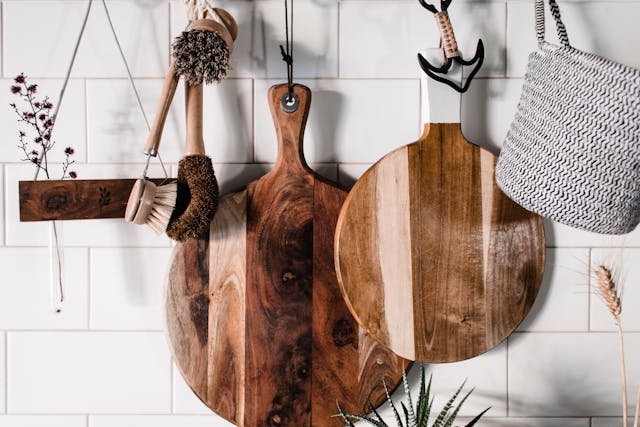
If you chop vegetables, then garlic, then herbs on the same cutting board without rinsing it, you carry flavors across everything and you make the board harder to clean at the end. A quick rinse under the tap between tasks takes ten seconds.
For meat: use a separate cutting board and wash it immediately with hot soapy water when you are done. Do not let it sit. Raw meat residue on a cutting board is a hygiene issue, not just a cleaning one.
After the final use, load the cutting board straight into the dishwasher or prop it up to air-dry. A cutting board that is clean and put away before dinner is served means one less thing to deal with later.
Why it works: Cutting boards accumulate smells and bacteria when they sit. Rinsing between tasks and cleaning immediately after keeps them in good condition.
9. Do a 60-Second Counter Reset Before You Sit Down to Eat
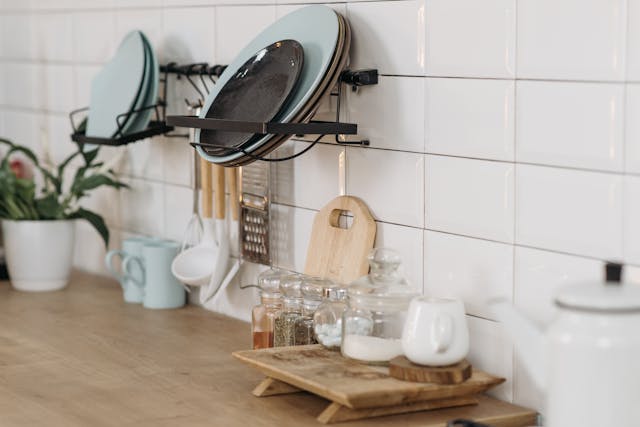
Before you serve the meal, do one fast scan of the kitchen. Spray and wipe the main prep surface. Put the cloth in the laundry or hang it to dry. Check the stovetop. Close any open cupboards. Sixty seconds, maximum.
You will not finish everything in sixty seconds. The pots still need washing. But the kitchen will look like a space you can come back to after dinner rather than something you want to close the door on.
Coming back to a kitchen that is mostly clean is a completely different experience from coming back to one that is a full mess.
That sixty-second reset is the difference between dreading cleanup and finding it manageable.
Why it works: It sets a baseline. Everything after dinner is detail work, not starting from zero.
For a more complete approach to keeping your home tidy without spending all your time on it, Stop Buying Storage Bins You Don’t Need covers the same logic applied to home organization: fewer things to manage means less to clean.
Kitchen Cleaning Checklist for Every Cooking Session
Save this and use it before your next meal.
- Empty the dishwasher before you start
- Clear and wipe the sink
- Set a garbage bowl on the counter
- Fill a bowl with warm soapy water for utensils
- Keep a damp cloth within reach
- Wipe spills immediately, not at the end
- Put ingredients away as soon as you finish with them
- Use cooking wait times for one small cleaning task
- Wipe the stovetop while it is still warm
- Do a 60-second counter reset before sitting down to eat
Pin this so you have it ready the next time you cook.
Start With This
- Empty the dishwasher right now. Before the next meal, not during it. Just do it now so it is ready.
- Put a bowl on the counter next time you cook. One bowl for scraps. Watch how many trips to the bin it eliminates.
- Set a cloth next to the stove. Not under the sink. Not in a drawer. Right there, next to where you work.
Before You Start Cooking
- Dishwasher empty
- Sink clear
- Garbage bowl on the counter
- Damp cloth within arm’s reach
- Spray bottle nearby
Save this pin for later!
Q&A
1. I cook fast and forget to clean as I go. Any way to build this habit?
Start with just one thing: the garbage bowl. It requires no behavior change during cooking, just one extra piece on the counter. Once that feels normal, add the soapy water soak. One habit at a time is how this sticks.
2. My kitchen is small. I do not have space for a garbage bowl and a soak bowl.
Use the sink for the soak and a zip-lock bag taped to a cupboard door for scraps. Both can work in a small space without taking up counter room.
3. What about the pots? They are always the last thing I clean.
Fill pots with water as soon as you serve from them. Even cold water in a hot pot prevents food from cementing onto the surface. When you come back to it after dinner, a rinse is usually enough.
4. Does this actually save time or does it just spread the cleaning out?
It saves time. Food that dries requires scrubbing. Food that is still fresh takes seconds. Using cooking wait times for cleaning costs no extra time at all, since those minutes were idle anyway.
5. My kids help cook and they make a bigger mess. Does this still work?
Yes, but assign them one job: the garbage bowl. Kids are usually willing to throw things away if there is a clear container to aim for. It keeps them involved and reduces the counter mess at the same time.
6. What is the single most effective thing on this list?
Wiping spills immediately. It is the biggest lever. Everything else saves you minutes. This one saves you scrubbing.
7. I already do some of this. What should I add next?
The 60-second reset before eating. Most people skip this because dinner is ready and they just want to sit down. But those sixty seconds mean the kitchen you come back to after dinner is already mostly done.
8. What about the floor? I always have a messy floor after cooking.
Keep a small handheld broom hanging on the inside of a cupboard door near the stove. A thirty-second sweep during a cooking pause takes care of most of it before it gets walked through the house.
9. Is it worth cleaning the microwave after every use?
A quick wipe with the cloth you already have on the counter takes ten seconds if the splatter is fresh. If you wait, you are looking at steaming it with lemon water and actual effort. Ten seconds versus five minutes. Fresh is always easier.
10. Any tips for grease on the stovetop and hood?
Wipe the hood filter with a paper towel and a drop of dish soap once a week while the stove is cool. For the stovetop, Woman and Home’s kitchen cleaning hacks guide has a surprisingly effective tip: vegetable oil removes grease from the extractor hood better than any cleaner because grease dissolves in grease.
Useful Reading on This Topic
If you want to go deeper on the clean-as-you-go approach, Clean My Space’s guide to keeping the kitchen clean while cooking breaks down the logic well and is genuinely practical rather than aspirational.
For utensil management specifically, The Kitchn’s ten tips for a cleaner kitchen while you cook covers the garbage bowl method and the soapy water soak in a way that is easy to adapt to any kitchen size.
And Apartment Therapy’s kitchen cleaning hacks includes a few less obvious tricks, like what to do with pots you cannot soak and how to build a proper shutdown routine for the end of the night.
Recommended Reading
- The 30-Day Declutter Challenge for Busy Moms
- A Flexible Morning Routine That Holds Up When Life Gets Chaotic
- Stop Buying Storage Bins You Don’t Need
Last Thing
I have cooked this way for years. It is not a cleaning routine. It is just how cooking looks when you do not let things pile up.
The kitchen I leave behind after dinner is not perfect. But it is manageable.
The pots are soaking. The counter is wiped. The dishwasher is running. I can sit down and actually enjoy the meal instead of thinking about what is waiting for me afterward.
That is the point. Not a cleaner kitchen. A more relaxed evening.
Which of these nine do you already do, and which one are you going to try first?
You May Also Like
-
Sweater Outfits: 11 Fresh Ways to Wear One Burgundy Sweater All Winter
In this post I’ll show you how to wear one burgundy sweater 11 different ways, from a Monday at the office to Christmas Eve dinner. You’ll also find color pairs, the mistakes that make a knit look tired, and simple care tips that keep it soft for years.
-
Christmas Savings Challenge: A Printable Tracker for Weekly and Biweekly Paydays
This christmas savings challenge turns the cost of December into small, planned amounts you set aside from now until the holidays. You’ll find 8 simple challenges with the real math for weekly and biweekly paydays, plus a free printable tracker to color in.
-
Christmas Mantle Ideas: 13 Calm Looks With Zero Clutter
These christmas mantle ideas help you build an elegant fireplace display that looks calm instead of crowded. You’ll find 13 looks, from a lush garland with burgundy velvet to a mantel with a TV above it, plus color pairs and the mistakes worth skipping.









2 Comments